
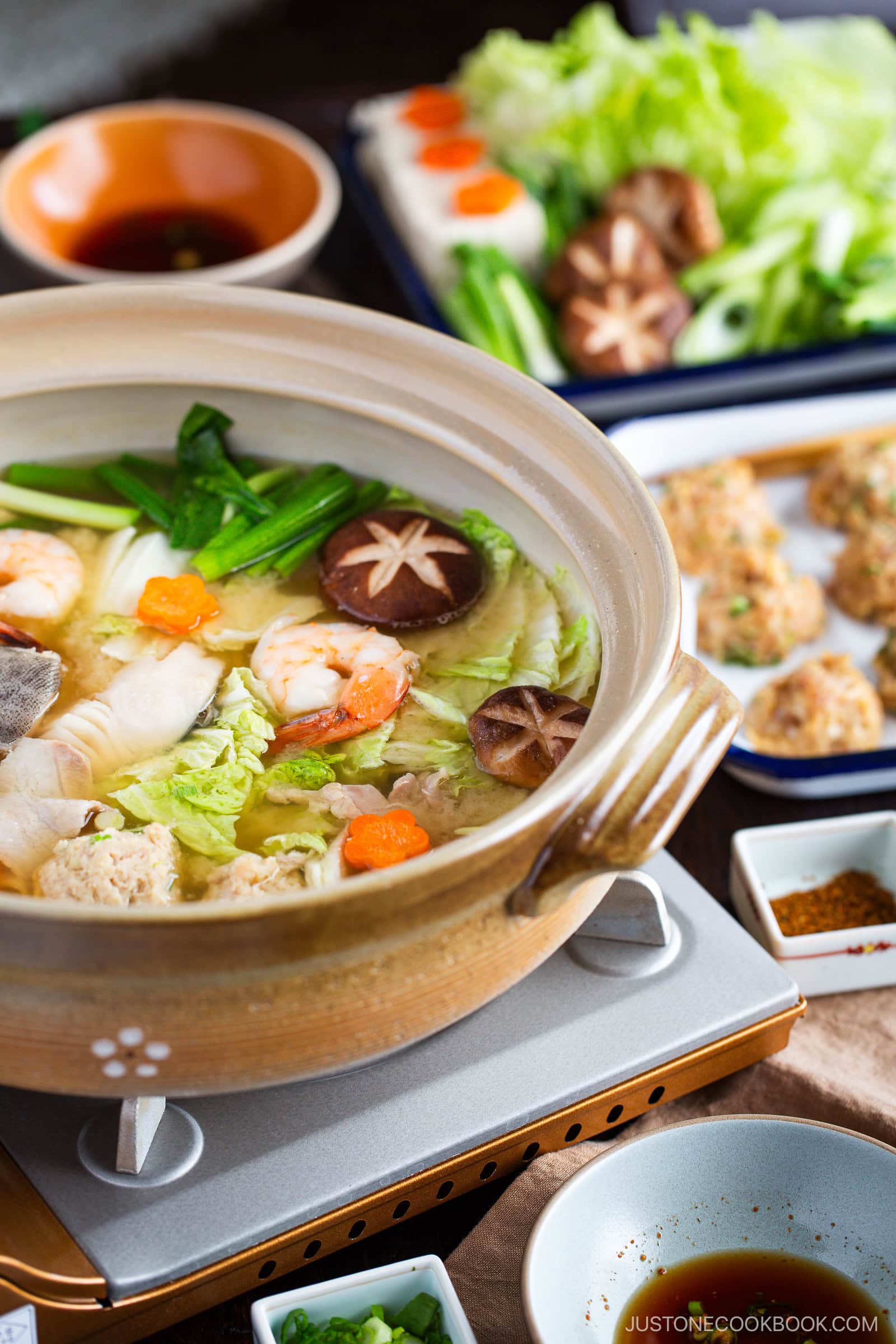
Recipe Highlights
Chanko Nabe may be famous as the strength-building hot pot of sumo wrestlers, but in my home, it’s all about gathering around the table with friends and family. I love how everyone can cook what they enjoy from a simmering donabe clay pot. There’s no single “correct” recipe, which makes it easy to adapt with whatever we have on hand.
- Mix and match your favorite ingredients
- Easy to make it vegan/vegetarian
- Great for cozy weeknight dinners and gatherings
If you love Japanese hot pot, try my Mille-Feuille Nabe and Soy Milk Hot Pot recipes next! Learn to make a foolproof nabe every time with my tutorial Nabe, Your Ultimate Japanese Hot Pot Guide.
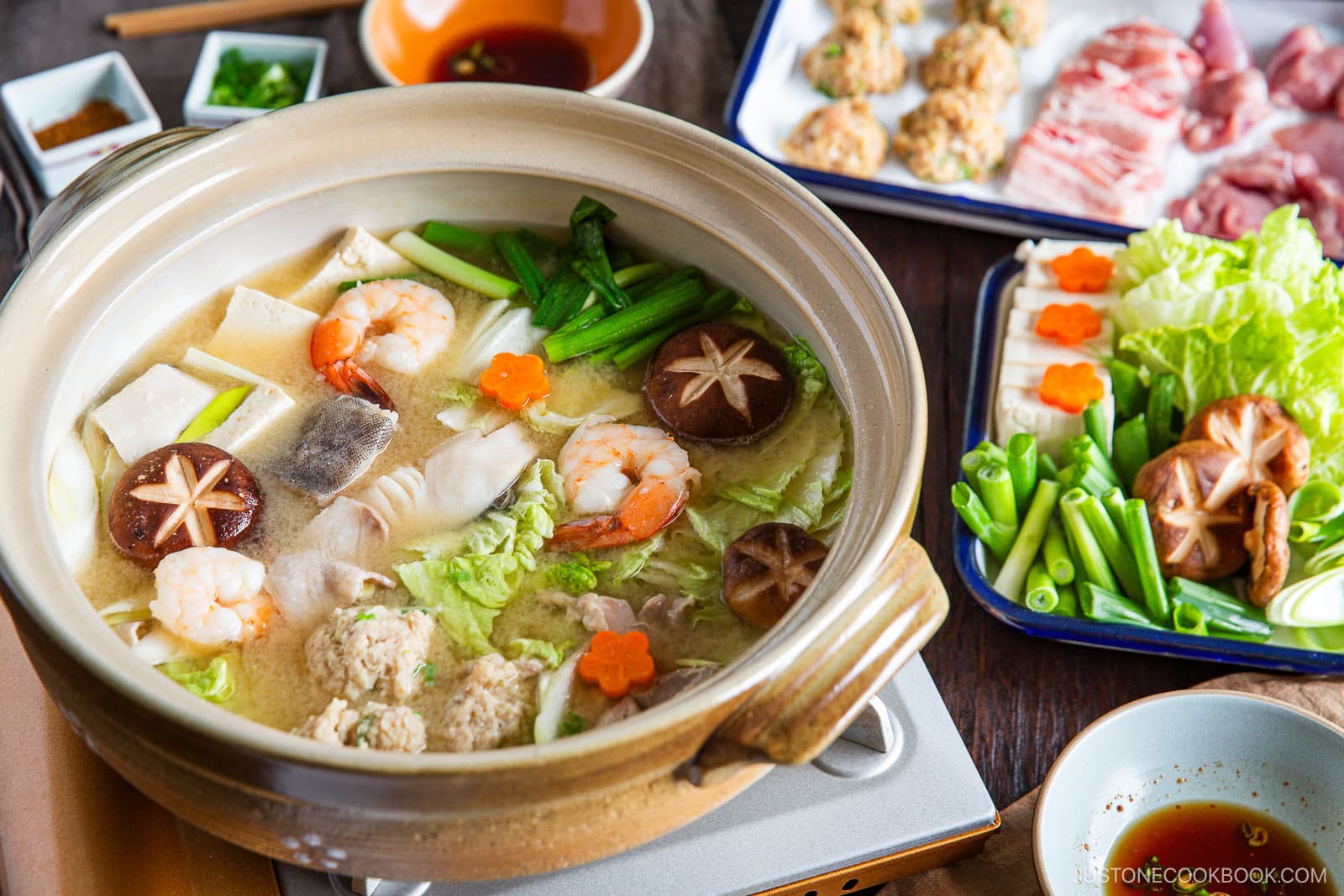
What is Chanko Nabe?
Chanko nabe (ちゃんこ鍋) is a protein-rich Japanese hot pot that professional sumo wrestlers eat to bulk up. In sumo stables, junior wrestlers prepare the meal as part of their daily training duties.
Fun fact: There is no single official recipe for chanko nabe. The word “chanko” simply means the meals sumo wrestlers eat, and each sumo stable develops its own version.
As a result, flavors and ingredients vary widely. Some uses miso, others use soy sauce or salt, and some even add kimchi.
Traditionally, for good luck, wrestlers avoid beef and pork in the hot pot because four-legged animals symbolize loss; sumo wrestlers can only touch the ground with the soles of their feet, not their hands. For this reason, they often use chicken instead. It stands on two legs, symbolizing stability and victory.
In the end, chanko nabe is about the style of cooking: a nourishing, communal hot pot built around protein, vegetables, and rich broth.
Ingredients for Chanko Nabe
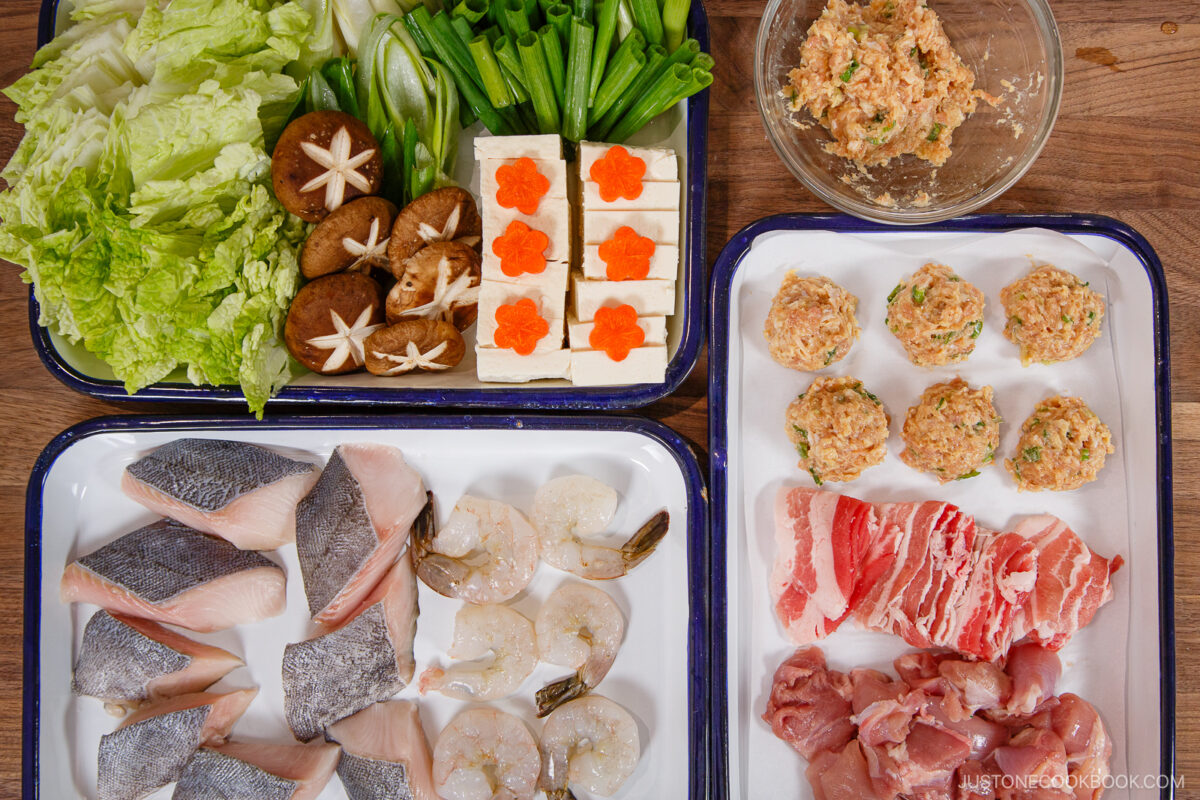
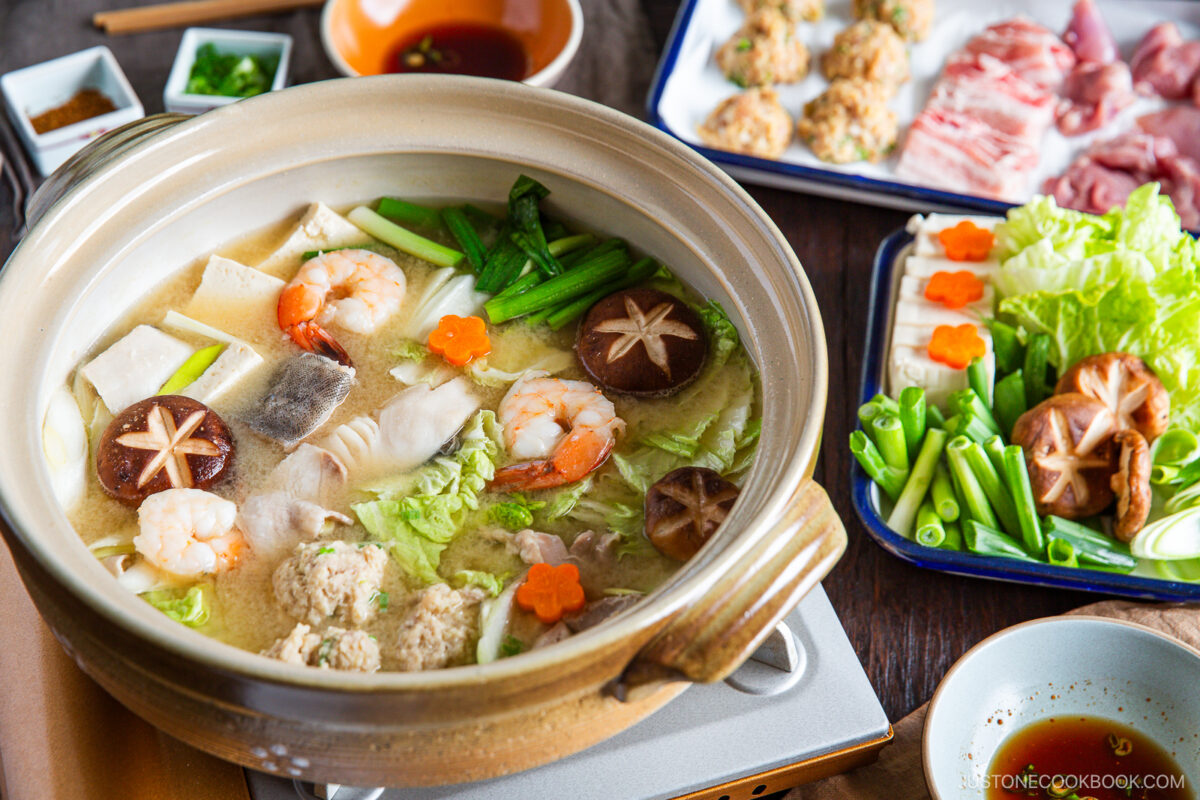
- chicken meatballs – ground chicken, egg, green onions, ginger juice, panko, soy sauce, cornstarch
- chicken thighs
- sliced pork belly (optional)
- cod fillet
- shrimp
- medium-firm tofu
- vegetables – napa cabbage, shiitake mushrooms, long green onion (Tokyo negi), green onions/scallions, carrot
For the Broth
- chicken stock – or use vegetable stock/vegan dashi
- white miso
- sake, mirin, ginger juice, and garlic
For Serving
- ponzu or goma dare (sesame dipping sauce) (optional) – you can make Homemade Ponzu Sauce
- Japanese short-grain rice or udon/ramen noodles
Find the printable recipe with measurements below.
Jump to RecipeHow to Make Chanko Nabe
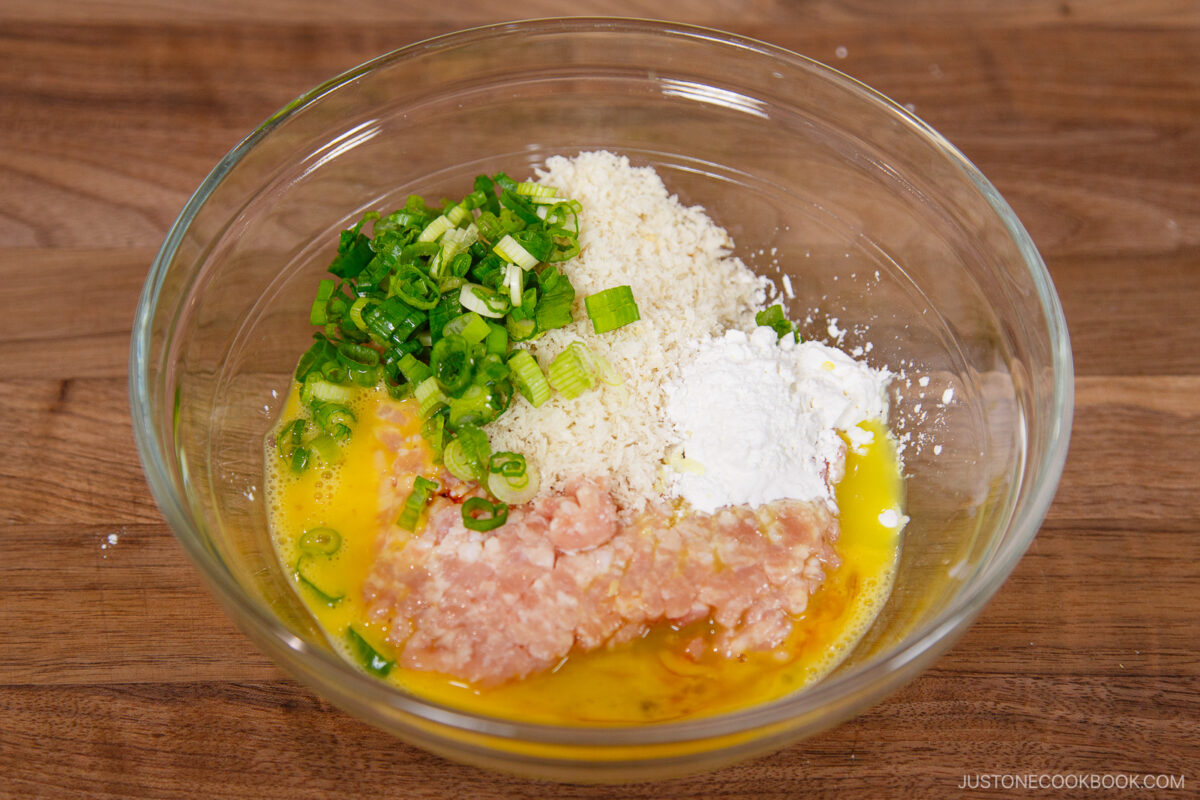
- Prepare the chicken meatball mixture. In a large bowl, combine all the meatball ingredients and mix until well combined.
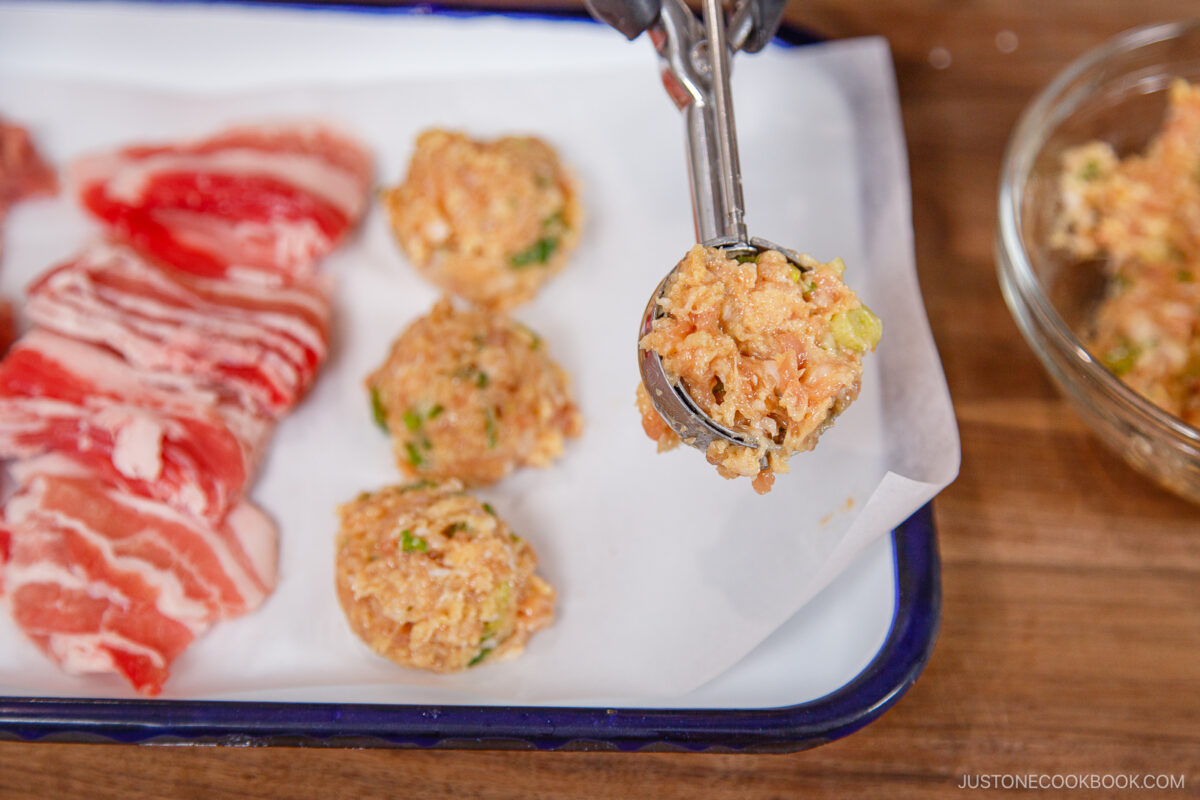
- Shape the meatballs. Scoop the mixture and form into evenly sized meatballs. I like to use a cookie scoop so they cook evenly.
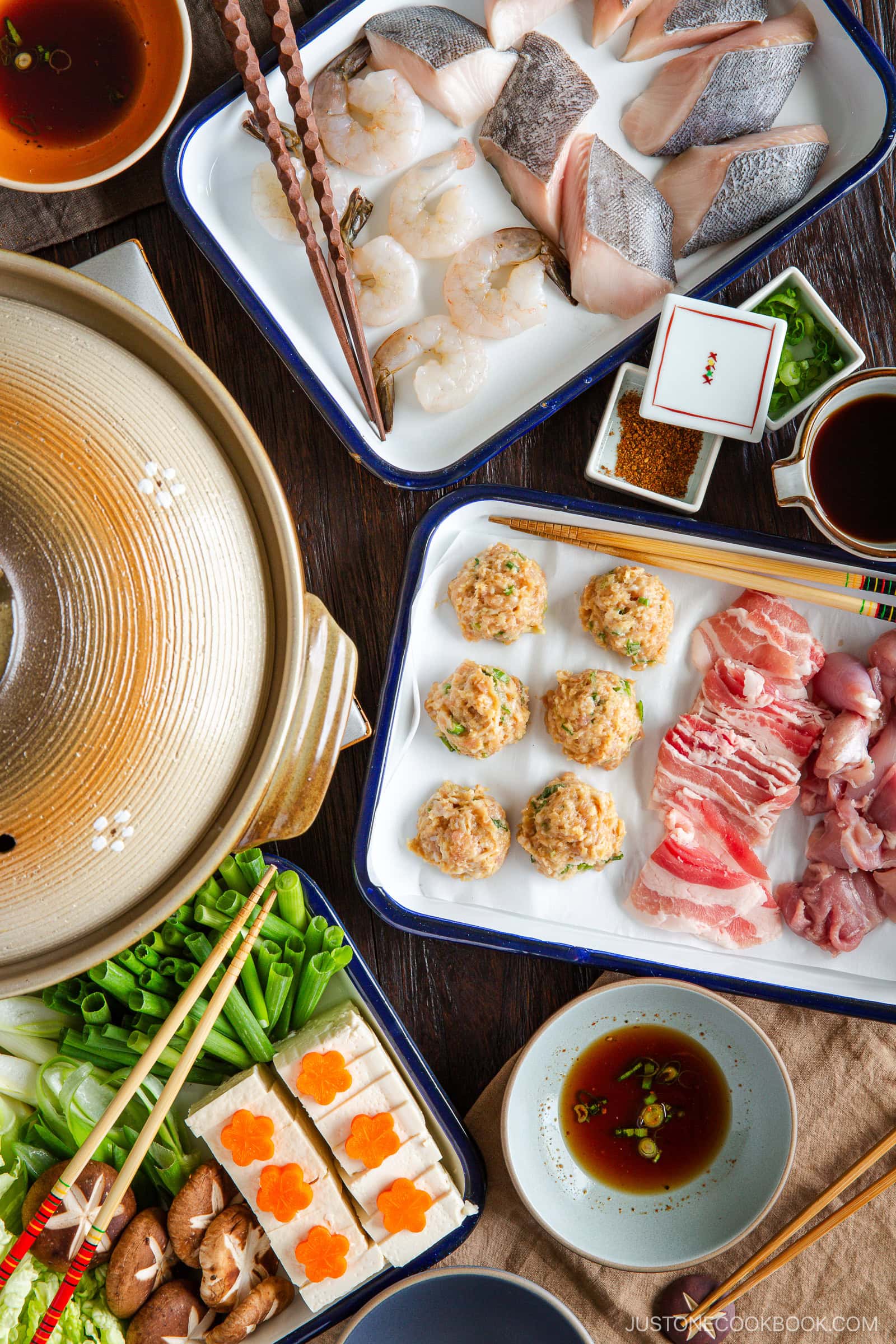
- Prepare the hot pot ingredients. Cut vegetables and proteins into bite-sized pieces. Arrange them neatly on platters for easy cooking and presentation.
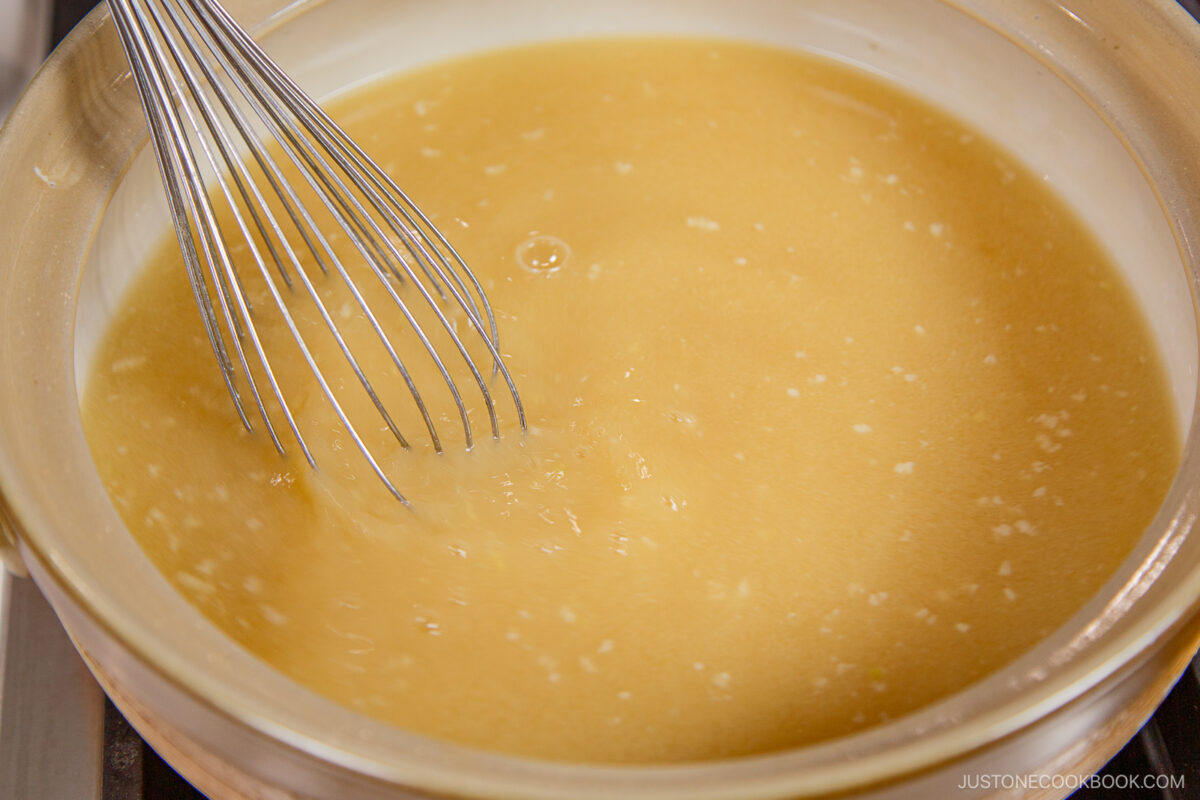
- Prepare the broth. In a large pot or donabe, bring the chicken stock, sake, mirin, garlic, and ginger juice (grated and squeezed from fresh ginger) to a simmer. Whisk the miso with some hot broth until smooth, then stir it back into the pot. Bring it back to a simmer, cover, and turn off the heat.
- Cook and serve at the table. Bring the broth to a gentle simmer and add ingredients in stages, starting with heartier fillings. Cover and cook until tender, then serve in individual bowls. Add more broth or water if needed. For the final course, simmer rice or noodles in the remaining broth.

Nami’s Recipe Tips
These simple tips will help you make Chanko Nabe perfectly every time.
- Grate fresh ginger in a ceramic grater. In Japanese cooking, we use ginger juice from freshly grated ginger (sometimes just juice without grated ginger). Graters like a microplane doesn’t give much juice.
- Use white miso – Its mild, creamy flavor makes a velvety broth. Try using other types (see all kinds of miso) for exploring various flavors. It varies in saltiness, so taste the broth and adjust the broth with more miso or stock if needed.
- Keep the broth at a gentle simmer. Avoid a rolling boil to prevents the broth from turning cloudy. A gentle simmer keeps the meatballs tender.
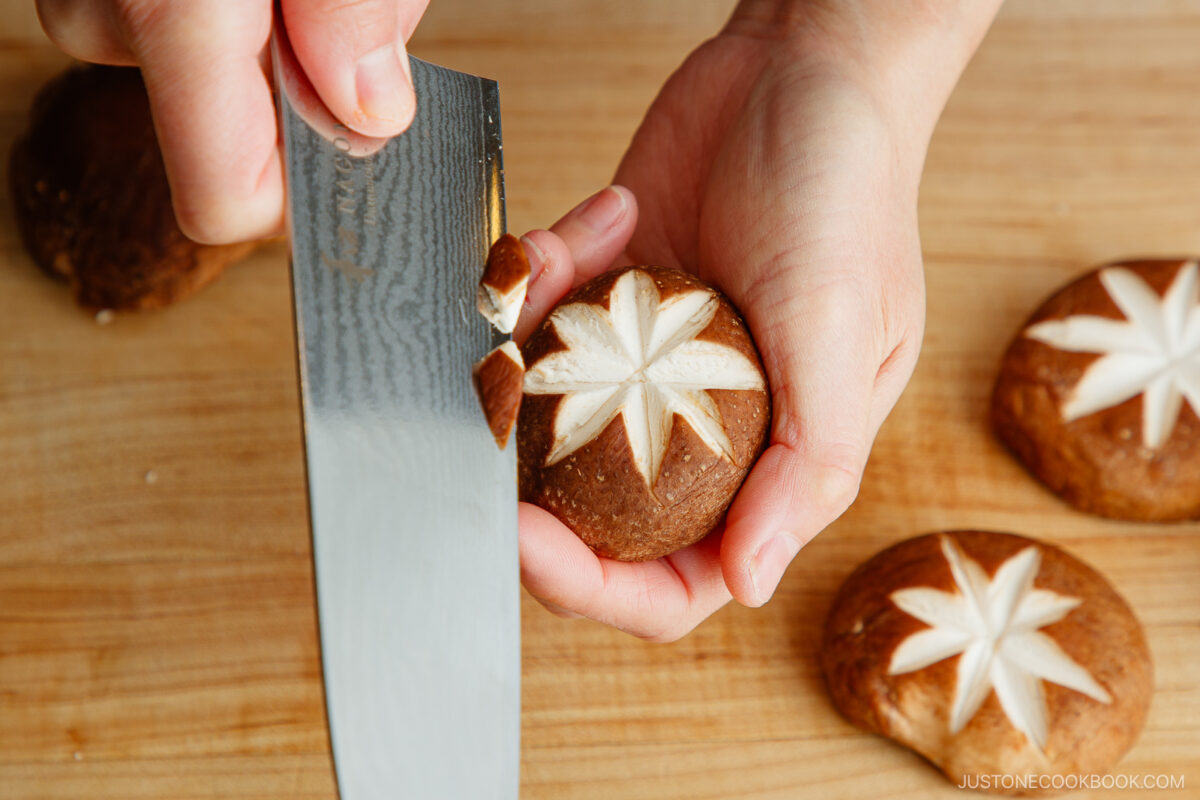
- Cut decorative flowers – See my guides on How To Make a Flower Pattern on Shiitake Mushroom Caps and How to Cut Carrots into Flower Shapes.
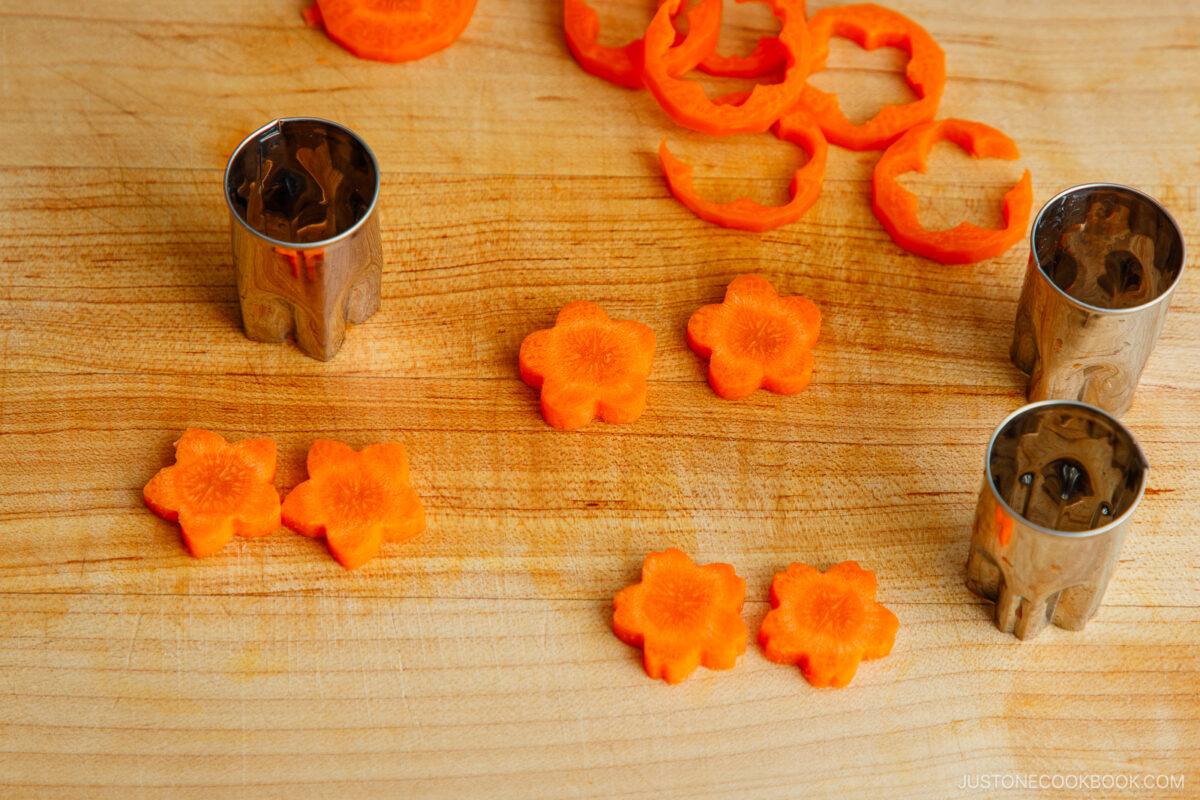
- Cook in stages. For the round of cooking, start with root vegetables and dense ingredients. Add leafy greens, tofu, and mushrooms later so they don’t overcook.
- Finish with rice or noodles – This final course, called shime (〆), is my family’s favorite way to soak up and enjoy the delicious broth after it becomes richer as it cooks.
- Skim for a clear broth. If foam rises to the surface, skim it off with a fine-mesh skimmer for a cleaner, more refined taste.
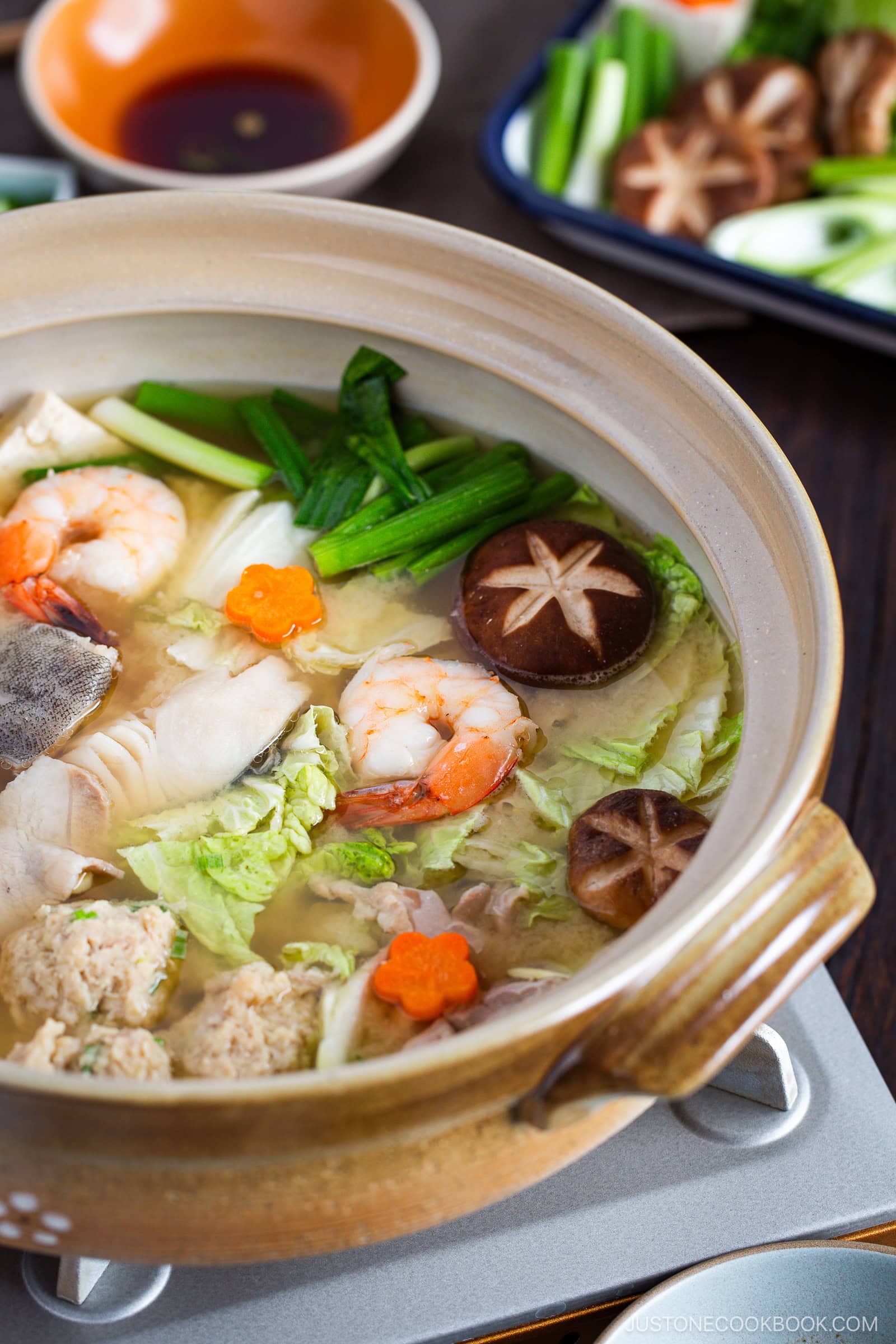
Variations and Customizations
Looking to change things up? Try these easy and tasty ideas!
- Change up the broth flavor. Try salt, soy sauce, or kimchi instead of miso. Or try different type of miso.
- Swap the protein. Add your favorite seafood and meats.
- Add in other veggies. Try burdock root, mizuna, chives, konnyaku, and onion.
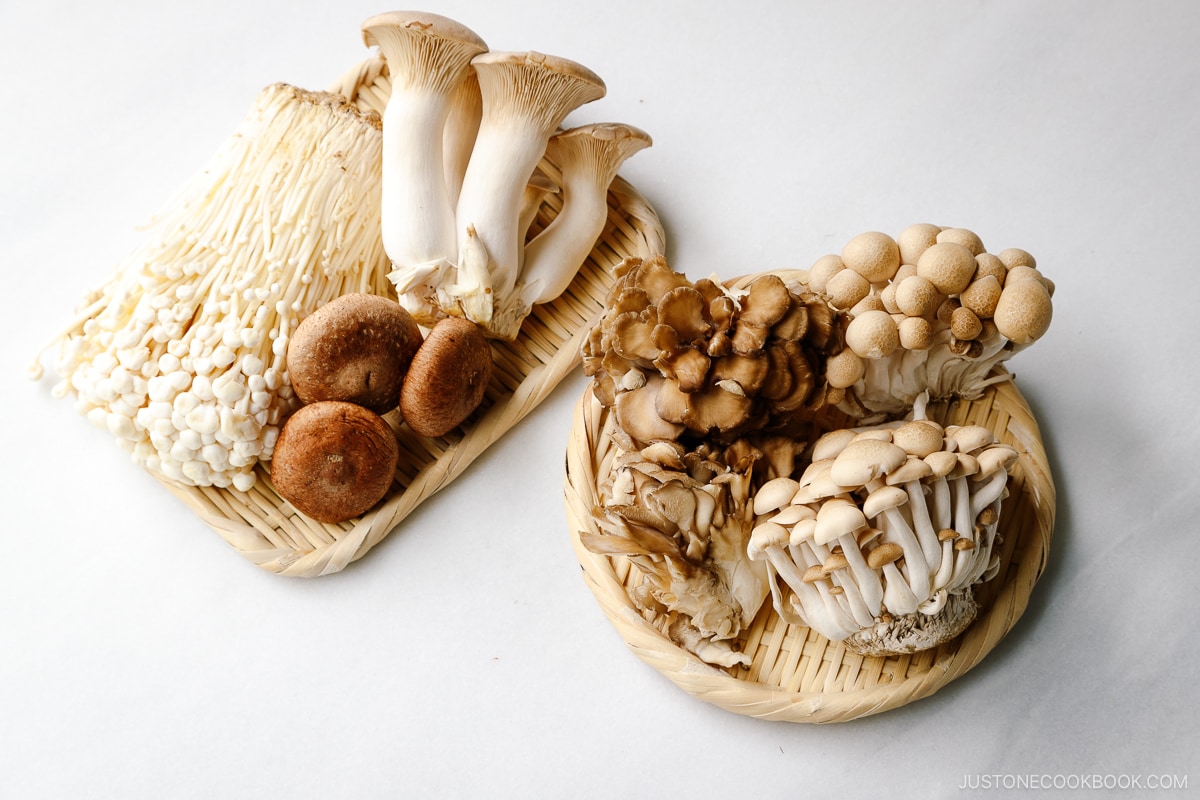
- Try different Japanese mushrooms. Enoki, maitake, and shimeji work well, too.
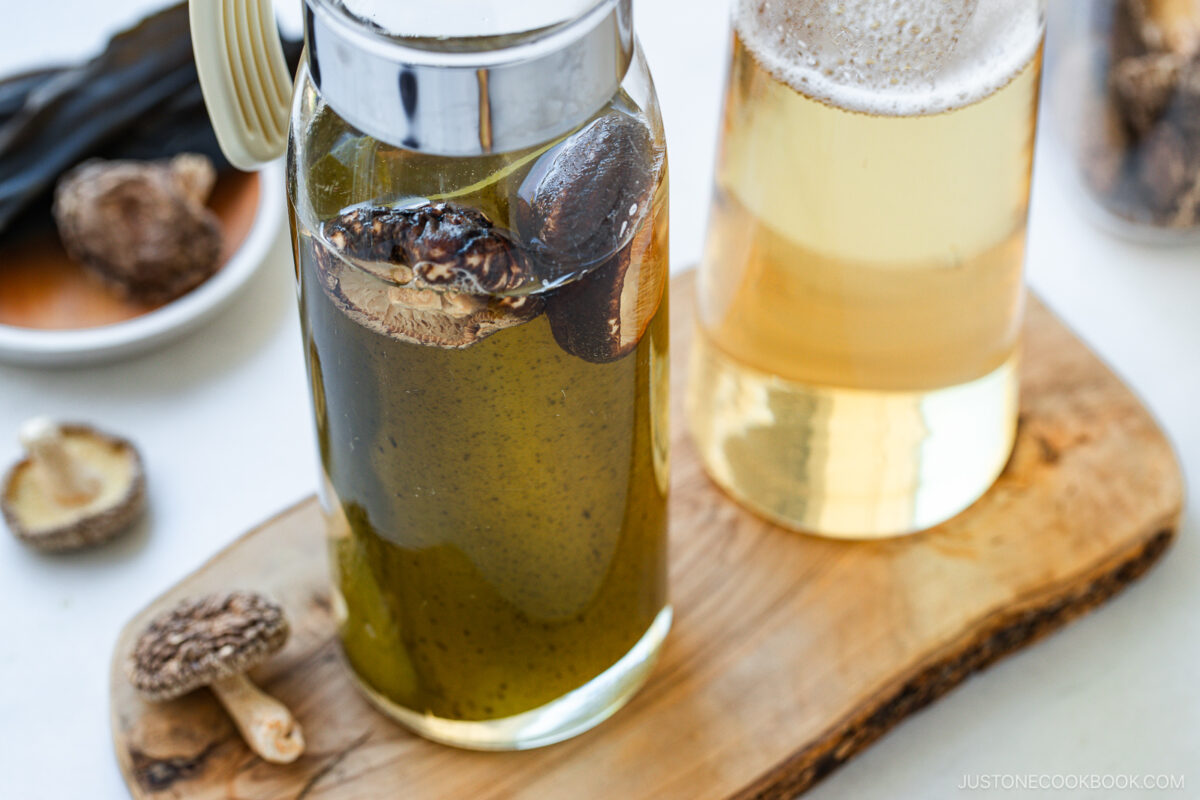
- Make it vegetarian/vegan. Use Vegan Dashi. Skip the meat and add deep-fried tofu and more mushrooms.
What to Serve with Chanko Nabe
I pair Chanko Nabe with fresh vegetable sides to balance the dish. Here are my picks:
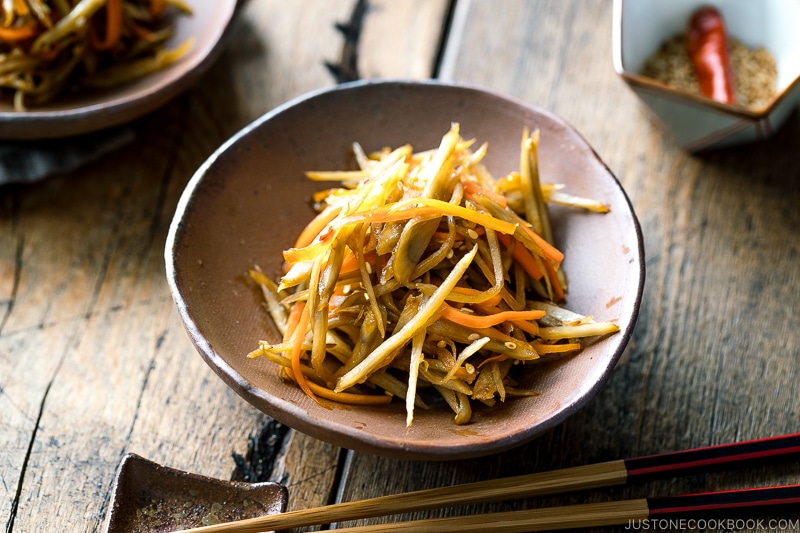
- Kinpira Gobo – This crunchy simmered burdock root contrasts nicely with the miso broth.
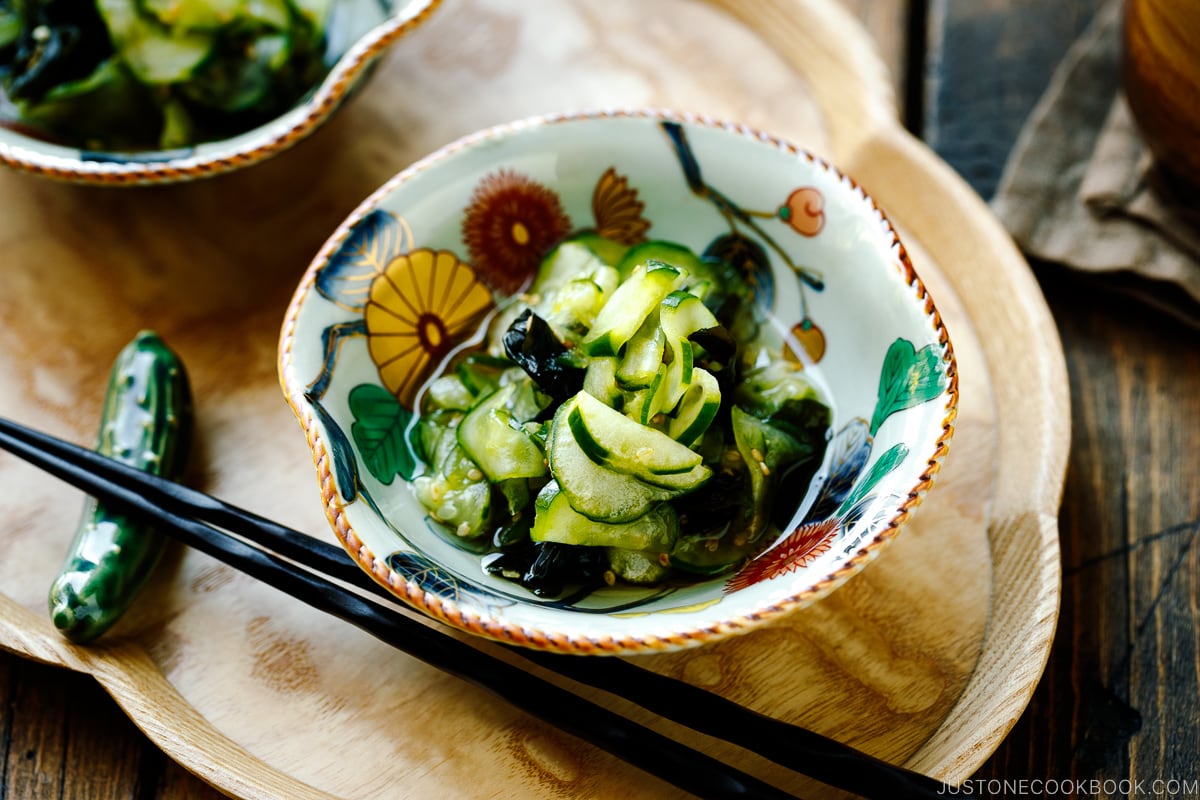
- Japanese Cucumber Salad – This crisp salad refreshes your palate between sips of stew.
- Yamitsuki Cabbage – This addictive cabbage brings a fresh element to the meal.
Storage and Reheating Tips
To store: Cool completely, then refrigerate in an airtight container for up to 24–36 hours.
To reheat: Warm gently on the stovetop over low heat until hot.
FAQs
Why do sumo wrestlers eat chanko nabe?
Sumo wrestlers eat chanko nabe because it’s hearty, protein-rich, and easy to cook in large batches. This nourishing hot pot fuels their intense daily training and helps maintain their competitive size. In sumo stables, junior wrestlers prepare the meal.
What ingredients are in chanko nabe?
Traditional chanko nabe includes chicken, napa cabbage, mushrooms, and seasonal vegetables simmered in a savory broth. Like other Japanese hot pot (nabemono) dishes, it’s flexible and adaptable. See my post Nabe: Your Ultimate Japanese Hot Pot Guide for ways to customize it.
Can I make chanko nabe at home?
Yes! Chanko nabe is one of the easiest Japanese hot pot recipes to make at home. Simply make a flavorful broth, add protein and vegetables, and simmer until tender. It’s cozy, customizable, and perfect for gathering around the table.
Is chanko nabe healthy?
Chanko nabe is a naturally balanced and wholesome meal with lean protein and vegetables in a light broth, so it feels nourishing and not heavy. The overall calories depend on portion size and sides like rice.
I’d love to hear how yours turned out! 💛 Please leave a star rating and comment below to share your experience. Your feedback not only supports Just One Cookbook but also helps other home cooks discover recipes they can trust.
Chanko Nabe (Sumo Stew)
Ingredients
For the Chicken Meatballs
- ½ lb ground chicken
- ½ large egg (50 g w/o shell) (beaten)
- 1 green onion/scallion
- 2 inches ginger (grated and squeezed for 2 tsp ginger juice)
- 2 tsp soy sauce
- 6 Tbsp panko (Japanese breadcrumbs)
- 1 Tbsp cornstarch
For the Broth
- 6 cups chicken stock/broth (for vegan/vegetarian, use vegetable broth or Vegan Dashi)
- ¼ cup sake
- ⅓ cup mirin
- 2 cloves garlic (crushed)
- 4 inches ginger (grated and squeezed for 2 Tbsp ginger juice)
- ½ cup white miso
For the Stew
- chicken meatballs (see ingredients above)
- 4 boneless, skinless chicken thighs
- 1½ lb cod fillet
- 8 shrimp
- 14 oz medium-firm tofu (momen dofu)
- 6 oz sliced pork belly (optional)
- ½ head napa cabbage
- 2 inches carrot
- 2 Tokyo negi (long green onion)
- 6 green onions/scallions
- 4–6 shiitake mushrooms
For Serving
- ponzu (or make my Homemade Ponzu recipe)
- sesame dipping sauce (goma dare)
- 4 servings cooked Japanese short-grain rice (or precooked udon / ramen noodles; for the final course)
Instructions
To Make the Chicken Meatballs
- In a large bowl, combine ½ lb ground chicken, 2 tsp soy sauce, 2 tsp ginger juice (grated and squeezed from 2 inches ginger), 1 Tbsp cornstarch, 6 Tbsp panko (Japanese breadcrumbs), 1 green onion/scallion (finely chopped), and ½ large egg (50 g w/o shell) (beaten).
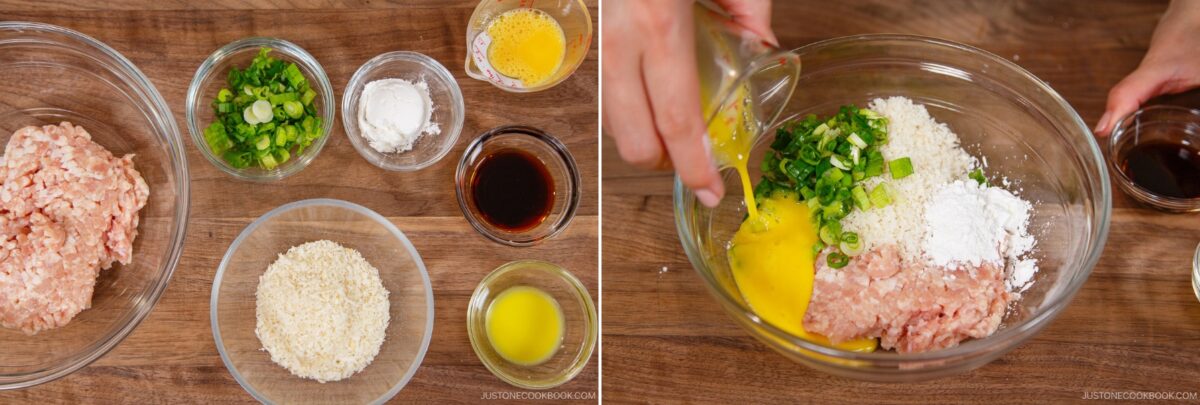
- Using your hands, mix it all together until pale and well combined.
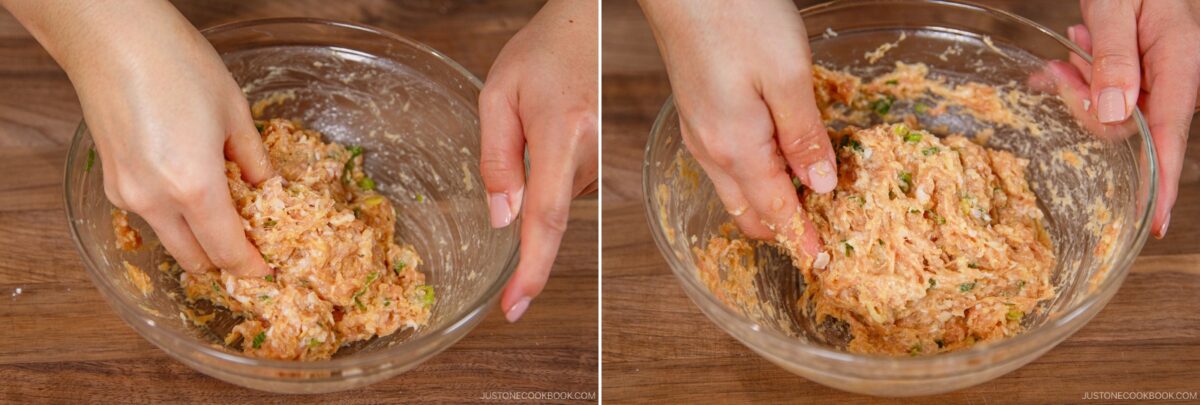
- Shape the mixture into 1-inch (2.5-cm) chicken meatballs. If it's too loose to form meatballs, sprinkle in additional panko, as needed.
To Prepare the Hot Pot Ingredients
- Protein:Trim the visible fat from 4 boneless, skinless chicken thighs and cut the meat into bite-sized pieces. Cut 1½ lb cod fillet into 2-inch (5-cm) chunks. Peel and devein 8 shrimp. Cut 14 oz medium-firm tofu (momen dofu) into 1-inch (2.5-cm) cubes. Cut 6 oz sliced pork belly (optional) into 2-inch (5-cm) pieces. Vegetables:Separate ½ head napa cabbage into leaves and cut them into roughly 2-inch (5-cm) pieces. Slice 2 inches carrot. Optionally, make decorative flower shapes using a vegetable cutter; see how to cut carrots into flower shapes. Cut 2 Tokyo negi (long green onion) diagonally into pieces 1 inch (2.5 cm) long.Cut 6 green onions/scallions into pieces 2 inches (5 cm) long. Remove the stems from 4–6 shiitake mushrooms. Optionally, make a decorative cuts; see how to make a flower pattern on shiitake mushroom caps.
To Make the Broth
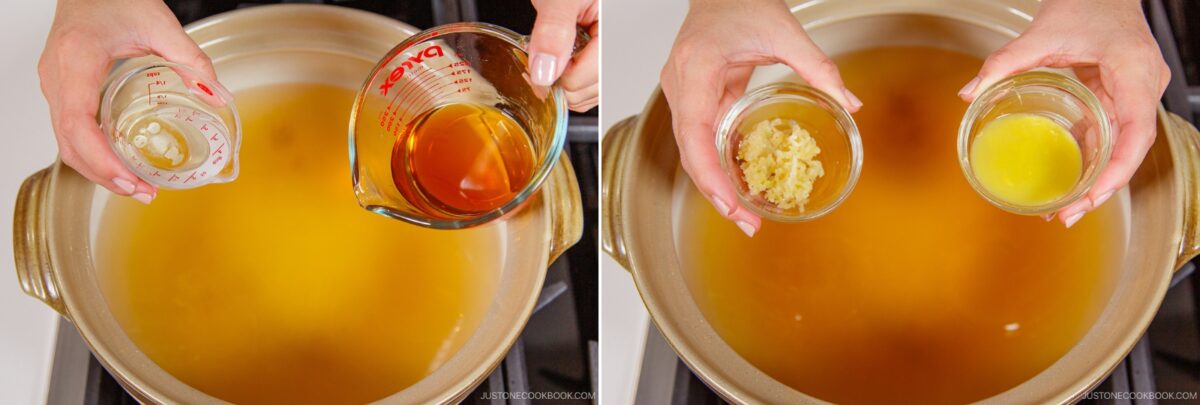
- On the stovetop, combine 6 cups chicken stock/broth, ¼ cup sake, and ⅓ cup mirin in a donabe clay pot (or Dutch oven or large pot). Add 1½ tsp crushed garlic from 2 cloves garlic and 2 Tbsp ginger juice (grated and squeezed from 4 inches ginger). Bring it all to a simmer over medium heat.
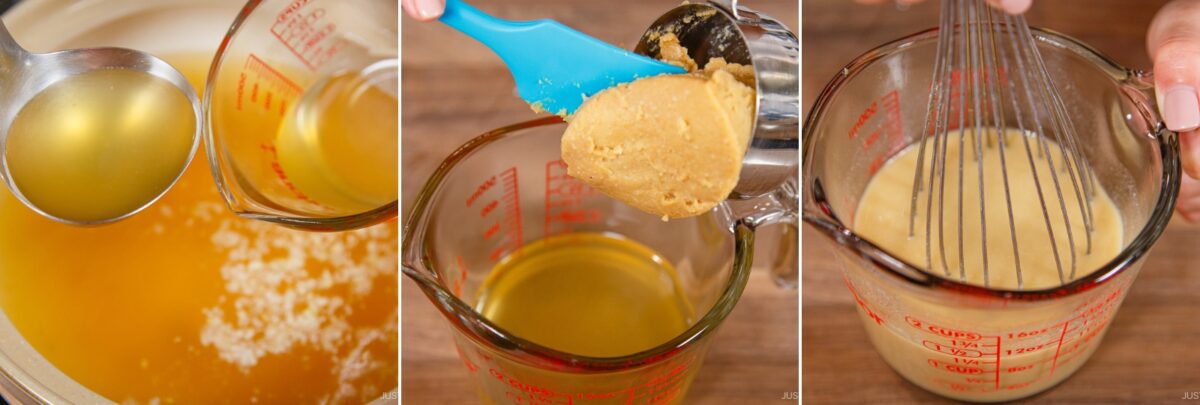
- Once simmering, ladle a small amount of broth into a measuring cup or bowl. Add ½ cup white miso to the cup and stir until fully dissolved and smooth, with no lumps remaining.
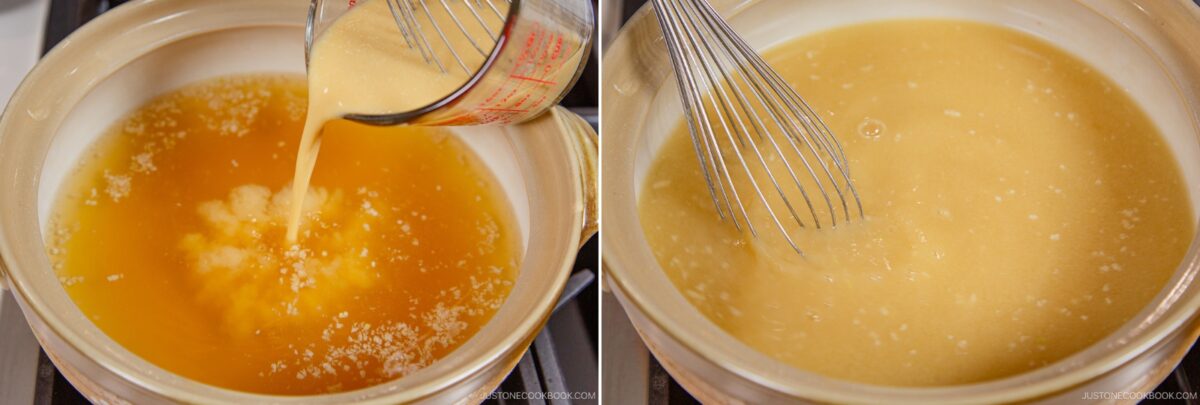
- Do not let the broth boil once you add the miso, or it will lose its flavor and aroma. Gradually stir the miso mixture back into the pot and turn off the heat as soon as small bubbles appear around the edges.
To Set Up the Table
- Arrange all the stew ingredients on platters and set them on the table. Pour the ponzu sauce and/or sesame dipping sauce (goma dare) into individual dipping bowls at each place setting. Provide chopsticks, soup bowls, and soup spoons (optional).Place a portable gas burner on the table and set the donabe with broth on top. If you don’t have a portable burner, cook on the stovetop and transfer to a large serving bowl, or bring the pot to the table between batches.
To Cook the Chanko Nabe
- First batch: Bring the broth to a simmer over medium heat. Add the fish, tofu, napa cabbage stems, negi, carrots, and some mushrooms. Cook in batches if needed. Cover and simmer gently for about 10 minutes, until napa cabbage is tender, the fish flakes easily, and the chicken is cooked through with no pink remaining. Transfer to individual bowls and enjoy.Nami's Tip: Keep the broth at a gentle simmer.
- Second batch: Add the chicken meatballs, meat (or more fish), and remaining vegetables. Cover and simmer gently for about 10 minutes. Note that vegetables and tofu cook faster than meat and seafood. Serve in individual bowls to enjoy the second round. Nami's Tip: Add water or chicken broth if the liquid reduces too much.
To Make the Final Course (Shime)
- Remove the solids from the broth when you're ready for the final course. Add 4 servings cooked Japanese short-grain rice or precooked udon noodles to the broth. Simmer for 2–3 minutes, until the rice or noodles are heated through and have absorbed some of the broth. Serve immediately.
To Store
- Refrigerate leftovers in an airtight container for up to 36 hours. Reheat gently before serving.
Notes
- Change up the broth flavor. Try salt, soy sauce, or kimchi instead of miso. Or try different type of miso.
- Swap the protein. Add your favorite seafood and meats.
- Add in other veggies. Try burdock root, mizuna, chives, konnyaku, and onion.
- Try different Japanese mushrooms. Enoki, maitake, and shimeji work well, too.
- Make it vegetarian/vegan. Use Vegan Dashi. Skip the meat and add deep-fried tofu and more mushrooms.
Nutrition
Did you make this recipe?
Tag @justonecookbook on Instagram so we can see your delicious creation!
Editor’s Note: This post was originally published on March 30, 2017, updated on February 14, 2017, and republished with more helpful information on March 4, 2026.