

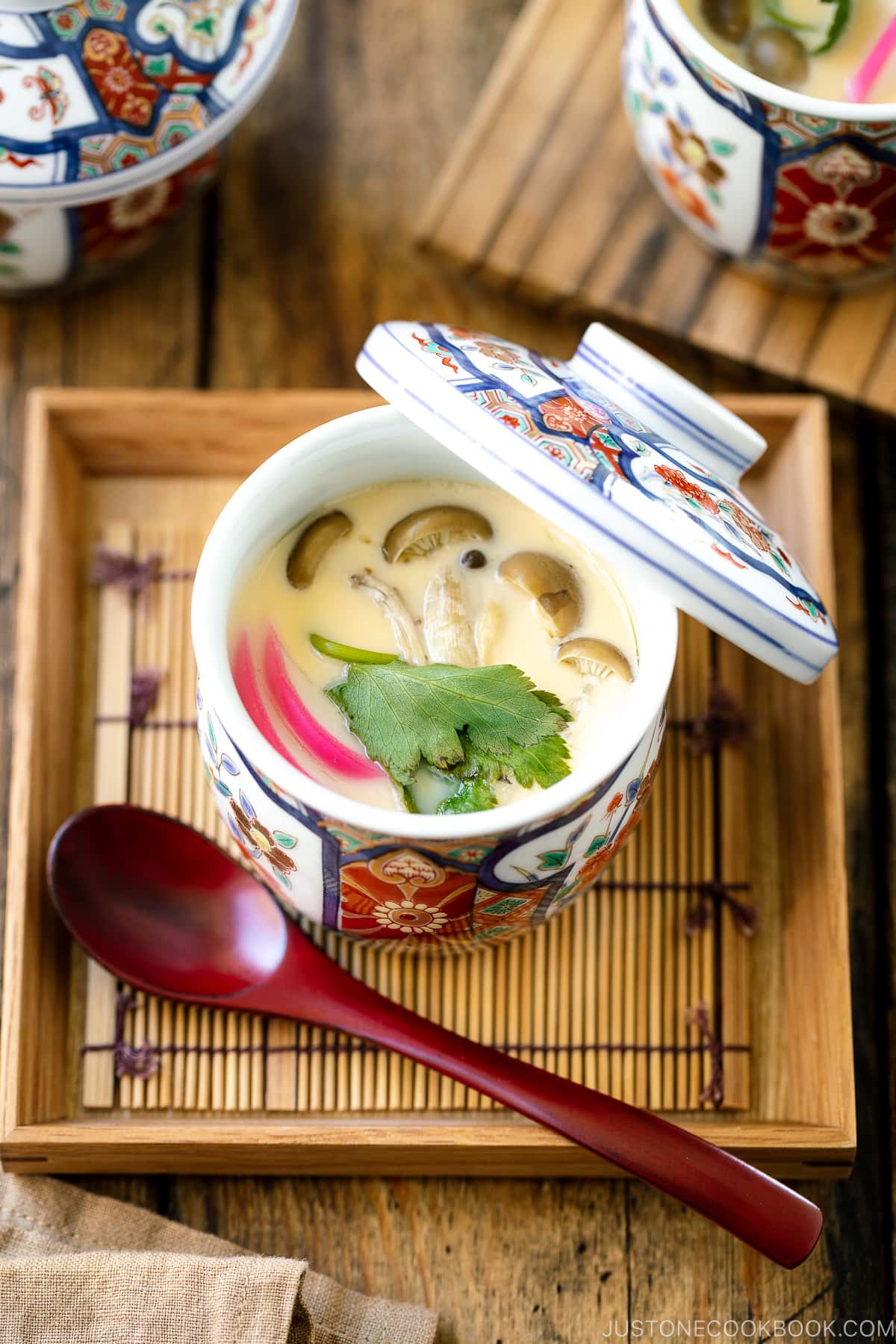
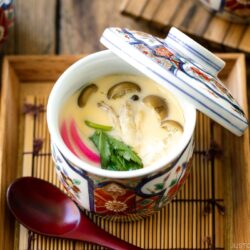
Served in a dainty little teacup, chawanmushi (茶碗蒸し) is a classic appetizer on the menu in many sushi or Japanese restaurants. There are many variations based on seasonal ingredients, but some of the most common ones include shrimp, fish, and vegetables. It can be homey or fancy depending on what goes into the egg custard. To get you started, I’ll be sharing a basic chawanmushi recipe with chicken, along with suggestions for a vegetarian version.
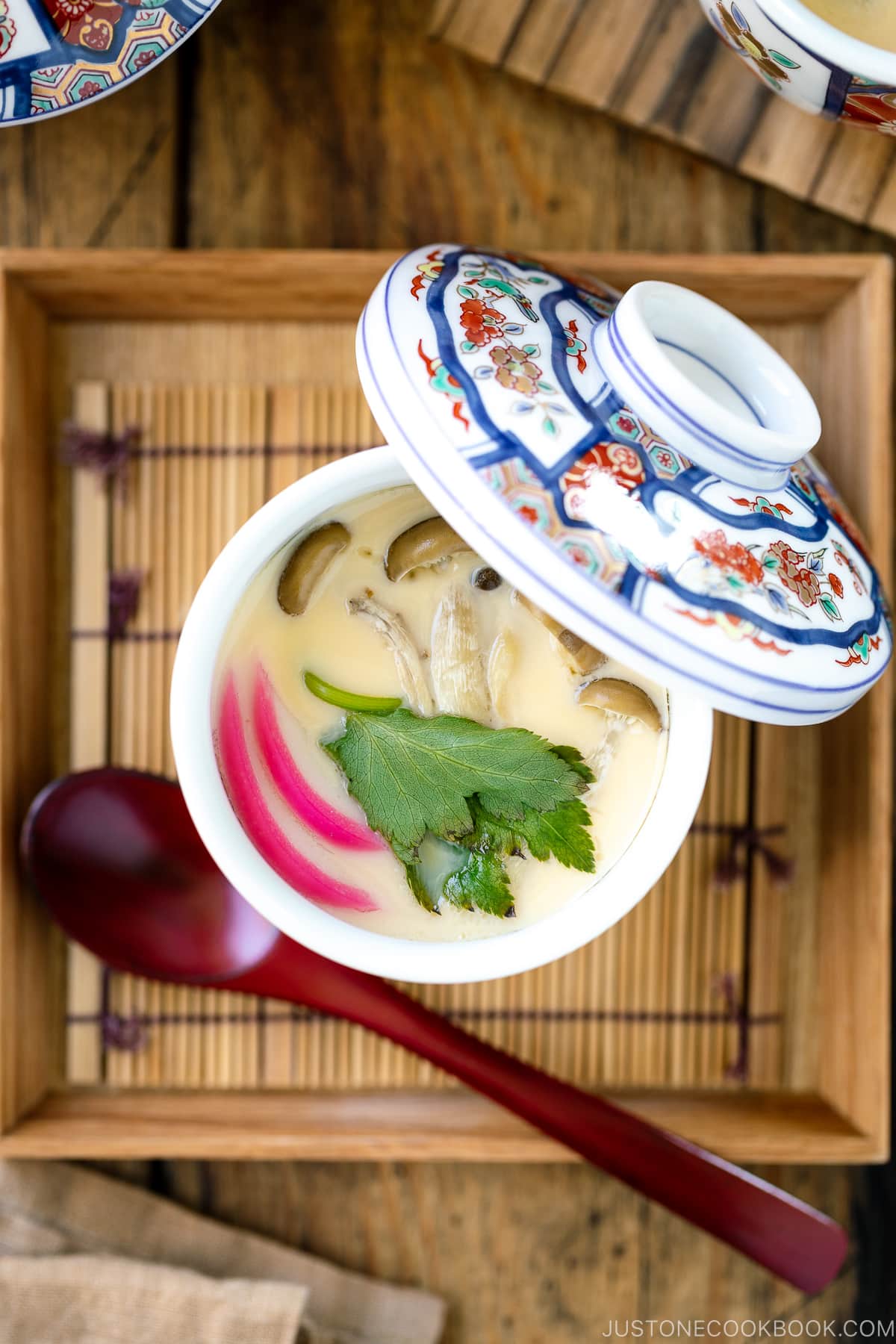
What is Chawanmushi?
Chawanmushi (茶碗蒸し) translates to ‘teacup steamed egg custard.’ We fill the egg mixture with ingredients such as ginkgo nuts, shiitake mushrooms, kamaboko (Japanese fish cake), and subtly flavored with dashi, soy sauce, and mirin. It is steamed in a cup and often served as a cold or hot appetizer. With its ivory color and lovely toppings, it is as tasty as it looks.
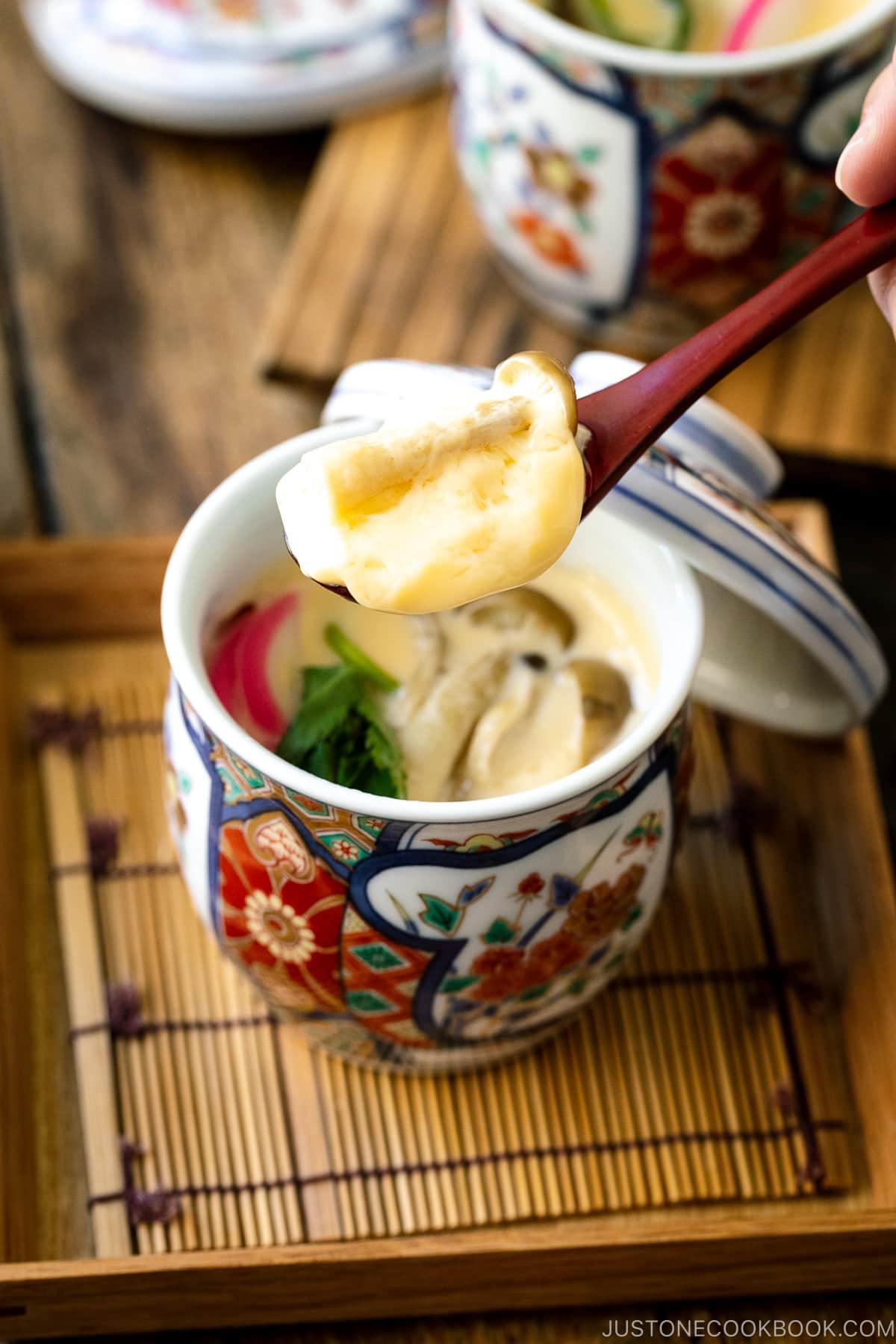
- The texture: The steamed custard is smooth and silky, while the sweet-savory meat and vegetables lend a contrasting mouthfeel to the dish. And the broth adds a touch of juiciness, making each bite utterly satisfying and surprising.
- The flavor: You can expect a delicate yet complex flavor from a good cup of chawanmushi. There is a balance of sweetness and saltiness from the different components, while the seasonings—dashi, soy sauce, mirin, and sake—contribute to an umami taste, which is key to making a delicious custard.
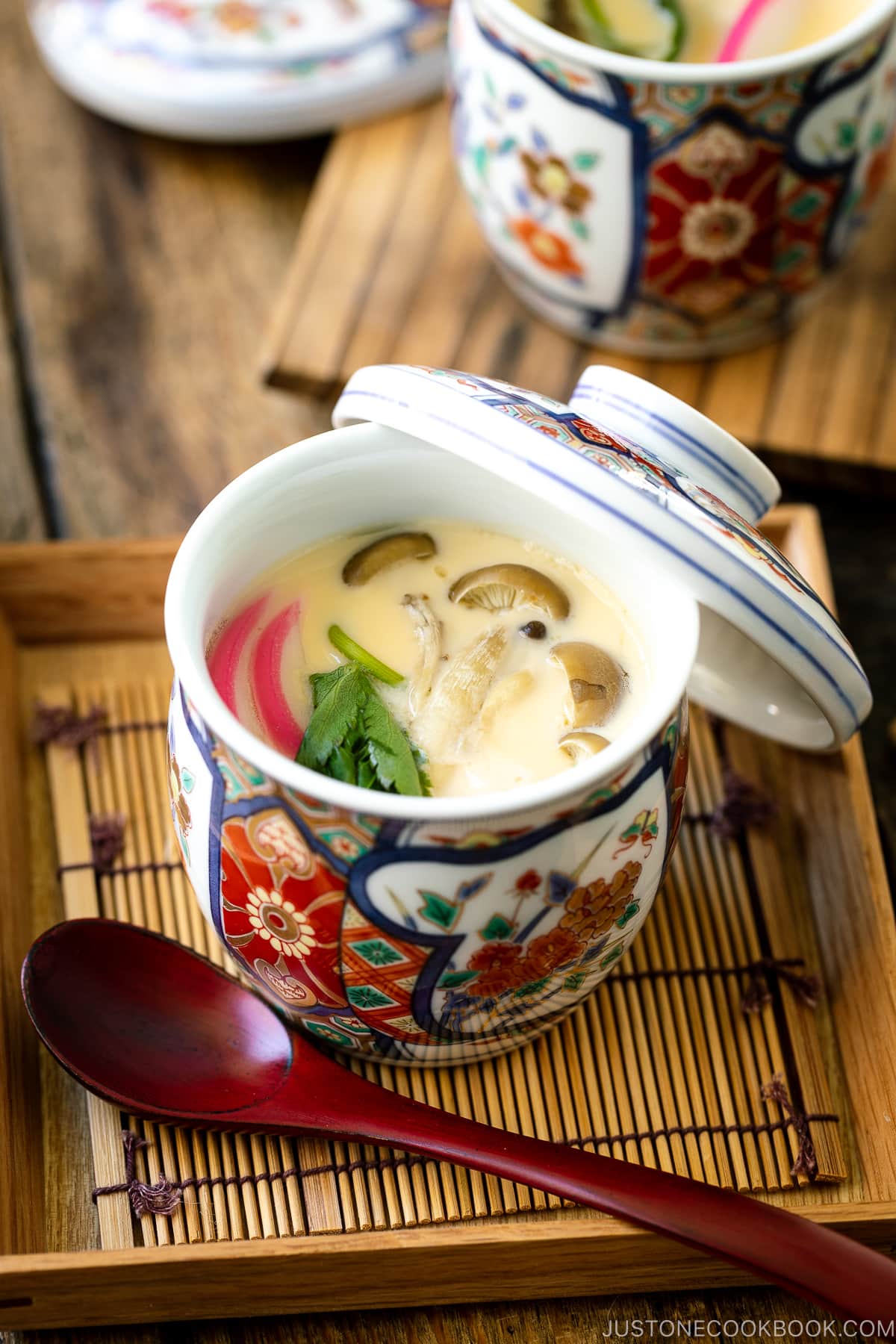
Ingredients for Chawanmushi
- Eggs
- Dashi (Japanese soup stock) – I highly recommend making dashi from scratch or using a dashi packet (instead of dashi powder) since the broth defines the taste of the dish. Use Vegan Dashi for a vegetarian version.
- Seasonings: Soy sauce, mirin, sake, and salt
- Chicken – I used chicken tenders for the recipe, but it can be chicken thigh or breast. Skip for a vegetarian version.
- Kamaboko fish cake – Skip for a vegetarian version.
- Mushrooms – I used shimeji mushrooms.
- Ginkgo nuts (gin-nan) – Optional.
- Mitsuba or green onion
Vegetarian Substitutions
Instead of using chicken and fish cake, you can use various mushrooms and vegetables. Depending on your choice of ingredients, you may need to blanch or cook certain vegetables beforehand, such as carrots.
How to Make Chawanmushi
- Prepare the ingredients. Cut chicken, kamaboko fish cakes, and mushrooms (if necessary).
- Make the custard mixture by combining the eggs, dashi, and condiments.
- Assemble the ingredients and custard mixture in chawanmushi cups.
- Steam chawanmushi in a pot, a steamer basket, or the oven for 20 minutes.
- Serve hot.
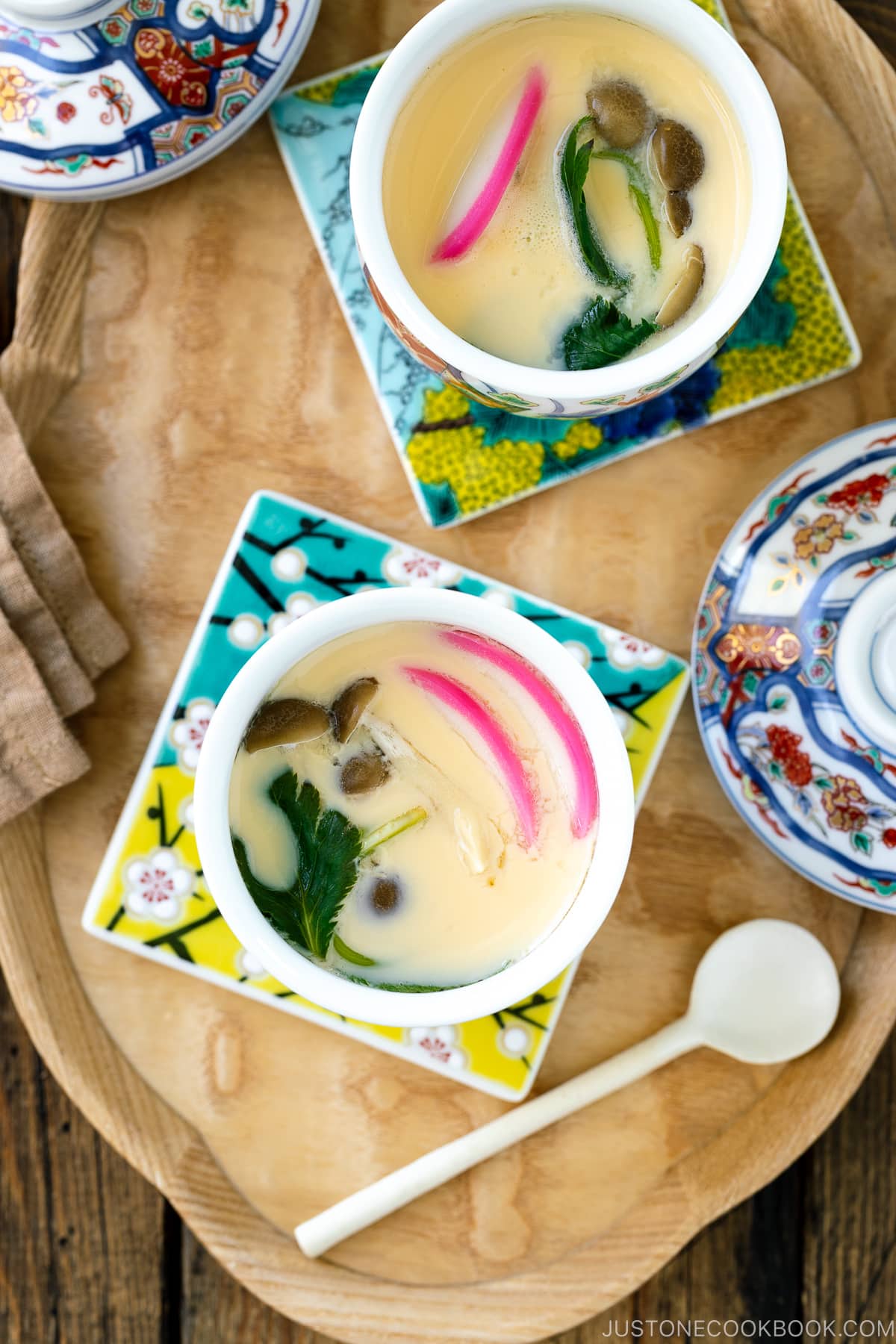
Chawanmushi Steamer Setups
Chawanmushi must be cooked with gentle heat, or the custard will develop small bubbles and a rough texture. You can use the following 3 methods to cook chawanmushi:
- Cook chawanmushi in a pot: I use this method for my recipe. Please read the instructions on the recipe card below. Boil water in a pot large enough to hold the steaming cups. Once boiling, reduce the heat to the lowest setting and gently place the cups in the hot water. Cook covered with the lid slightly ajar to let the hot steam escape. This creates a gentle steaming condition inside the steamer.
- Steam chawanmushi in a steamer basket: You can use a traditional steamer to make chawanmushi. Do not cover the chawanmushi cups directly. Instead, wrap the steamer lid with a large kitchen towel to prevent condensation from dropping into the egg custard during steaming. Place the steamer cups inside the steamer basket and leave the lid slightly ajar to let the hot steam escape.
- Steam in the oven: Preheat the oven to 350ºF (180ºC) and fill a roasting pan (or deep baking dish) with 1″ (2.5 cm) boiling water. Cover the steaming cups with the lid or aluminum foil and place them inside the roasting pan.
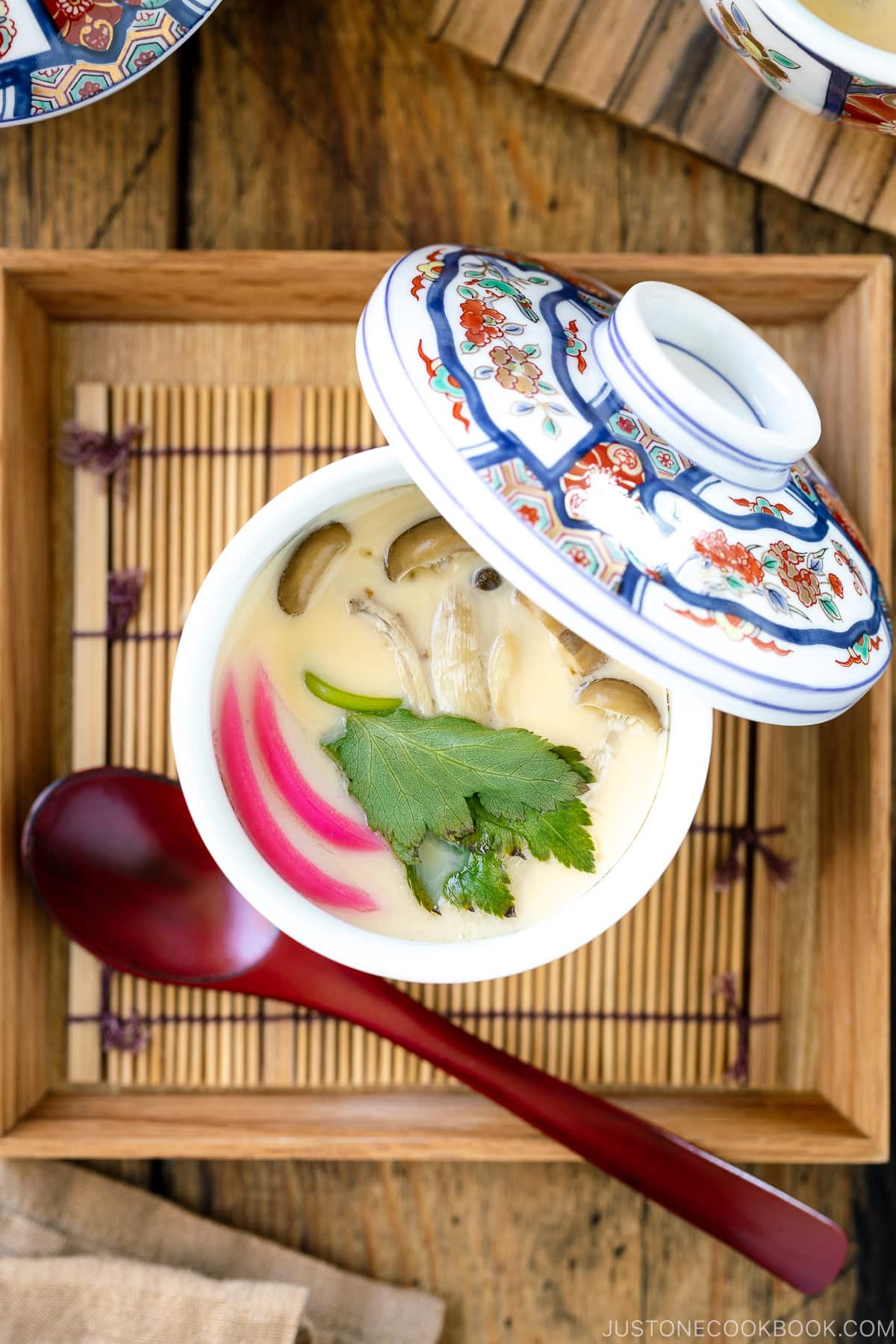
Cooking Tips
- The egg-to-dashi ratio is 1 to 2.5. Many professional chefs and home cooks use a ratio of 1 to 3. However, I prefer a slightly more eggy taste in my chawanmushi, so I use 2.5. First, measure the weight of the eggs, and then multiply by 2.5 to determine the amount of dashi needed. For example, 3 eggs (150 g) x 2.5 = 375. So you will need 375 ml of dashi.
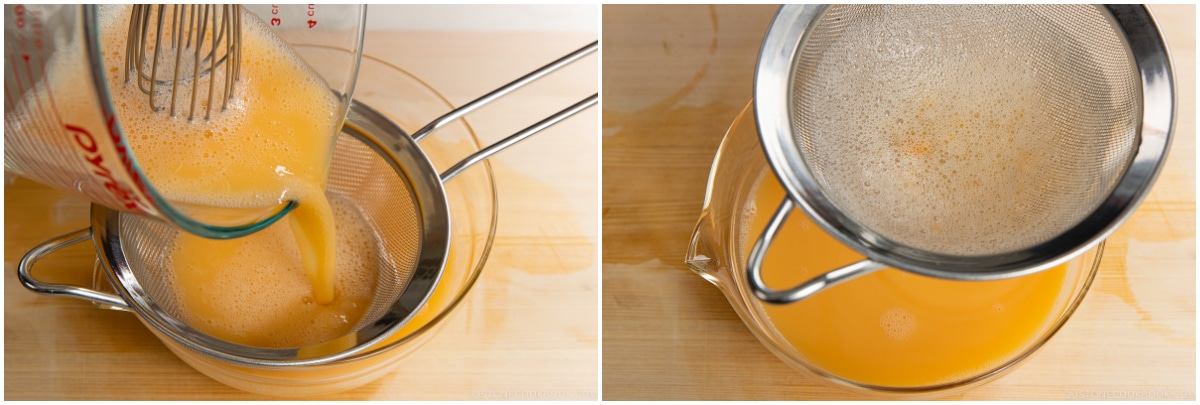
- Strain the egg mixture. Passing the egg mixture through a fine-mesh sieve helps to remove any stringy strands of egg whites, resulting in a smooth and silky custard.
- Use room-temperature ingredients. Make sure your ingredients are not cold or frozen. The egg mixture will cook fast, and your ingredients may not cook through evenly. Also, spread out the ingredients so the heat can pass through; for example, arrange the chicken in a single layer instead of stacking up.
- Cook on a gentle heat and keep the lid slightly ajar. When chawanmushi has a porous texture with tiny visible holes, which we call “su” (すが入る), it is considered a failure. These holes in the steamed egg custard are a clear indicator of overcooking or using high heat. Your goal is to make chawanmushi without these holes. You must be careful with cooking time and heat control. Avoid boiling the custard mixture by maintaining the simmering water at 176-194ºF (80-90ºC).
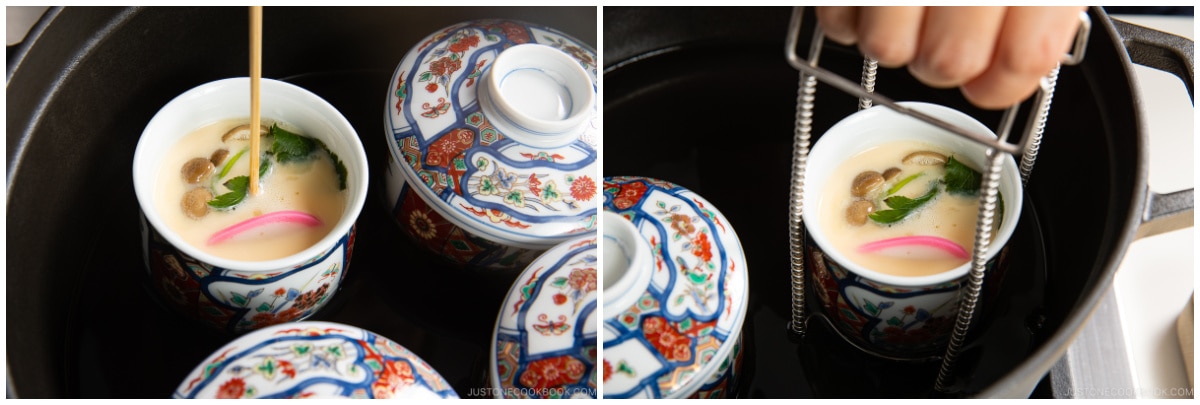
- Check doneness by inserting a skewer. When you insert a bamboo skewer into the center of the chawanmushi and clear juice comes out, it’s done. If the juice is not clear, cook it longer. You can also tilt the chawanmushi cup to see if it is solidified, but be careful as the cups are extremely hot.
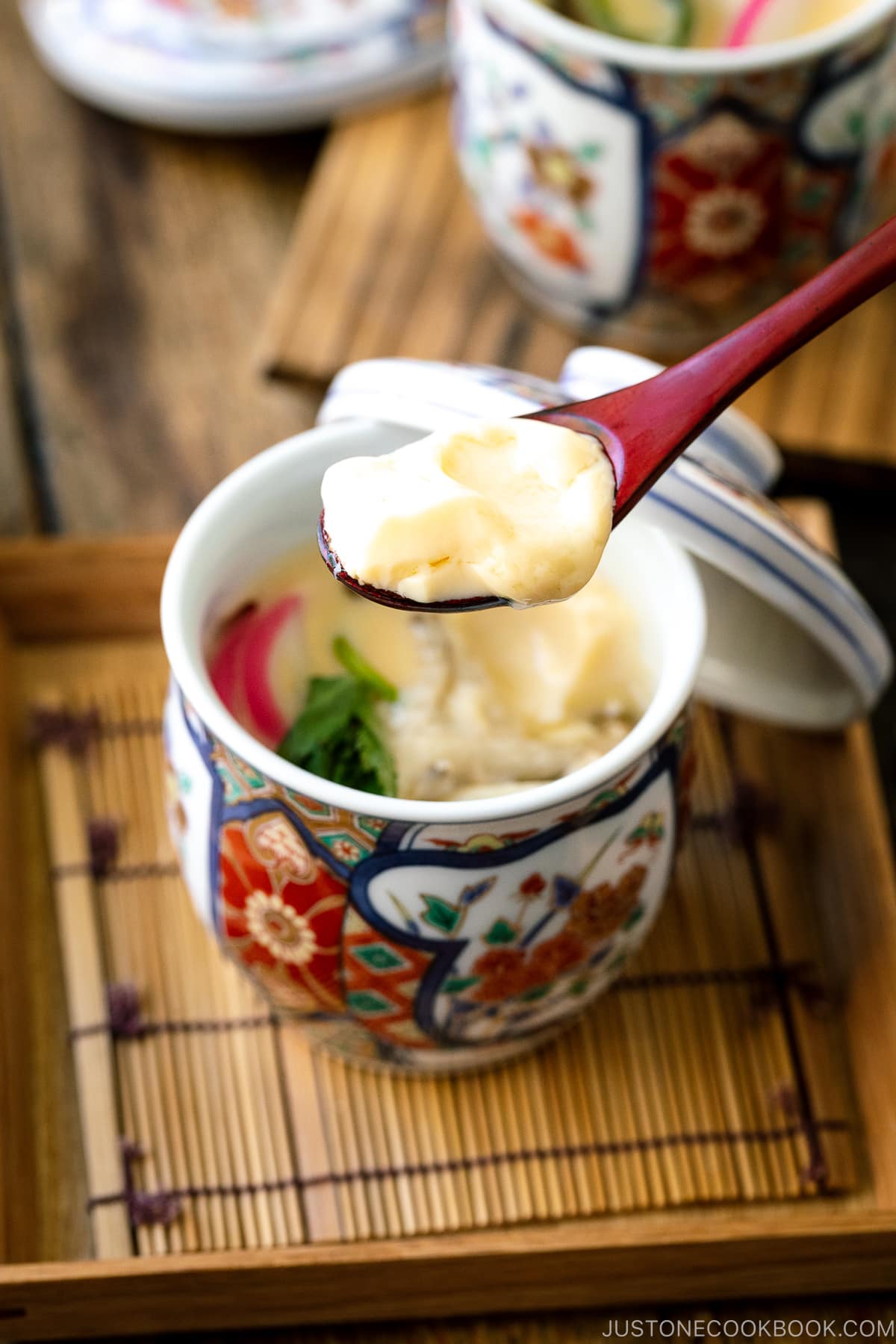
How to Enjoy Chawanmushi
Chawanmushi is typically served hot as an appetizer. Since the custard is very delicate and breaks easily, we eat chawanmushi with a small wooden or lacquer spoon.
Where to Buy Chawanmushi Cups
Chawanmushi is typically served in a special small cup with a lid. You can buy chawanmushi cups at JOC Goods.
Alternatively, you can use heat-resistant ramekins, pretty little small bowls, or mugs to prepare the savory steamed custard. Just make sure they are not too thick as the heat will be hard to penetrate.
Other Delicious Chawanmushi Recipes
There is really nothing like a silky custard with a savory broth topped with delicacies to soothe the hungry stomach while you wait for the main meal to be served. I hope you give this recipe a try because it is easy and practical to make at home.
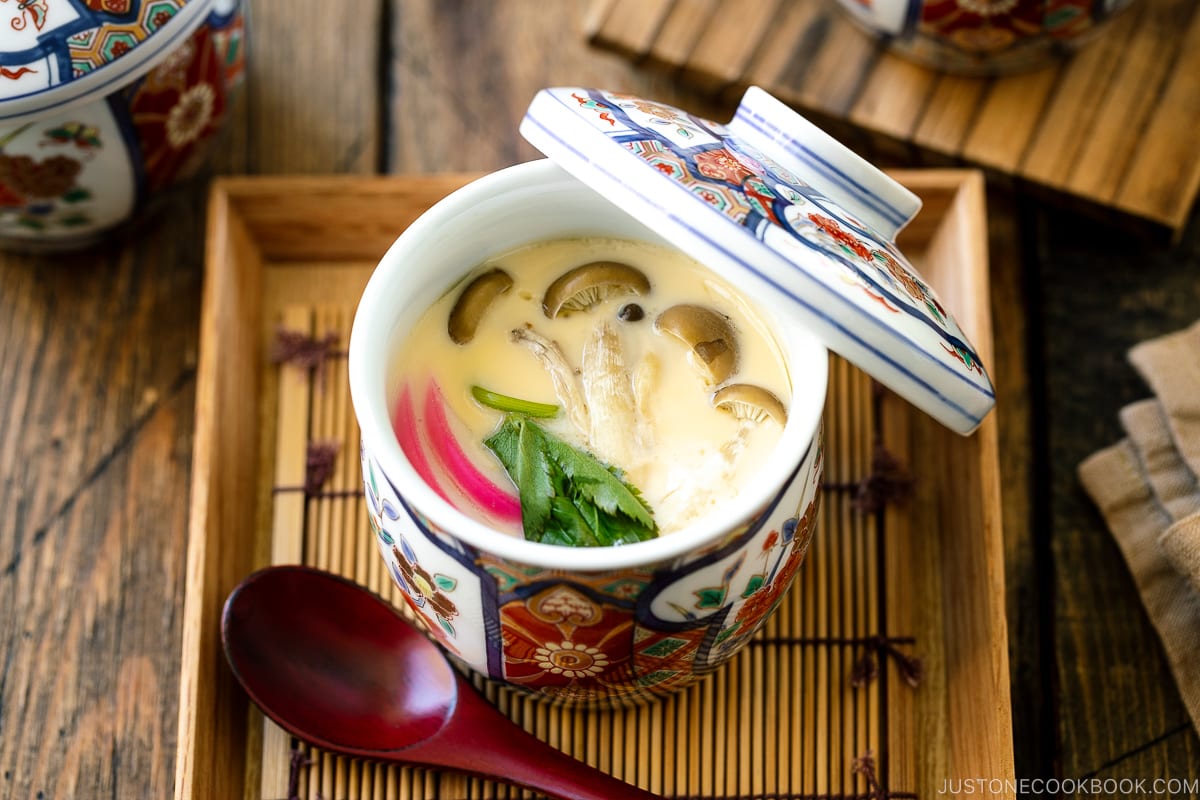
Chawanmushi (Japanese Savory Steamed Egg Custard)
Ingredients
- 2 chicken tenders (skip for vegetarian)
- 8 slices kamaboko (fish cake) (thin slices; skip for vegetarian)
- 1.8 oz shimeji (brown beech) mushrooms (roughly ½ package)
- 4 sprigs mitsuba (Japanese parsley) (or 1 green onion/scallion)
- 8 ginkgo nuts (pre-cooked; optional)
- 1 Tbsp sake (for marinating the chicken)
For the Custard
- 3 large eggs (50 g w/o shell)
- 1¾ cups dashi (Japanese soup stock) (approximately; use Kombu Dashi for vegetarian)
- 1 tsp mirin
- 1 tsp soy sauce (use light-colored usukuchi soy sauce, preferably)
- ½ tsp Diamond Crystal kosher salt
Instructions
Before You Start
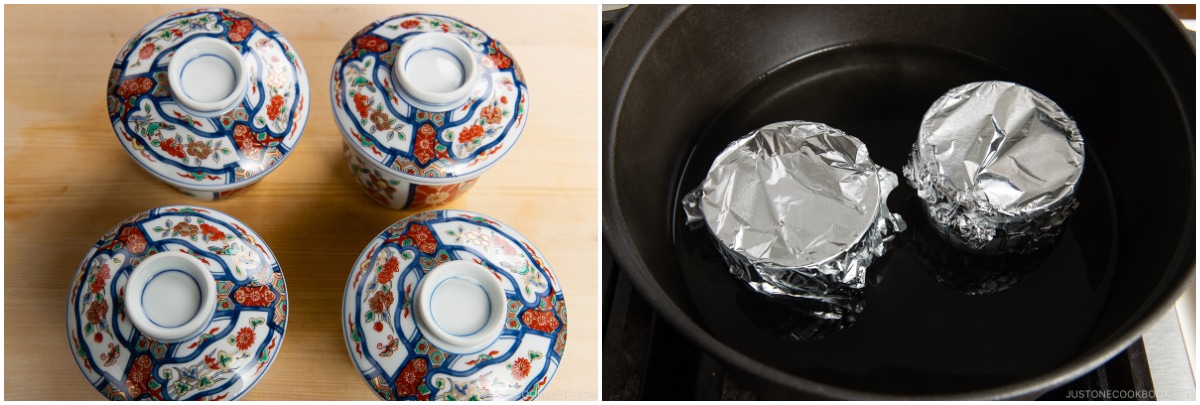
- Note that this recipe is based on 200 ml chawanmushi cups. Cup size and thickness affect cooking time. Avoid thick-walled cups, as the heat won‘t penetrate easily. If your cups don't have lids, make covers from aluminum foil. Find chawanmushi cups at JOC Goods.
To Prepare the Hot Water Bath
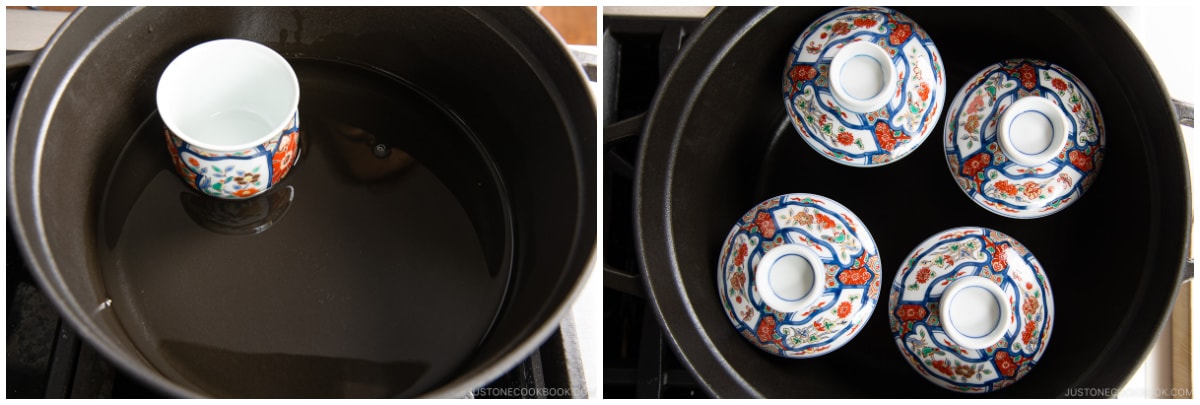
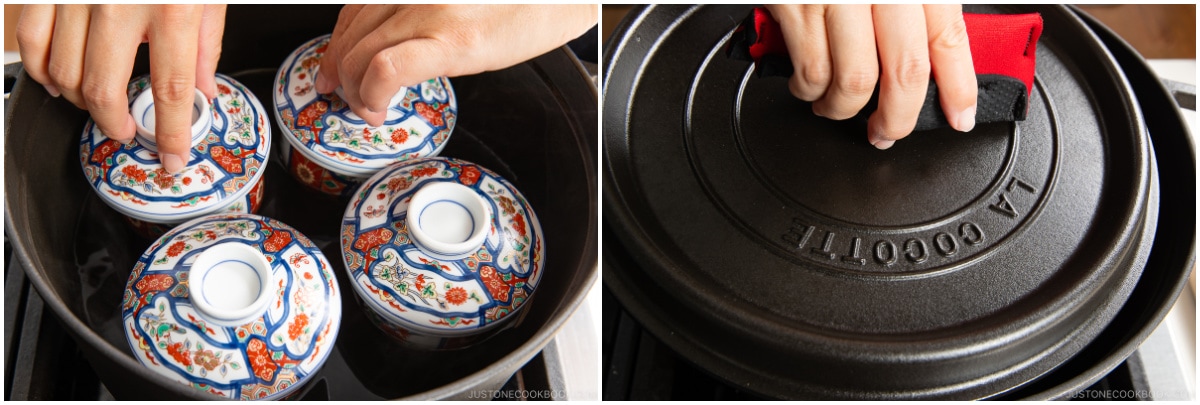
- Place the chawanmushi cups with lids in a large pot. Add enough water to the pot to reach halfway up their sides, then remove them. Cover the pot with a lid, bring it to a boil, and turn off the heat.
To Prepare the Ingredients
- Gather all the ingredients.
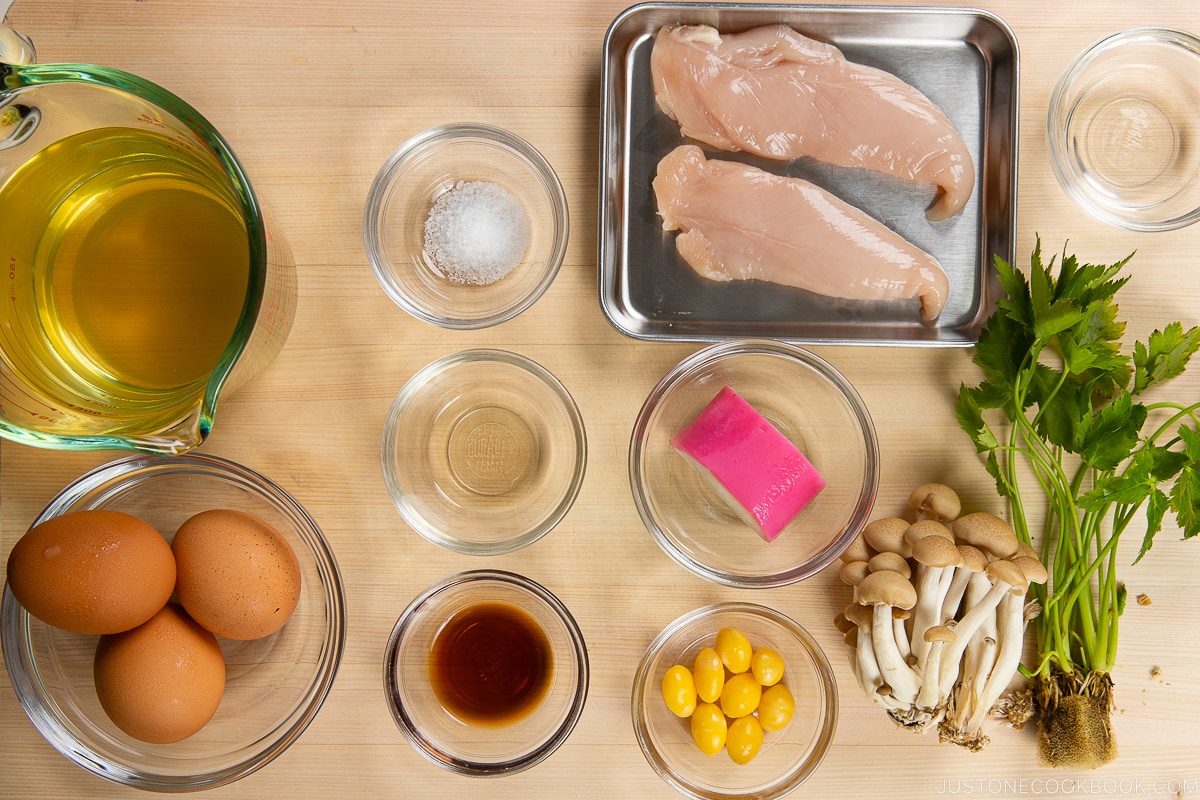
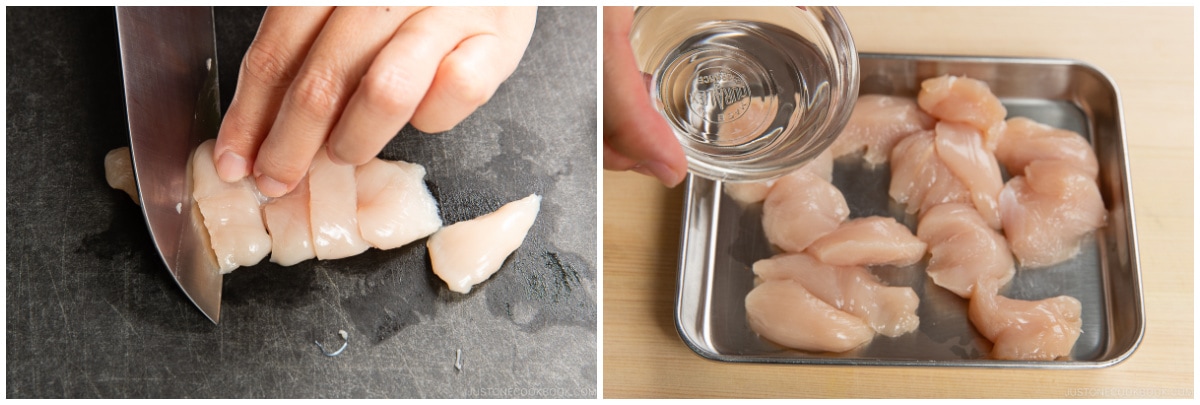
- Cut 2 chicken tenders into ½-inch (1.3 cm) pieces. Place in a tray or bowl, toss with 1 Tbsp sake, and marinate for 10 minutes.
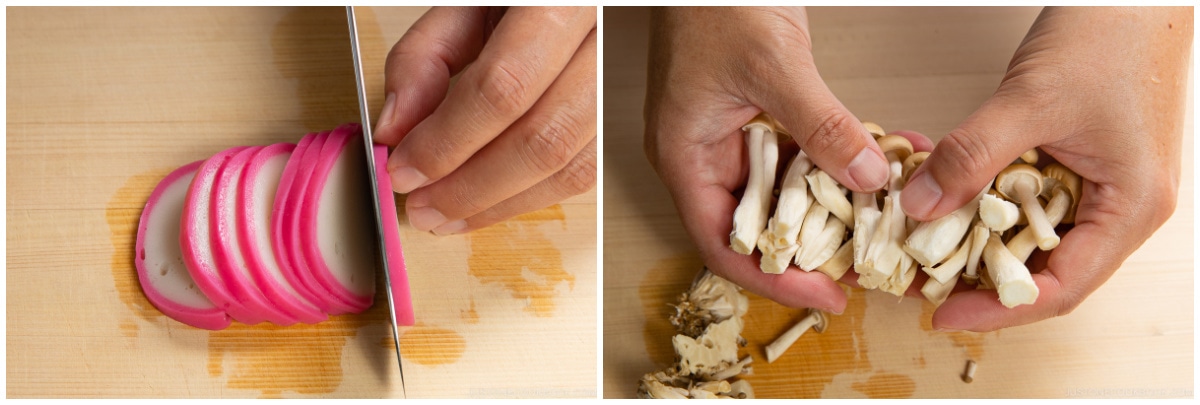
- Cut 8 slices kamaboko (fish cake) thinly. Trim the roots off 1.8 oz shimeji (brown beech) mushrooms and separate them into small clusters.
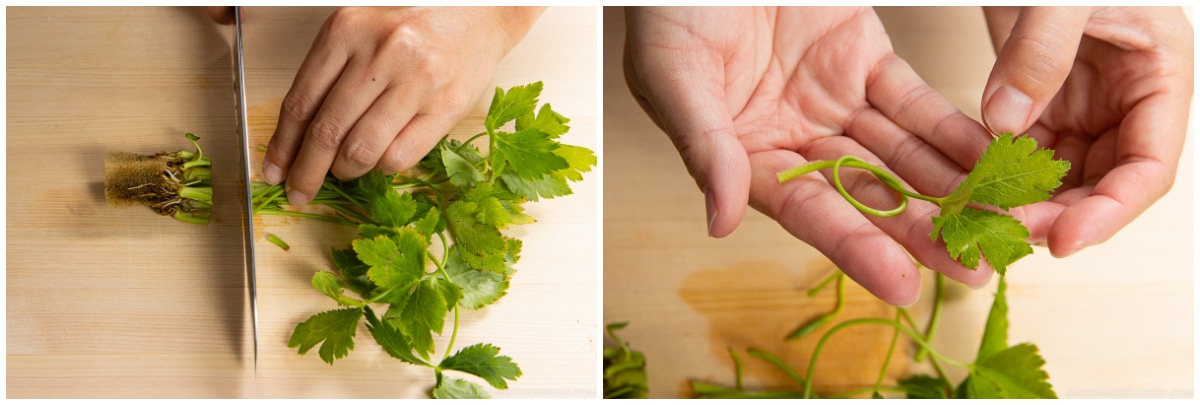
- Loosely knot each stem of the 4 sprigs mitsuba (Japanese parsley). Alternatively, thinly slice the green onion if using instead.
To Mix the Custard
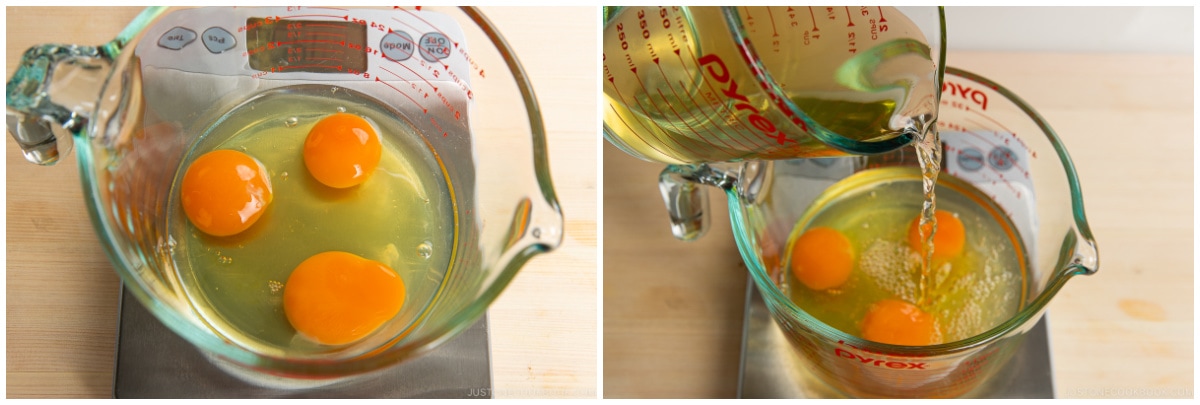
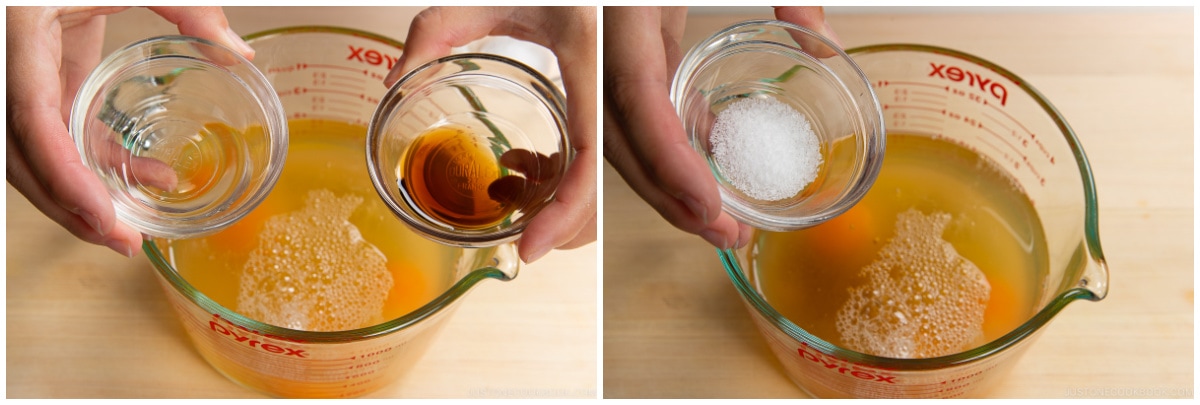
- Crack and weigh 3 large eggs (50 g w/o shell) in a measuring cup or bowl set over a kitchen scale. Multiply the egg weight by 2.5 to calculate how much dashi to use and add it to the eggs. Nami's Tip: For example, 150 g eggs x 2.5 = 375 ml dashi (egg-to-dashi ratio of 1:2.5). To measure the dashi, I zero out (tare) the scale and pour the stock directly into the eggs. I weigh and mix everything in a glass measuring cup for easy pouring later.
- Add 1 tsp mirin, 1 tsp soy sauce, and ½ tsp Diamond Crystal kosher salt to the egg mixture.Nami's Tip: Add less or more seasoning for how much egg you used, as I based these measurements on an egg weight of 150 g. If you have it, use usukuchi soy sauce because it keeps the custard color lighter.
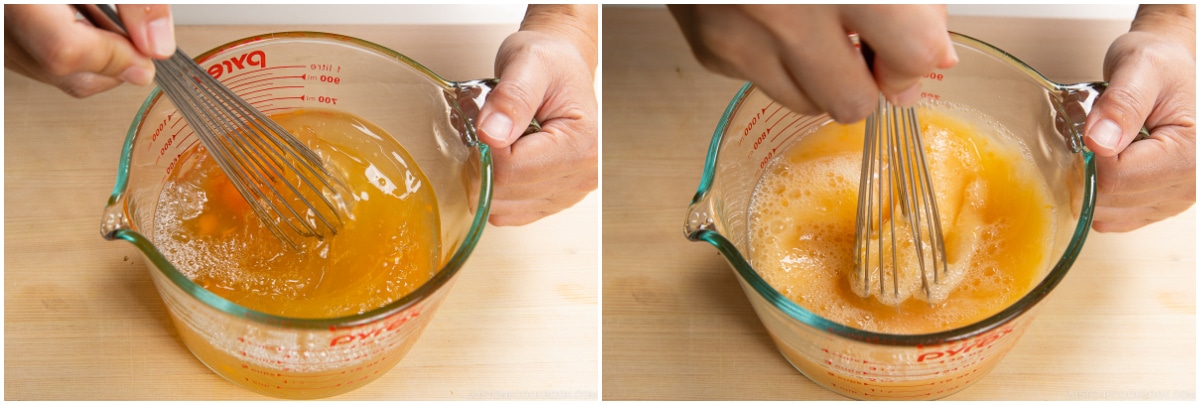
- Whisk the egg and dashi mixture until the egg whites and yolks are fully combined.
- Strain the egg mixture through a fine-mesh sieve into another bowl. Nami's Tip: Straining achieves a refined silky texture.
To Assemble the Cups
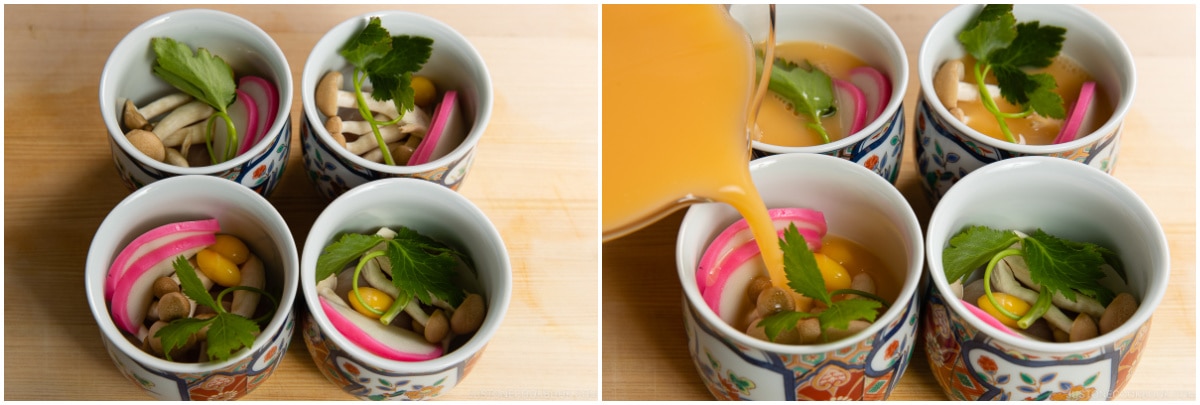
- Layer the chicken on the bottom of each cup, then add the shimeji mushrooms and ginkgo nuts (if using).
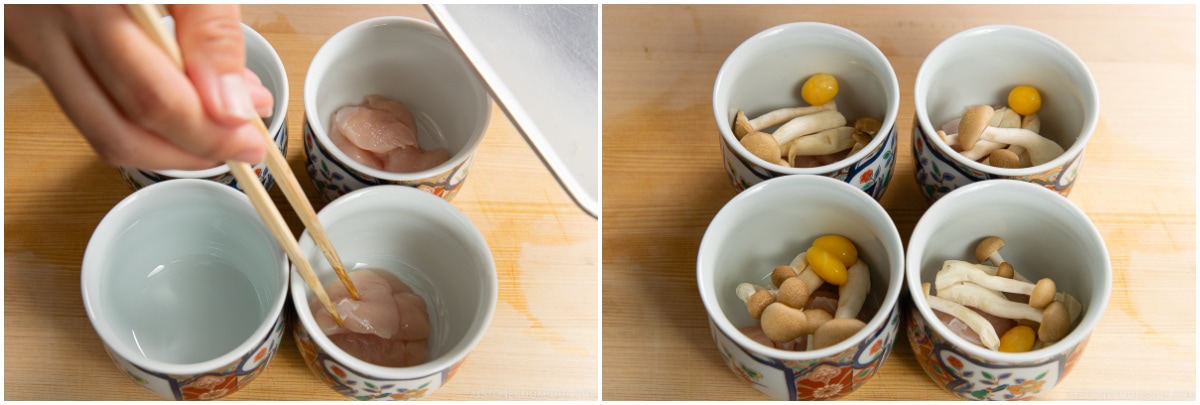
- Arrange kamaboko and mitsuba (or green onion) on top. Pour the egg mixture until cups are 80% full, keeping the top layer partly uncovered. Remove any air bubbles with a spoon or skewer.Nami's Tip: Air bubbles create a rough texture on the cooked custard.
To Steam the Chawanmushi
- Bring the pot of water back to a boil and reduce to the lowest heat. Keep the water between 176–194ºF (80–90ºC) throughout steaming. Carefully lower the cups into the water, cover with their lids, and set the pot lid slightly ajar. Steam for 20 minutes, or 15 minutes if you omitted the chicken.Nami's Tip: Monitor closely, as the size and thickness of your cups affects the cook time. Do not boil, or the finished custard will not be smooth.
- Test doneness by inserting a skewer into the center: clear liquid means it's ready. Tilt to confirm the custard is set throughout, then carefully lift the cups from the water.Nami's Tip: I removed the lids first and lifted out the cups with a hot plate gripper.
To Serve
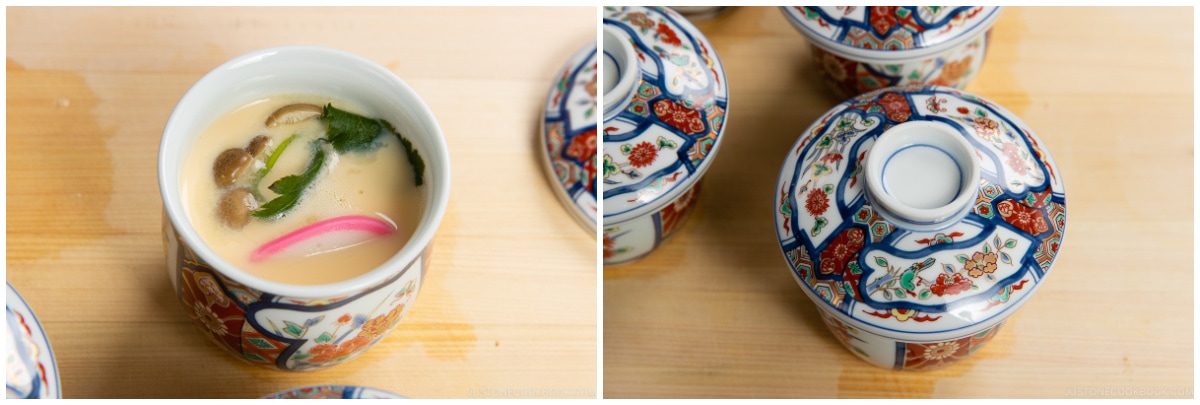
- Place the lids back on. Serve the chawanmushi hot or warm with a small spoon.
To Store
- Refrigerate leftovers in their cups for up to 2 days. To reheat, steam for 2 minutes until warmed through.
Notes
Nutrition
Did you make this recipe?
Tag @justonecookbook on Instagram so we can see your delicious creation!
Editor’s Note: This post was originally published on September 7, 2011. It’s been republished on October 2, 2022, with more content, new images, and a slightly revised recipe.