

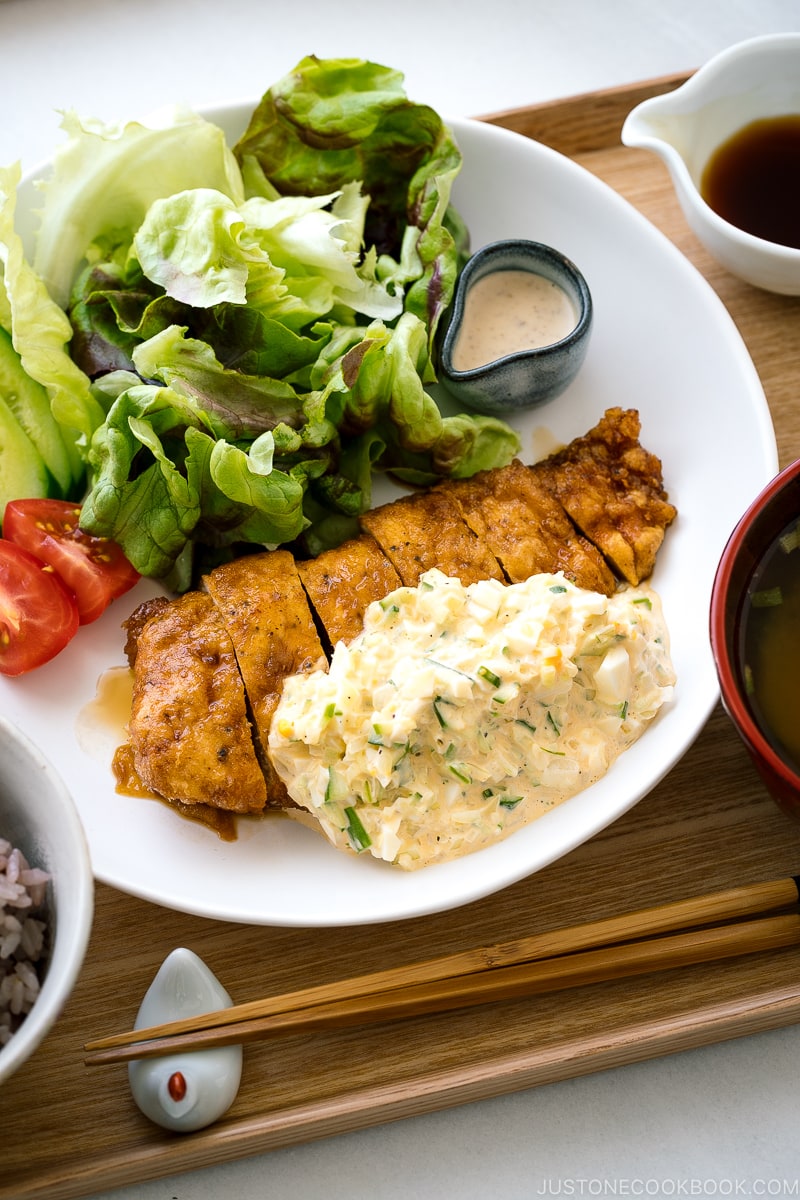
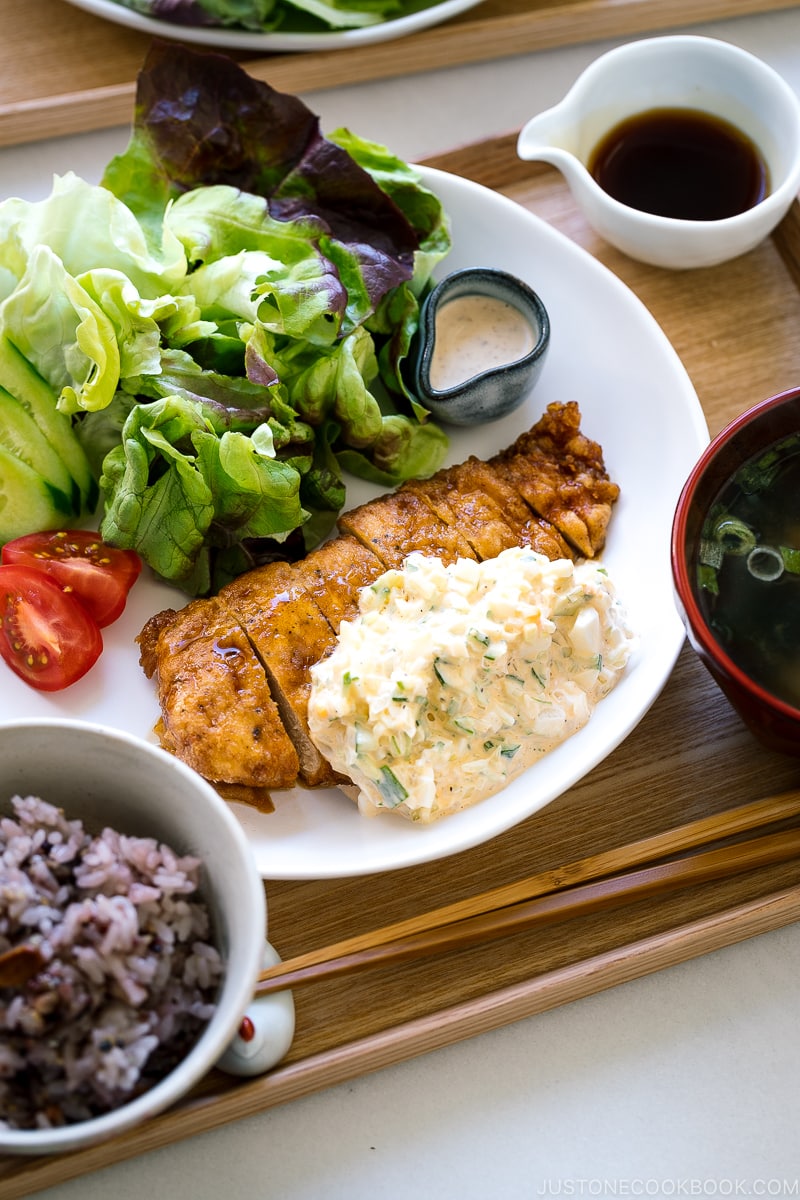
From a small region in southern Japan, Chicken Nanban (チキン南蛮), once a relatively unknown dish, has become one of the country’s most popular ways to enjoy fried chicken (karaage).
The dish is made with fried chicken dressed with a sweet and tangy nanban sauce and served with creamy tartar sauce for the finishing touch.
So, what sets Chicken Nanban apart from the other styles of Japanese fried chicken? The flour and egg coating. This method protects the meat from drying out while yielding a light, yet tasty crust that helps to soak up the sauces wonderfully. It is like a whole other level of chicken— you have to taste it to experience it!
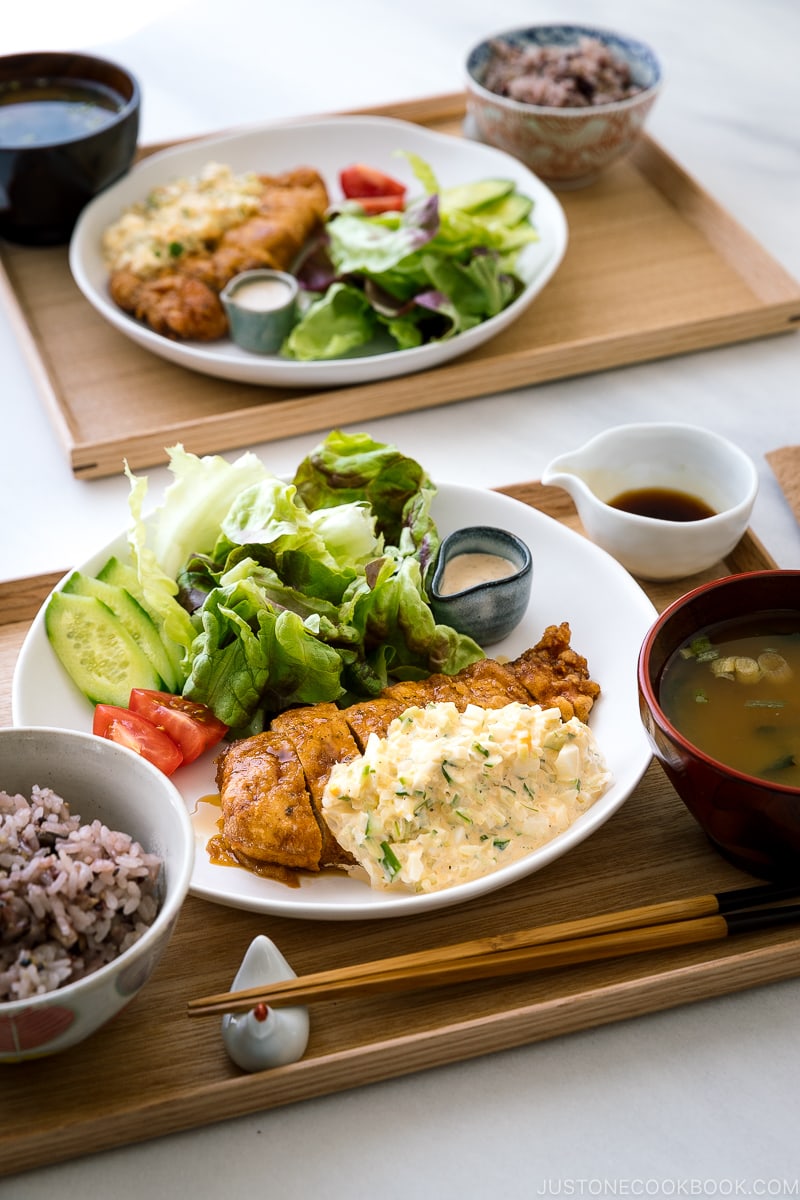
What is Chicken Nanban
The origin of the word “nanban” (南蛮) has a pejorative overtone (literally translated to “southern barbarian” from the Chinese word “naanmaan”), but it became a term used in Japan to denote something foreign and highly desirable.
When the first Europeans came to Japan in 1543, they arrived from Portugal and brought with them innovative dishes that have become some of Japan’s most popular foods today. Some delicious examples of Portuguese-inspired Japanese dishes include Castella Cake, Tempura, and Salmon Nanbanzuke.
Chicken Nanban was created in a small town in the Miyazaki Prefecture of Kyushu, Japan’s southernmost island. Allegedly, it was a humble meal made for the staff of a local diner Nao-chan during the 1950s, and it quickly gained popularity as a menu item throughout Kyushu before finding its way around the rest of Japan.
Quick Overview of This Dish
- Flavor: The balance between tender bites of fried chicken, sweet and tangy nanban sauce and creamy tartar sauce are what leaves people wanting more! It’s a unique combination that everyone should try.
- Texture: The flour-coated chicken is dipped in beaten egg and goes straight into the hot oil. Fried chicken has a nice crunch until it is coated with the refreshing nanban sauce. While the breading is no longer crispy, it still adds to the texture of the dish as being distinctly different from the chicken. With the creamy tartar sauce, the chicken brings layers of unique textures.
- Time: The nanban sauce and tartar sauce take around 20 minutes to prepare, and prep time for the chicken is about 10 minutes. Once the frying process begins, this dish can be made in less than a half hour!
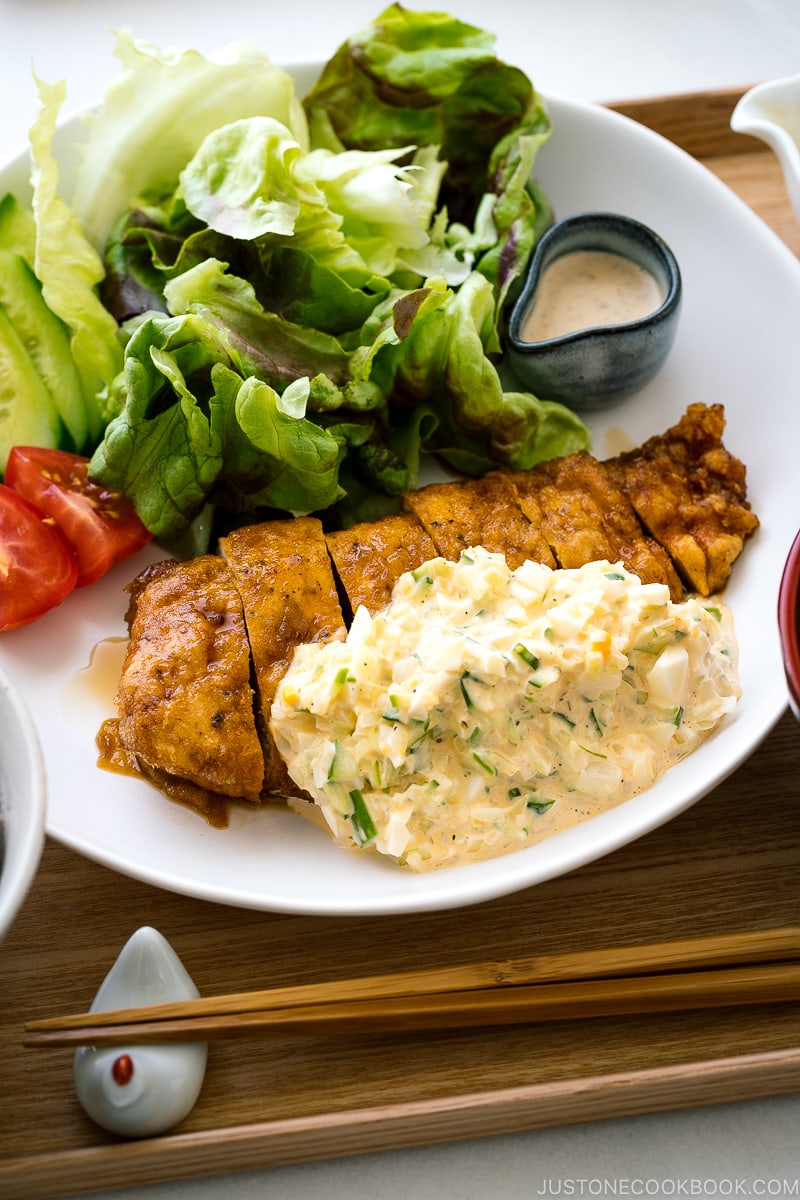
Nanban Sauce and Tartar Sauce
Chicken Nanban is served with both sweet and tangy nanban sauce (or nanbanzu in Japanese; 南蛮酢) and creamy tartar sauce. However, the original recipe served at Nao-chan did not, and still does not, come with tartar sauce.
There are countless variations of this dish and I personally enjoy the complex flavors of the juicy chicken, the slight acidity of the nanban sauce, and the tartar sauce—all in one bite!
How to Make Chicken Nanban
Ingredients You’ll Need
- Chicken: You can use boneless, skinless chicken breasts or thighs for chicken nanban—both variations are common in Japan. For my recipe, I used chicken breasts because it is easier to create an even thickness.
- Flour and Eggs: For coating the chicken.
- Nanban Sauce: Just 4 ingredients—rice vinegar, soy sauce, mirin and sugar.
- Tartar Sauce: You need a boiled egg, onion, cucumber, Japanese mayonnaise, rice vinegar, salt and pepper.
Overview: Cooking Steps
- Make the tartar sauce.
- Make the nanban sauce.
- Prepare the chicken and coat it with flour.
- Dip the chicken in beaten egg and deep fry until golden.
- After draining the excess oil, coat the chicken with the nanban sauce. Serve the chicken with the tartar sauce on top.
5 Recipe Tips for Chicken Nanban
Tip 1: Butterfly the Chicken
Typically, Chicken Nanban is served in one big piece— like a cutlet—that is sliced into pieces. You’ll need to make sure the entire piece of chicken is cooked through evenly, which can be tricky. Therefore, I prefer chicken breasts because they’re easier to butterfly and create an even thickness. When cooked right, breasts should never be dry.
On the other hand, thighs can be flavorful, but it could end up with the thinner side being overcooked and the thick side undercooked. If you prefer to use thighs, I suggest pounding them with a meat mallet or cutting them into bite-sized pieces before frying.
Tip 2: Fry at the Right Temperature
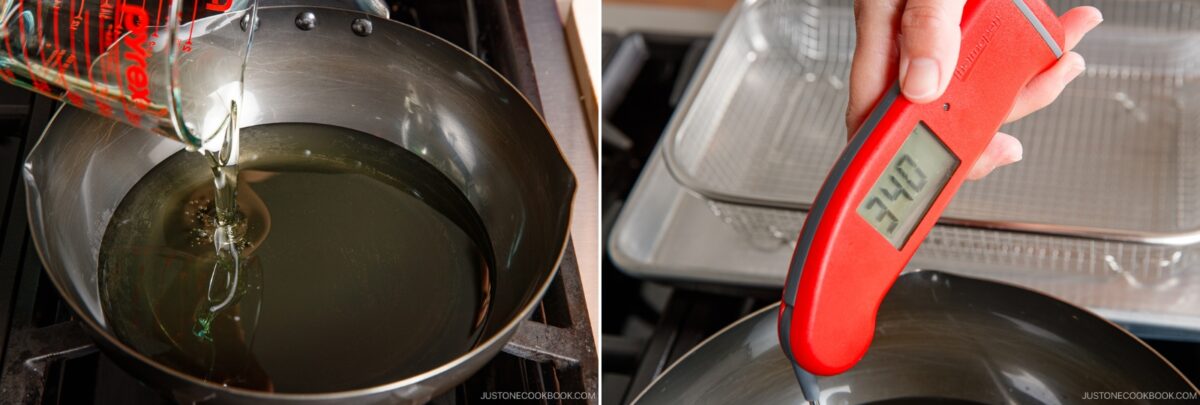
99% of a successful fried recipe relies on the technique. The number one rule is to make sure your oil is at the right temperature. Too low, the food will be saturated in oil; too high, the outside will cook faster than the inside. Also, never overcrowd the pan.
Use a thermometer for the oil (I use a Thermapen instant-read thermometer and love it!) It takes away any guesswork, ensuring your chicken is properly cooked every time. For a more comprehensive guide on deep frying food, read this post.
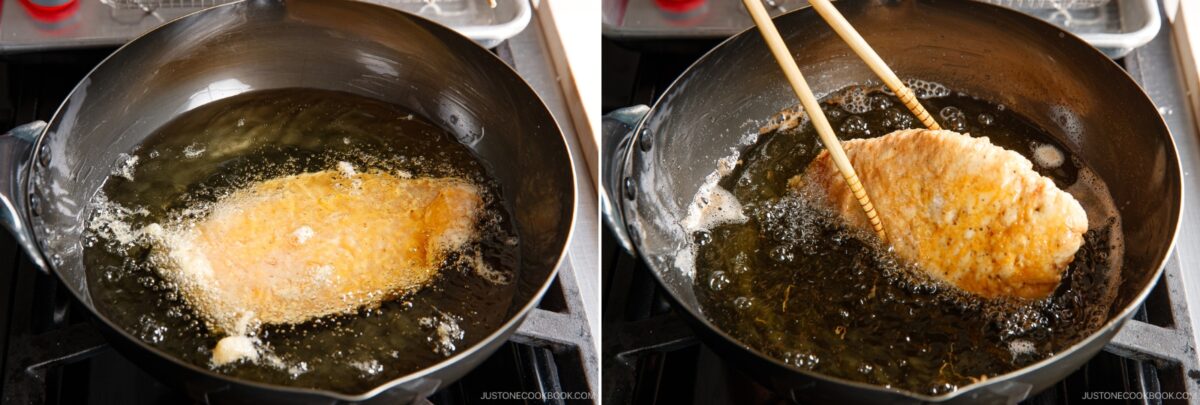
Tip 3: Don’t Touch the Chicken in the Oil for One Minute
Once the chicken is added to the frying oil, do not touch or flip for at least a minute. This helps the egg coating to stick and stay on the meat. If you flip too quickly, your utensil may break the thin coating.
Tip 4: Coat the Chicken with Nanban Sauce While Hot
Once all the chicken is done being fried (with excess oil shaken off), toss your chicken with the nanban sauce immediately. This helps the chicken absorb the sauce quickly.
Tip 5: Soak the Chopped Onion in Water
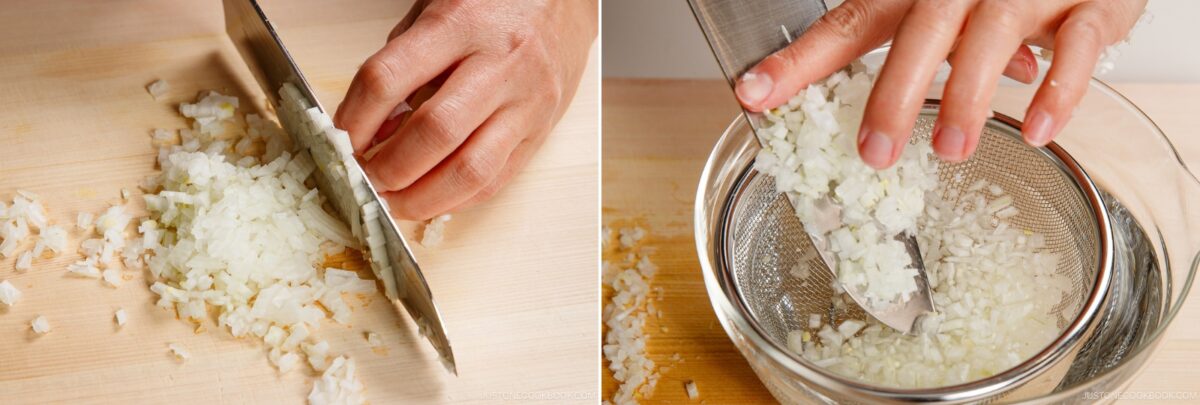
Many people do not enjoy the raw onion taste (sharp and pungent!) and decide to skip it altogether. But wait, I have a tip for you: soak the onion in cold water for 5-10 minutes to rid the astringent taste! We use the same trick to make salad dressing and sauce.
For our tartar sauce, the texture of finely-chopped onion is extremely important, giving a fresh crisp bite in the creamy sauce. So, soak the onion prior to making your sauce and say goodbye to that pungent onion taste!
On the topic of the tartar sauce, use Japanese mayonnaise such as Kewpie, preferably. It has that signature taste that you’re looking for. If you can’t find it, I have a recipe hack here.
The One Vinegar You Need in Your Pantry
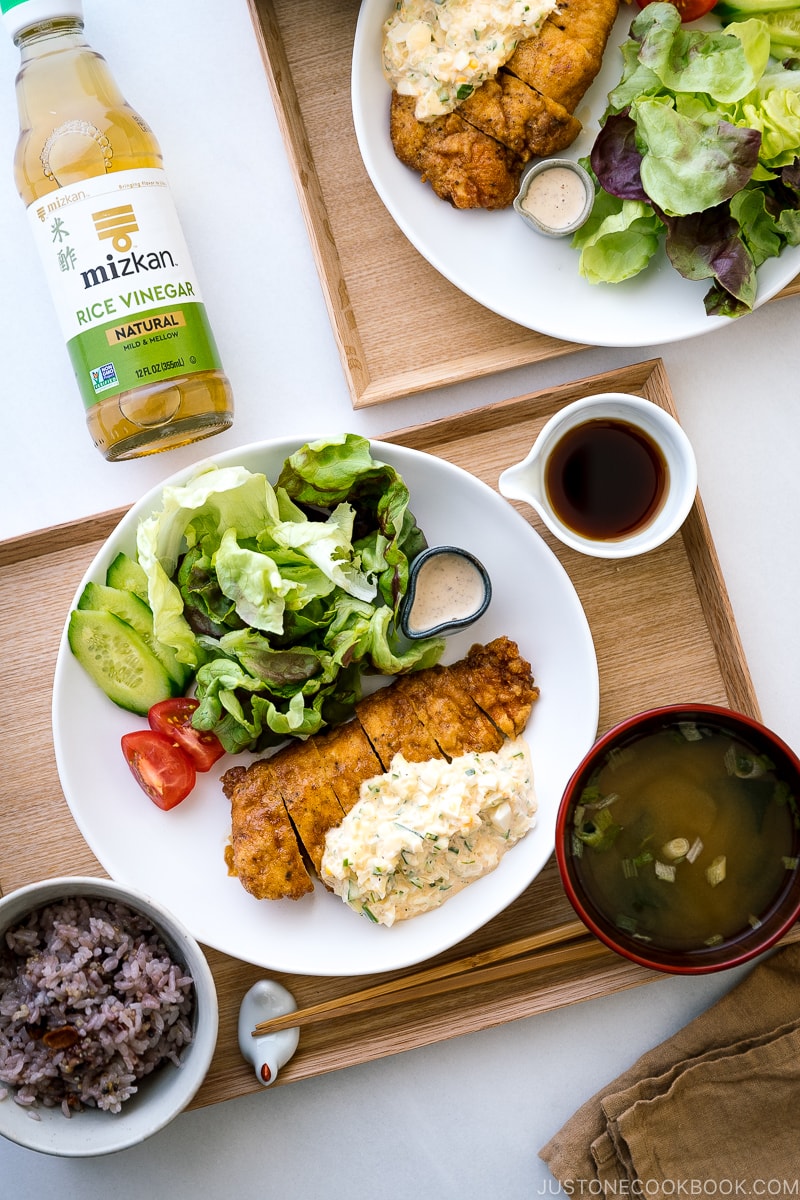
When making this four-ingredient nanban sauce, don’t be deterred by the vinegar. I use rice vinegar because it’s milder in taste and not quite as acidic as other vinegars. The sugar (and mirin) in this sauce is necessary to cut the acidity and complement the fried food.
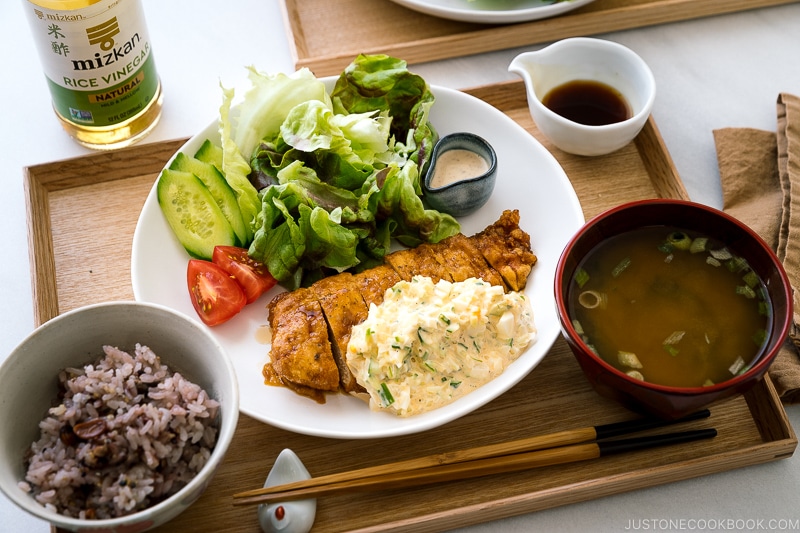
I can’t emphasize enough that it’s important to use rice vinegar when making Japanese food. Rice vinegar is a lot milder than the other kinds of vinegar. The only brand I’ve been using ever since I started cooking is Mizkan Natural Rice Vinegar. I personally use many types of Mizkan sauces and condiments for my home cooking. As a leading brand in Japan for over 215 years, I trust Mizkan for bringing authentic Japanese flavors to our dinner table, just as my grandmother and my mom did.
If you love using vinegar in your cooking, you can follow Mizkan on Facebook, Instagram, Twitter, and Pinterest for Japanese-inspired recipes and other quick and delicious usage ideas.
How to Enjoy Chicken Nanban
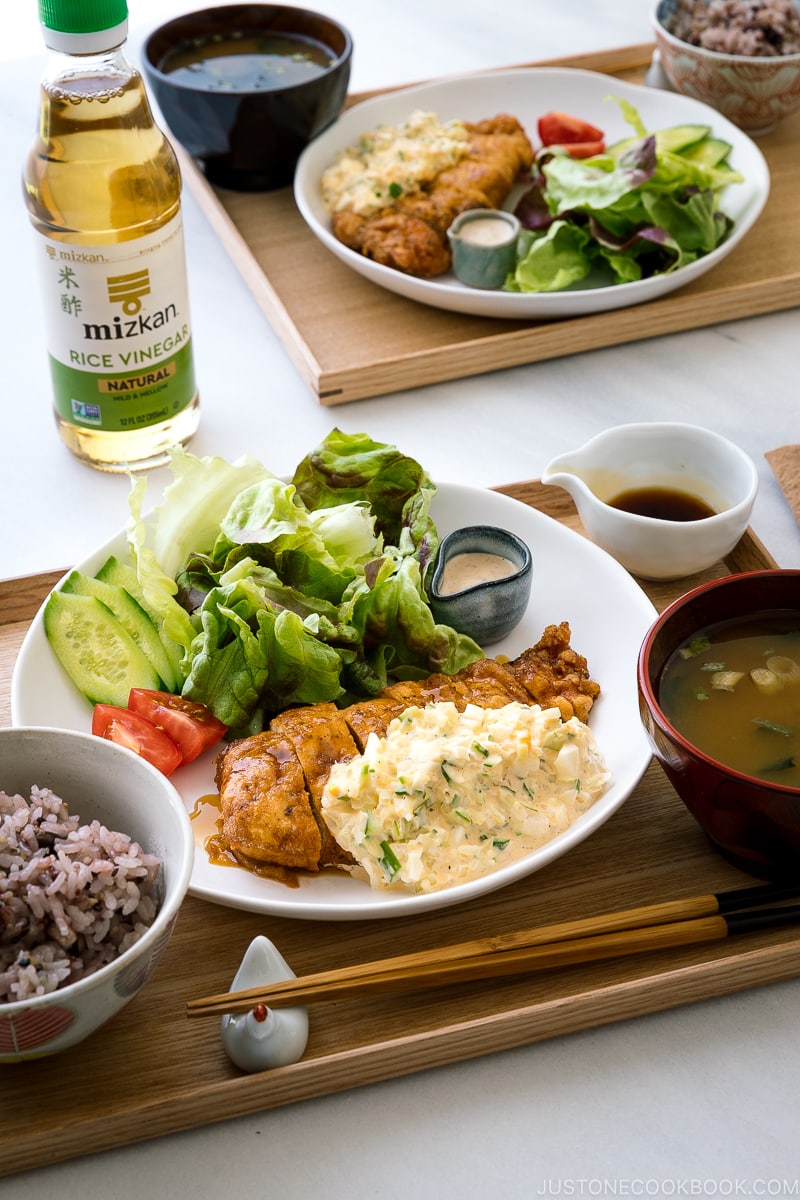
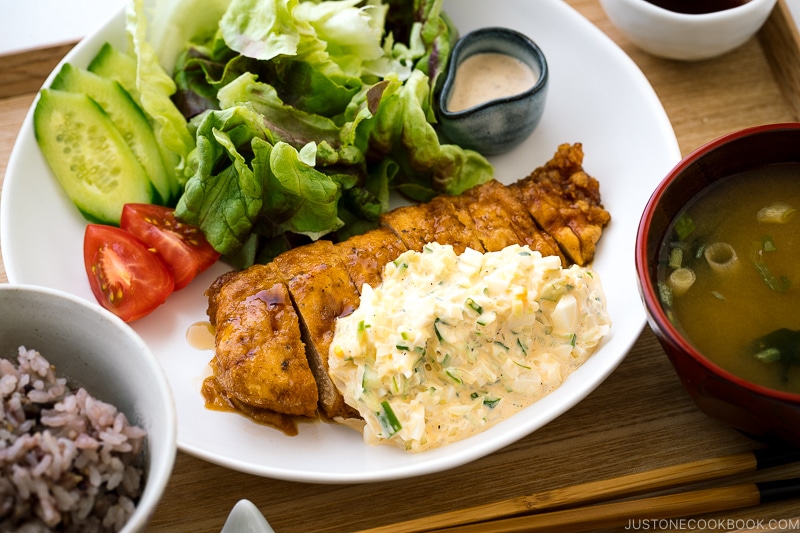
Chicken Nanban is typically enjoyed as a main dish to serve with rice and a side of soup. Since it’s a fried dish, it’s always best to serve with more vegetable-focused side dishes. Here, I serve the Chicken Nanban with the green lettuce with the Japanese sesame dressing, but you can enjoy it with other salads such as:
- Japanese Cucumber Salad
- Asian Coleslaw with Sesame Dressing
- Japanese Potato Salad
- Tofu Salad with Sesame Ponzu Dressing
- Japanese Kani Salad
- Harusame Glass Noodle Salad
- Japanese Macaroni Salad
Wish to learn more about Japanese cooking? Sign up for our free newsletter to receive cooking tips and recipe updates! And stay in touch with me on Facebook, Pinterest, YouTube, and Instagram.
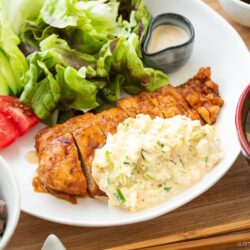
Chicken Nanban (Fried Chicken with Tartar Sauce)
Ingredients
- 1 boneless, skinless chicken breast (10.5 oz, 300 g)
- 1 large egg (50 g w/o shell)
- 1 Tbsp all-purpose flour (plain flour) (plus more, if needed)
- ⅛ tsp Diamond Crystal kosher salt
- ⅛ tsp freshly ground black pepper
- 2 cups neutral oil
For the Nanban Sauce
- 2 Tbsp rice vinegar (unseasoned)
- 2 Tbsp soy sauce
- 1 Tbsp mirin
- 2 Tbsp sugar
For the Tartar Sauce
- 1 large egg (50 g w/o shell)
- ½ Japanese or Persian cucumber (1.8 oz, 50 g; 4 Tbsp, finely chopped; or use a cucumber pickle and omit the rice vinegar below)
- ¼ onion (1.8 oz, 50 g)
- 3 Tbsp Japanese Kewpie mayonnaise
- 1 tsp rice vinegar (unseasoned)
- ⅛ tsp Diamond Crystal kosher salt
- ⅛ tsp freshly ground black pepper
Instructions
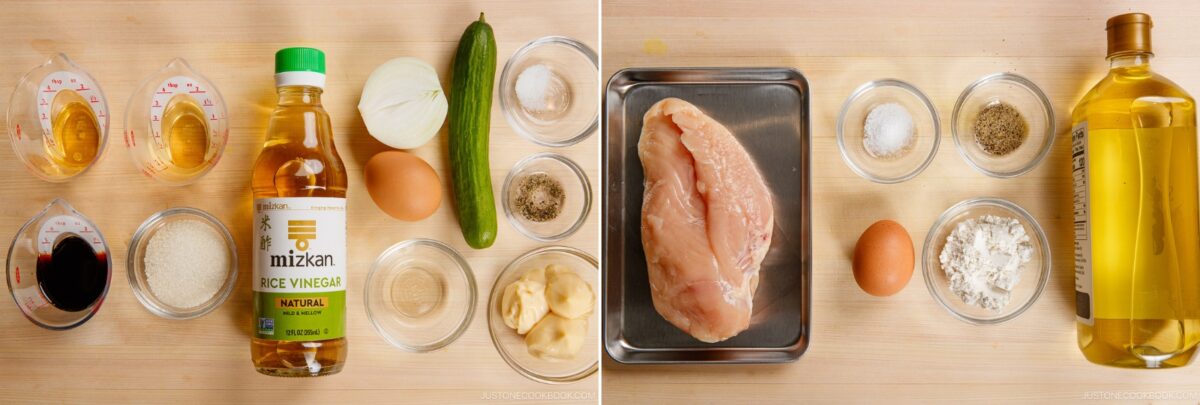
- Gather all the ingredients.
To Make the Tartar Sauce
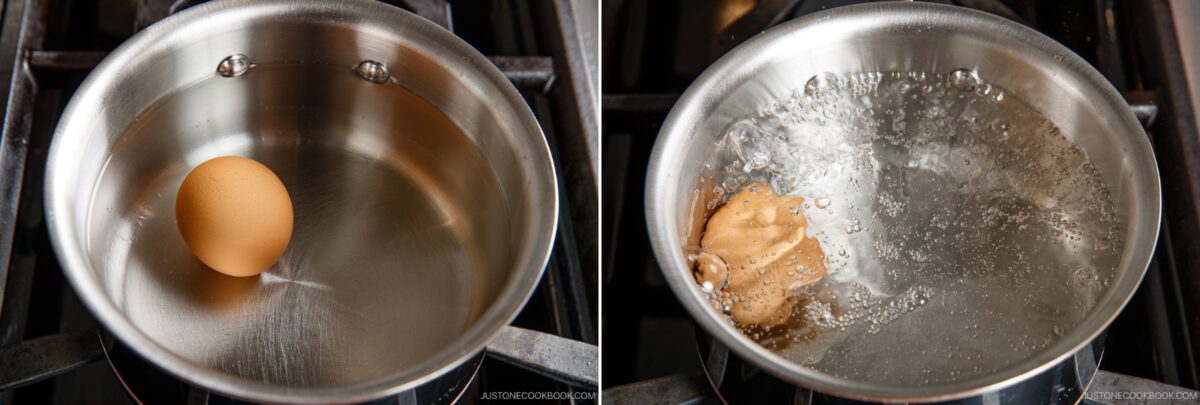
- Place 1 large egg (50 g w/o shell) in a saucepan. Cover with water by one inch. To keep the egg from bouncing and cracking, bring to a boil over medium heat, then reduce to a gentle simmer for 12 minutes.
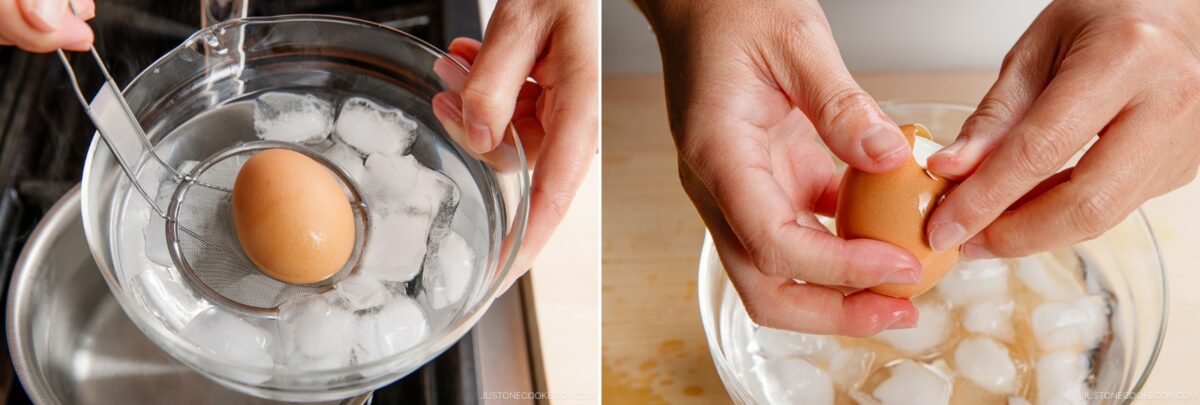
- Remove from the heat. Submerge the egg in iced water to stop the cooking. When cool enough to handle, peel and set aside.
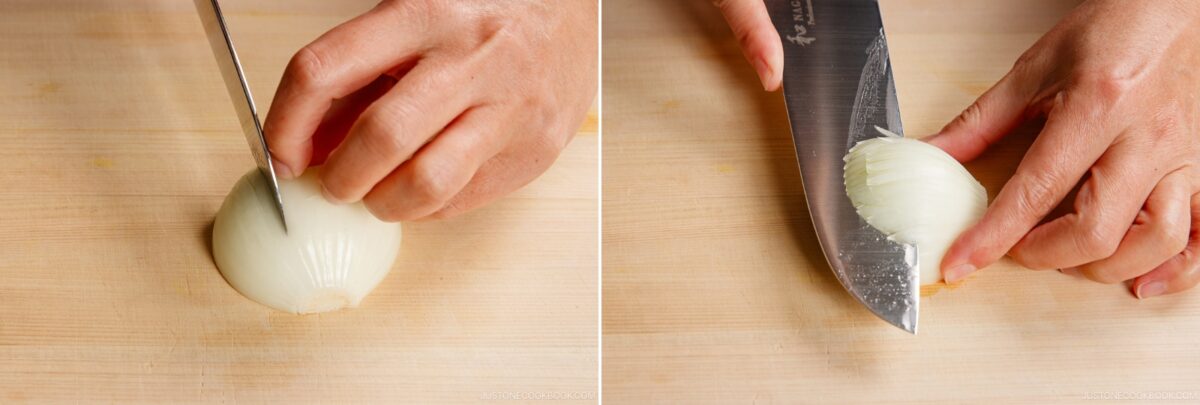
- Mince ¼ onion as finely as possible. Place it cut side down. Make ⅛-inch (3 mm) vertical slices to within ½ inch of the root end. Cut 2–3 horizontal slices toward the root.
- Slice crosswise ⅛ inch (3 mm) for an even mince. Mince finer by running your knife through them in a rocking motion. Submerge the onion in cold water for 5–10 minutes.Nami's Tip: Soaking the onion removes the sharpness.
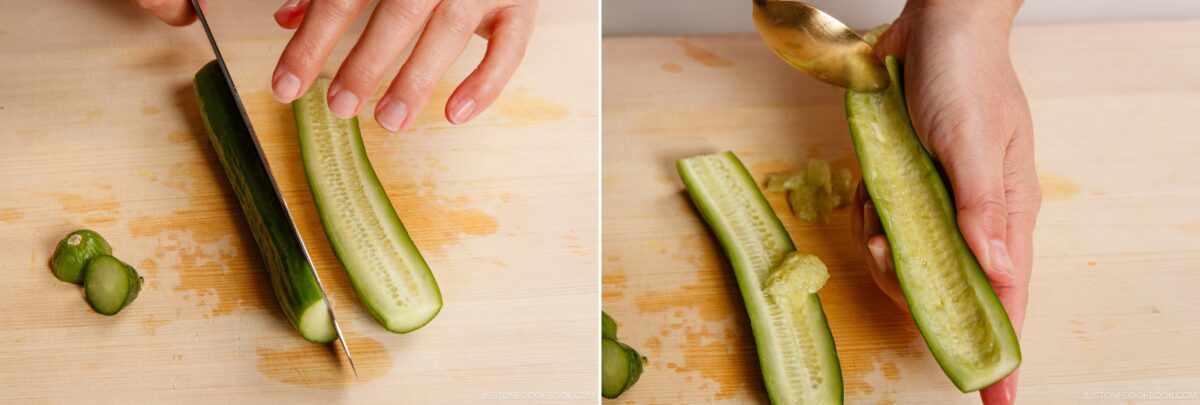
- Cut off the ends from ½ Japanese or Persian cucumber. Slice in half lengthwise. Remove the seeds with a spoon.Nami's Tip: Scooping out the seeds keeps excess moisture out of the tartar sauce.
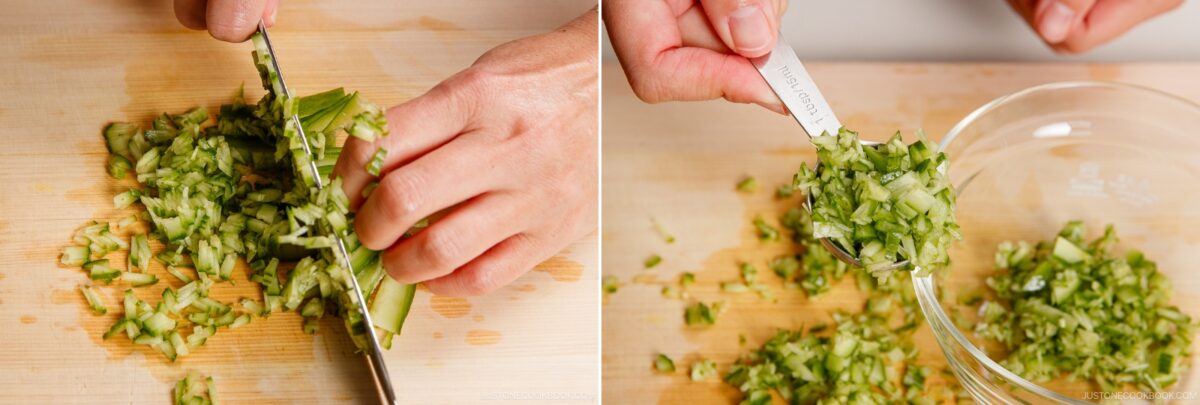
- Cut the cucumber halves lengthwise into thin strips.
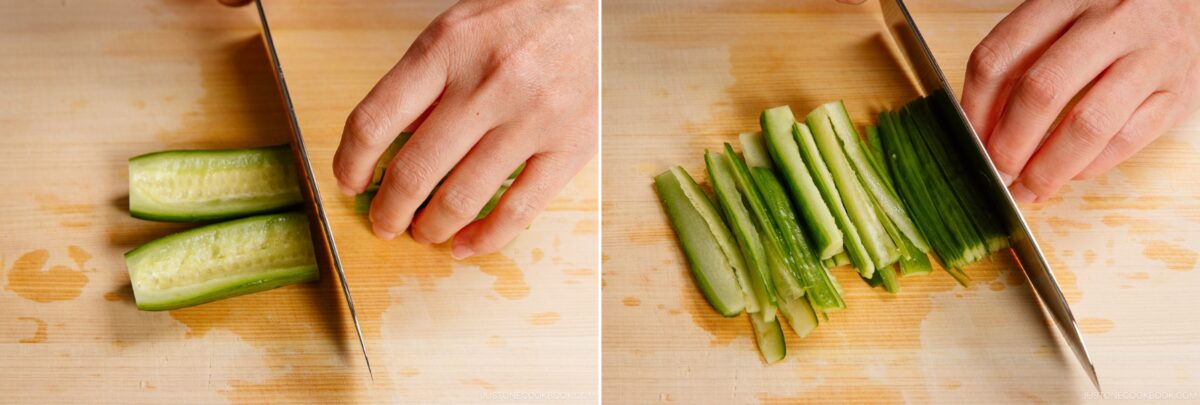
- Finely mince them crosswise into ⅛-inch (3 mm) pieces. Place in a medium bowl. I used 3 heaping tablespoons of finely chopped cucumber for two servings. Nami's Tip: Reserve the leftover cucumber to use in a salad or as topping for cold udon noodles.
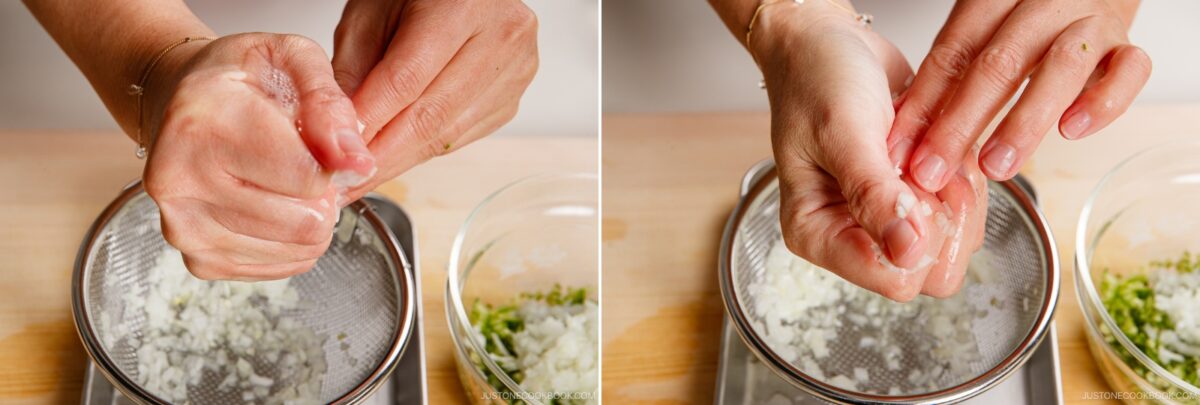
- Drain the onion in a fine-mesh colander. Squeeze out the excess moisture. Add them to the bowl with the cucumber. Nami's Tip: Use roughly the same amount of cucumber and onion.
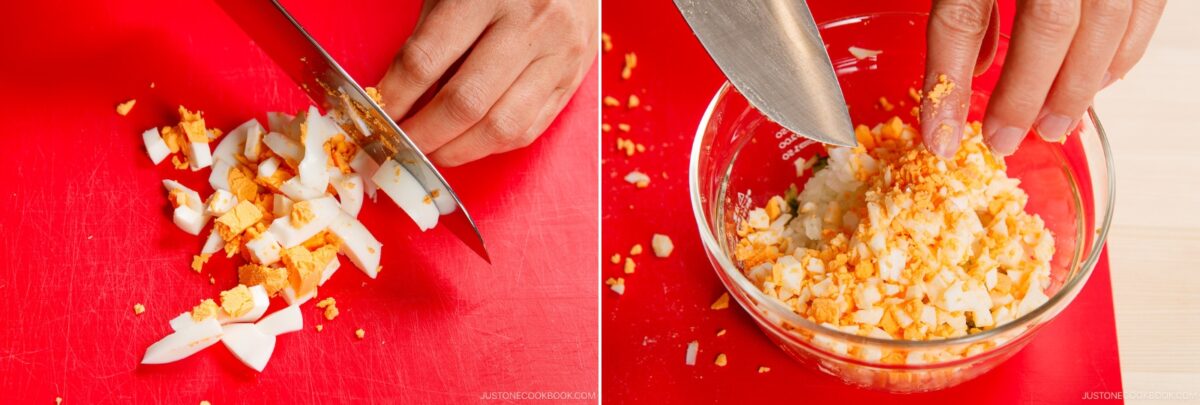
- Mince the boiled egg, especially the egg white. Add to the cucumber and onion.
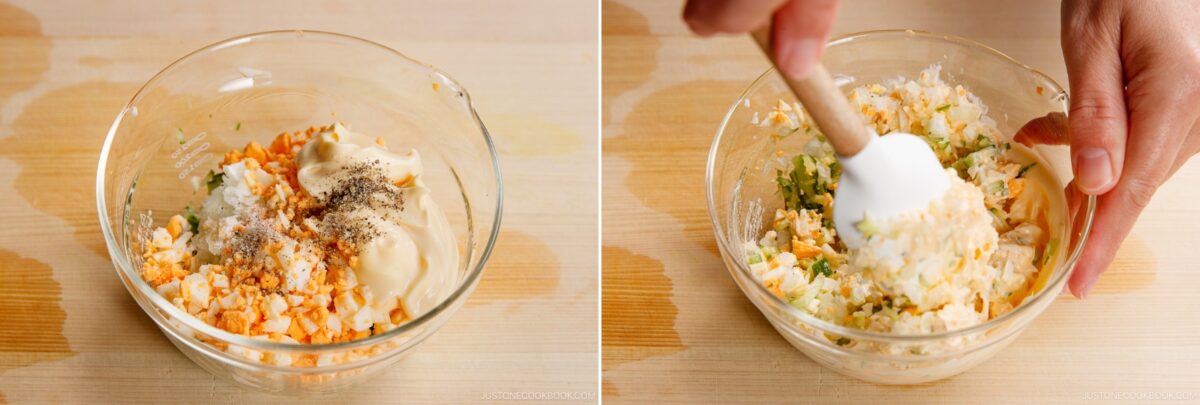
- Add 3 Tbsp Japanese Kewpie mayonnaise, 1 tsp rice vinegar (unseasoned), ⅛ tsp Diamond Crystal kosher salt, and ⅛ tsp freshly ground black pepper. Mix well. Cover the bowl and refrigerate until serving.
To Make the Nanban Sauce
- Combine 2 Tbsp soy sauce, 2 Tbsp rice vinegar (unseasoned), 1 Tbsp mirin, and 2 Tbsp sugar in a medium saucepan. Bring to a gentle simmer over medium heat. Stir until the sugar dissolves completely, then remove from the heat.
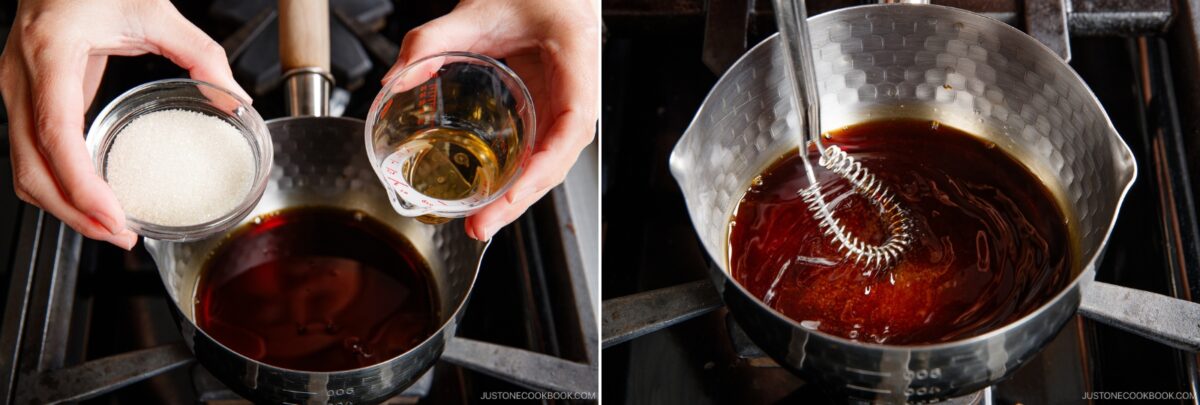
To Prepare the Cutlets
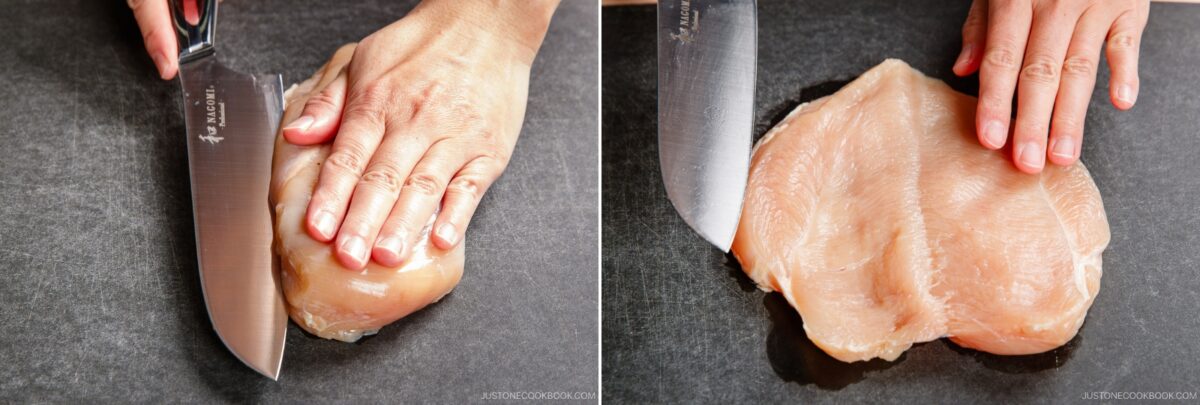
- Butterfly (split) 1 boneless, skinless chicken breast: Cut horizontally with a knife, stopping ½ inch before cutting all the way through, then open flat like a book.
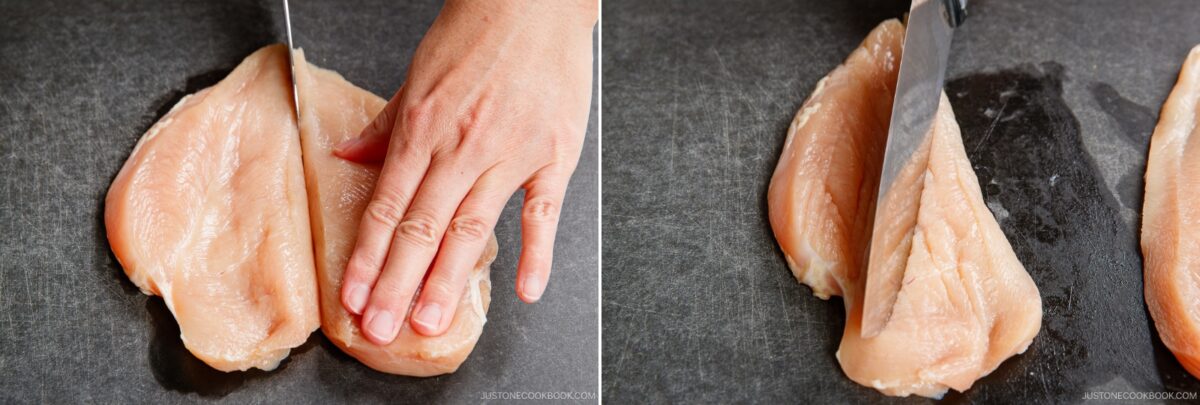
- Cut in half down the middle to get two cutlets. Pound both sides with the back of a knife or a meat mallet until the cutlets are an even thickness throughout.
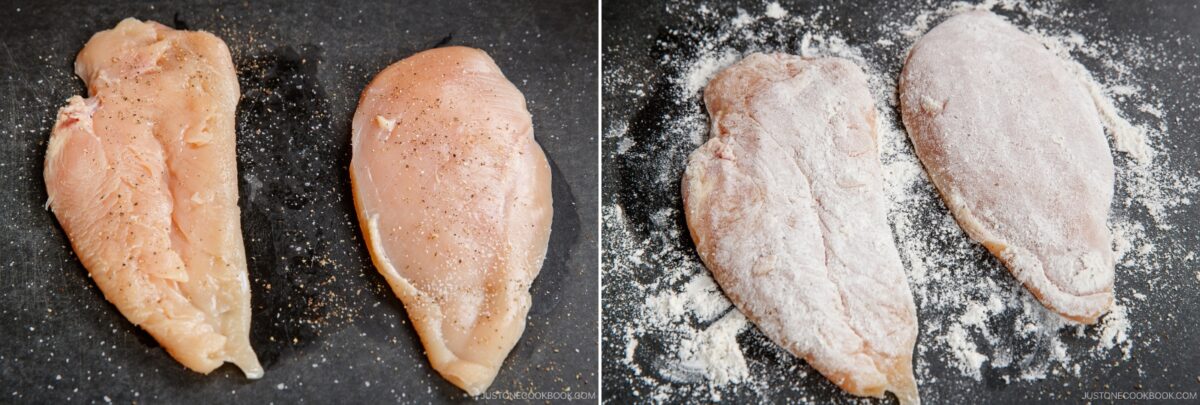
- Season both sides with ⅛ tsp Diamond Crystal kosher salt and ⅛ tsp freshly ground black pepper. Coat with 1 Tbsp all-purpose flour (plain flour). Dust off any excess. Set aside. Nami's Tip: If the cutlets are still cold from the refrigerator, leave them on the counter for 10 minutes or so while the oil is heating up in the next step.
To Fry the Chicken
- Add 2 cups neutral oil to a medium pot. Heat over medium heat to 340ºF (170ºC). Nami's Tip: I use a carbon steel pot. I also use an instant-read thermometer for accuracy. If you don't have one, stick a chopstick in the oil; when tiny bubbles appear around the tip, the oil is ready.
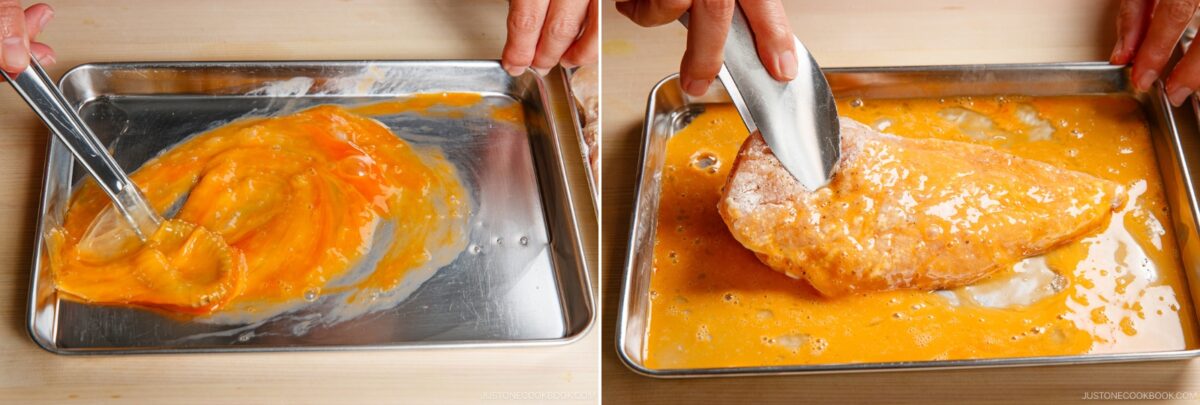
- Meanwhile, crack 1 large egg (50 g w/o shell) into a shallow tray and beat until thoroughly blended. Dip one floured cutlet into the egg, turning to coat both sides completely.Nami's Tip: Fry one piece at a time to keep oil temperature stable. Likewise, don't let the temperature go higher than 340ºF (170ºC). Otherwise, the chicken will darken too quickly while the inside stays undercooked.
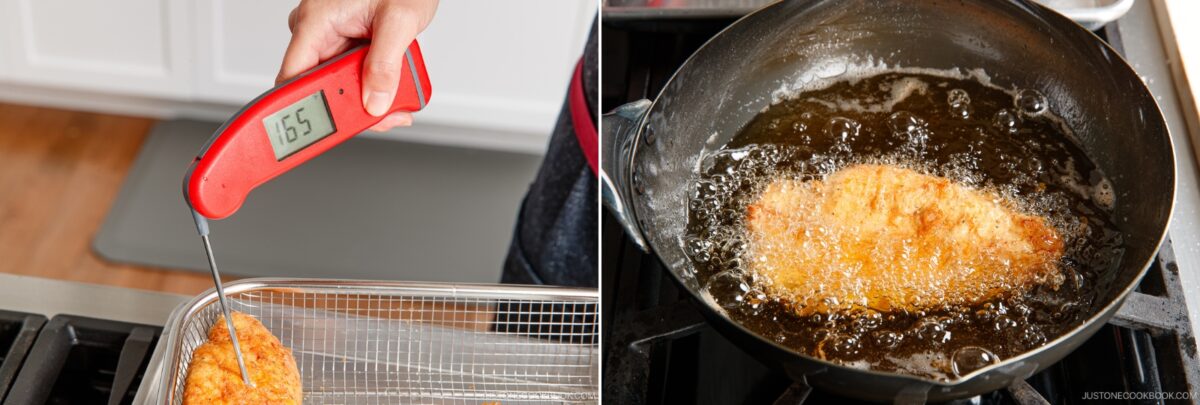
- FIRST FRY: Gently lower one piece of chicken into the hot oil. Leave it undisturbed for the first minute so the egg coating can set, then cook for 4 minutes total, flipping at the halfway mark. Scoop out any fried crumbs with a fine-mesh strainer.Transfer the fried chicken to a wire rack to drain. Meanwhile, fry the second cutlet and transfer it to the rack.Nami's Tips: The residual heat will continue to cook the meat as it rests. Cleaning the oil keeps it from getting darker and dirtier with burnt crumbs.
- SECOND FRY: Raise the oil temperature to 350ºF (180ºC). Carefully place the first piece of fried chicken in the oil again. Fry for 30 seconds on each side.Nami's Tip: Be careful of bigger oil splatters than during the first fry. This happens when the moisture underneath the crust vaporizes and hits the hot oil.
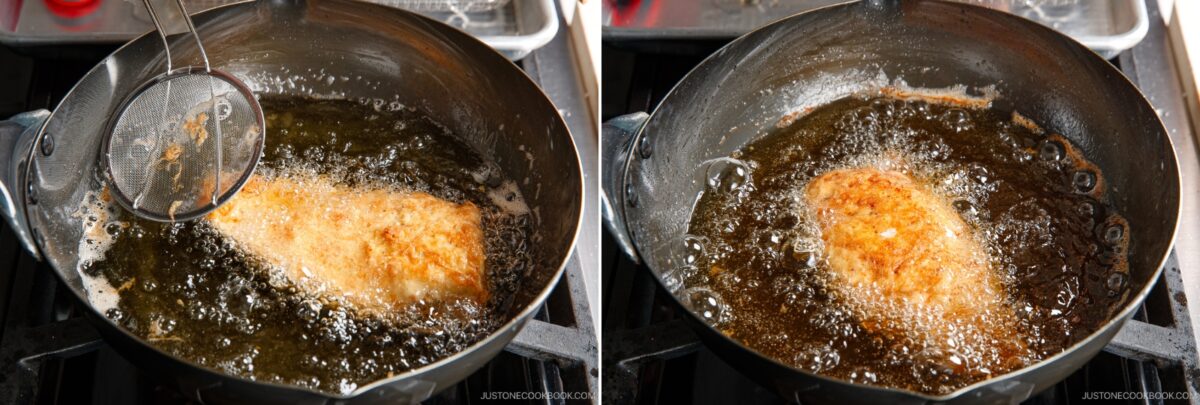
- Remove the chicken from the oil and transfer to a wire rack or paper towel to drain. Repeat with the second cutlet.Nami's Tip: If you have an instant-read thermometer, check that the chicken's internal temperature is at least 165ºF (74ºC).
To Coat with Nanban Sauce
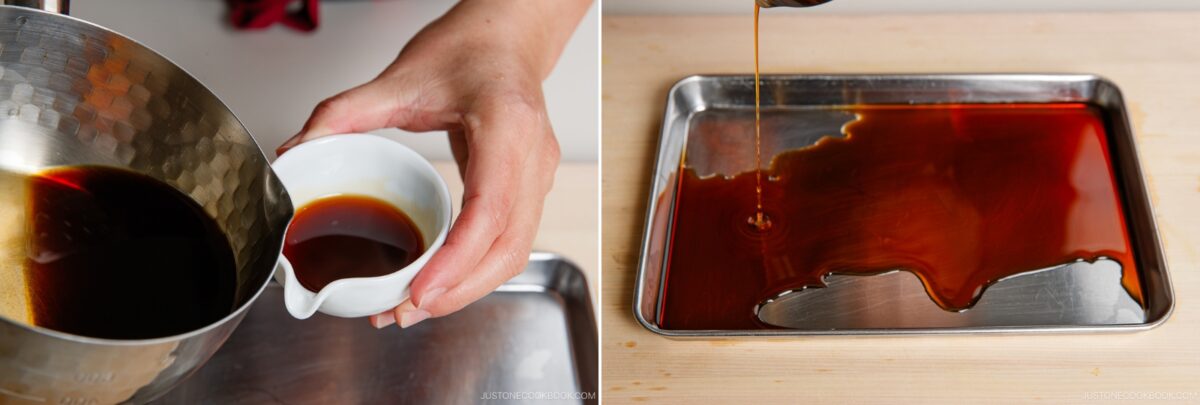
- Reserve 2 tablespoons of the nanban sauce in a small bowl for serving. Add the rest of the sauce to a tray.
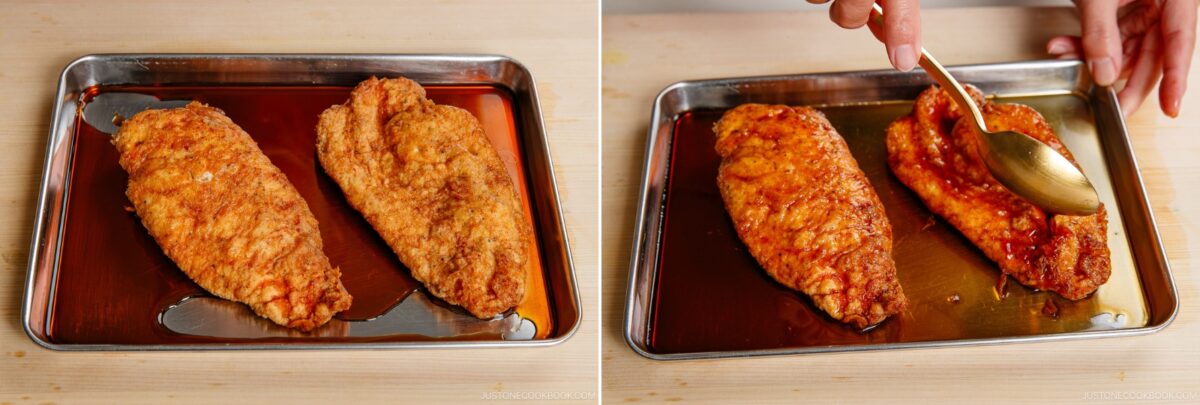
- Add the hot chicken cutlets to the tray immediately and spoon the nanban sauce over both sides until all surfaces are evenly coated.
To Serve
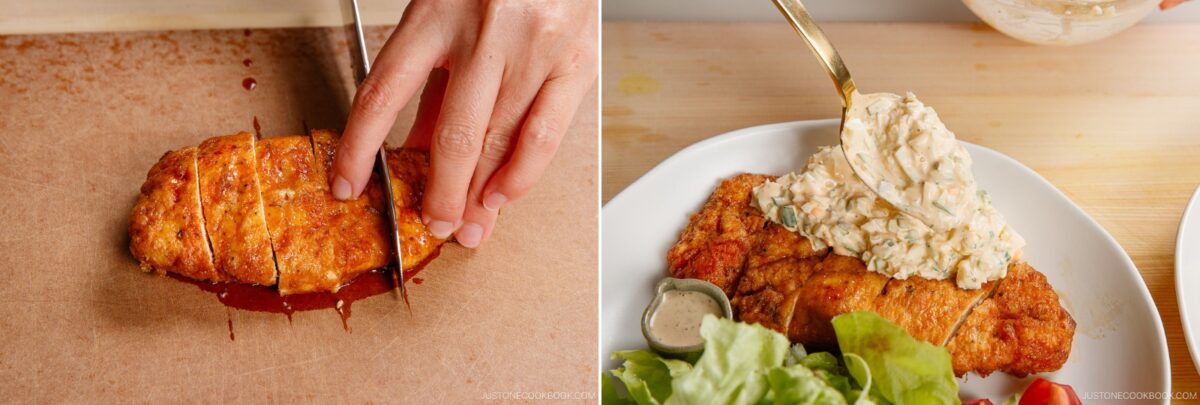
- Slice each cutlet crosswise into ¾-inch (2-cm) pieces. Transfer to individual plates and spoon a generous dollop of tartar sauce alongside. Drizzle with the reserved nanban sauce.
To Store
- Store the leftover chicken in an airtight container. Keep in the refrigerator for 3 days or in the freezer for up to a month. Do not freeze the tartar sauce. Make a new batch of both sauces when you serve leftover fried chicken. Reheat defrosted or frozen fried chicken on a baking sheet lined with aluminum foil or parchment paper. Bake until warmed through at 350ºF (180ºC) for 15–20 minutes if defrosted, or 30–40 minutes if frozen.
Notes
- Use chicken thighs – Pound them with a meat mallet or cut into bite-size pieces before frying so they cook evenly.
- Skip the tartar sauce – Some versions—including the original version at Nao-chan restaurant in Miyazaki—leave it out.
- Make it vegetarian – Prep firm tofu following my Pan-Fried Teriyaki Tofu method then coat with your sauces.
- Make spicy nanban sauce – Add dried chili peppers or red chili flakes when heating your nanban marinade and let it infuse while the sauce cools.
Nutrition
Did you make this recipe?
Tag @justonecookbook on Instagram so we can see your delicious creation!
Editor’s Note: The post was originally published on January 22, 2011. The blog post has been completely updated with new content, new images, and the revised recipe on March 9, 2022.