
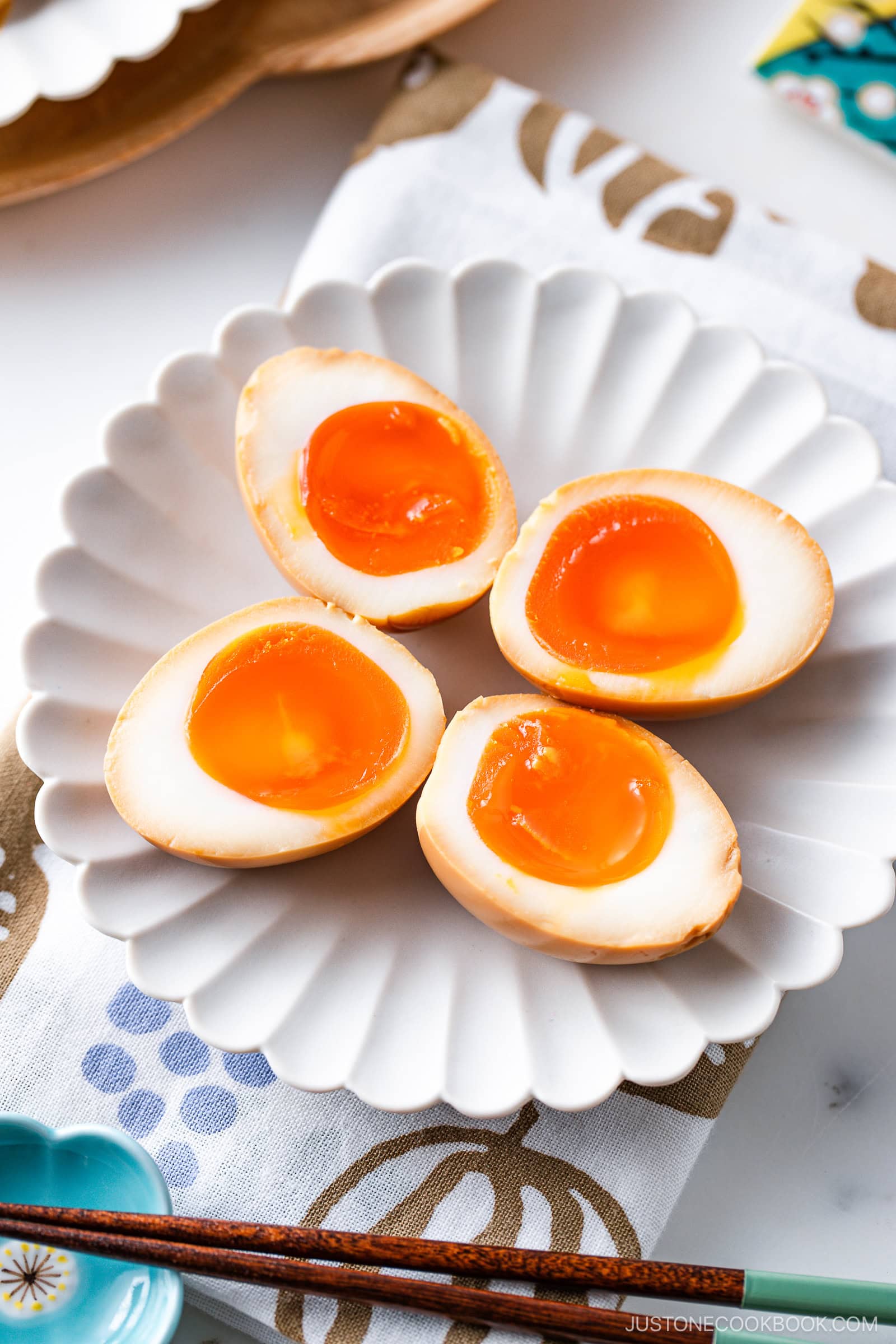
Ramen eggs are one of those recipes that look impressive but take almost no effort. Honestly, I can’t imagine a bowl of ramen without one. Even on nights when I skip every other topping, a jammy ajitama is a must-have for me. They’re perfect to make ahead, too. I marinate them the day before so they’re ready to go!
- Rich, jammy yolks with a deeply savory marinade in every bite
- Just 4 pantry ingredients and easy to prep the night before
- Versatile enough for ramen, rice bowls, toast, and snacking
If you love eggs, try my Tamagoyaki, Japanese Egg Sandwich, and Omurice (Japanese Omelette Rice) recipes next!

What are Ramen Eggs (Ajitsuke Tamago)?
Ramen eggs are soft-boiled eggs marinated in a salty-sweet soy sauce blend. In Japan, they’re called ajitama (味玉), short for ajitsuke tamago (味付け玉子), or nitamago (煮玉子). They’re famous for their jammy yolks and deep umami flavor. Beyond ramen, you’ll find them in bento boxes, salads, curry rice, sandwiches, and enjoyed as a snack on their own.
Ingredients for Ramen Eggs (Ajitsuke Tamago)
- cold eggs
- soy sauce
- mirin
- sake
- sugar
Find the printable recipe with measurements below.
Jump to RecipeHow to Make Ramen Eggs (Ajitsuke Tamago)
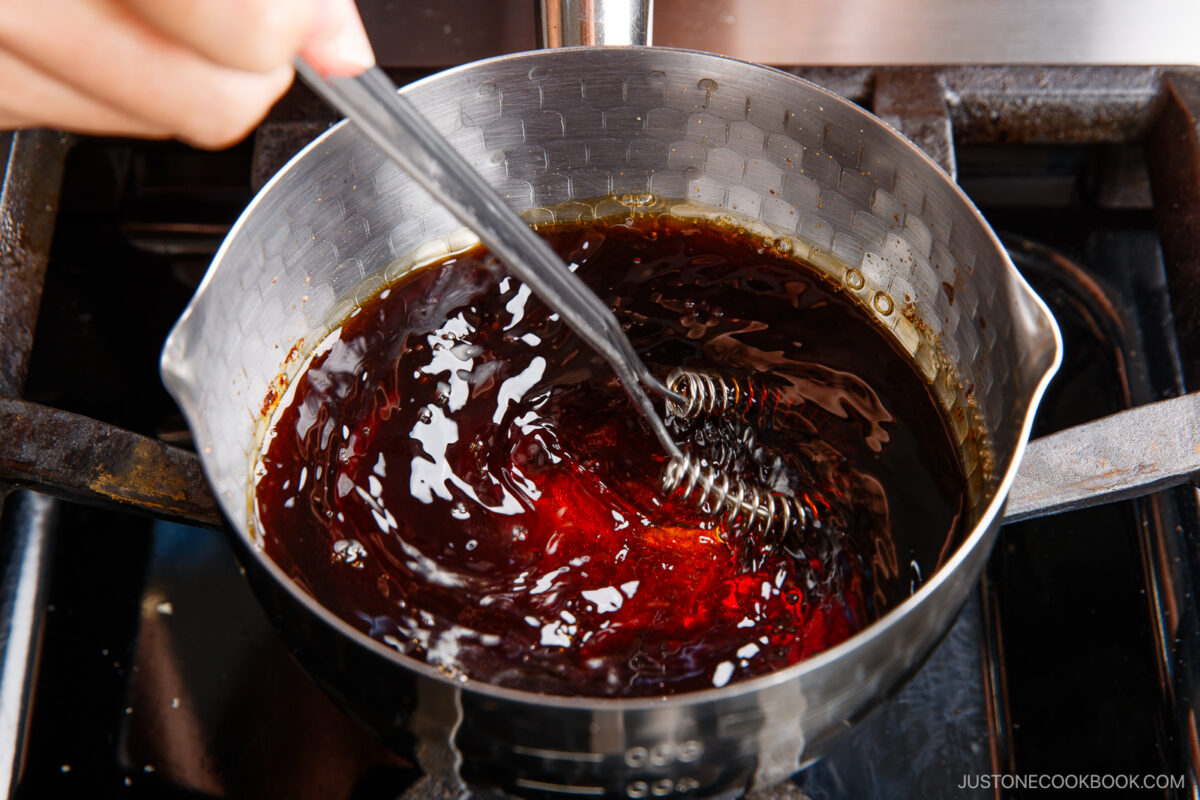
- Make the marinade. Combine soy sauce, mirin, sake, and sugar in a small saucepan. Bring to a boil and simmer for 1 minute. Cool completely.
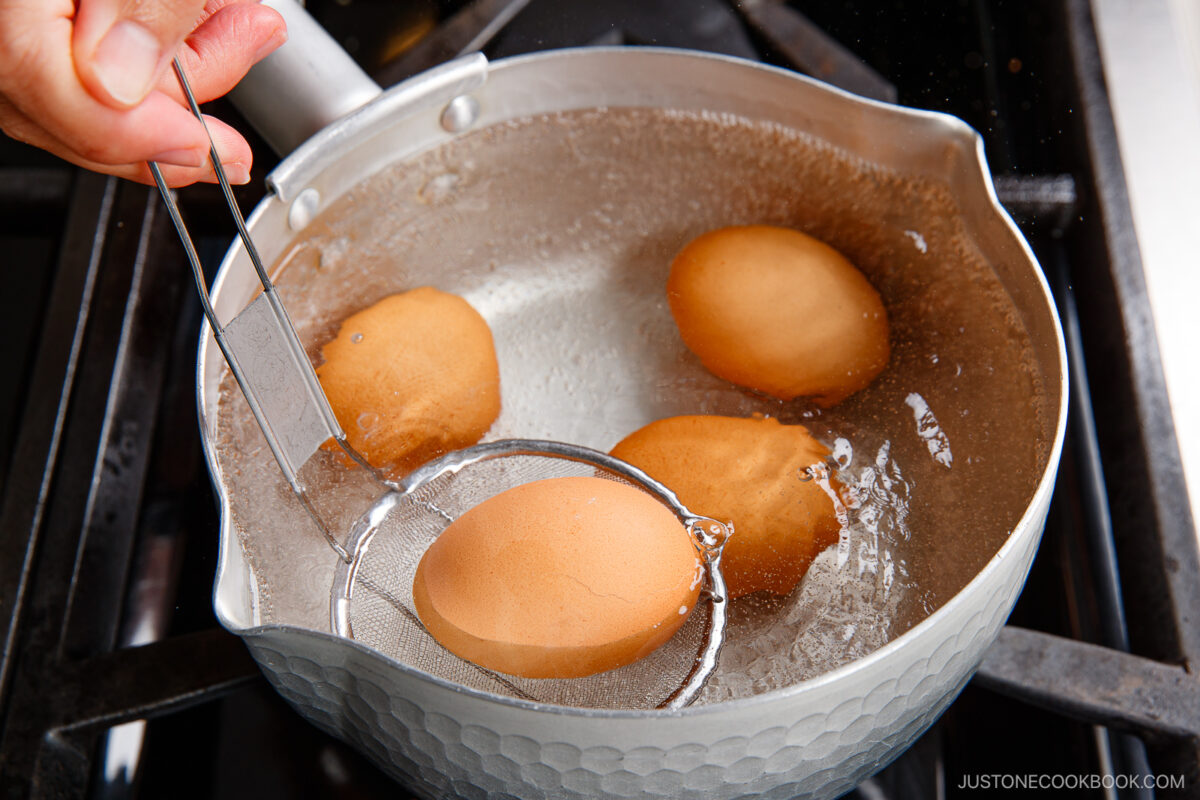
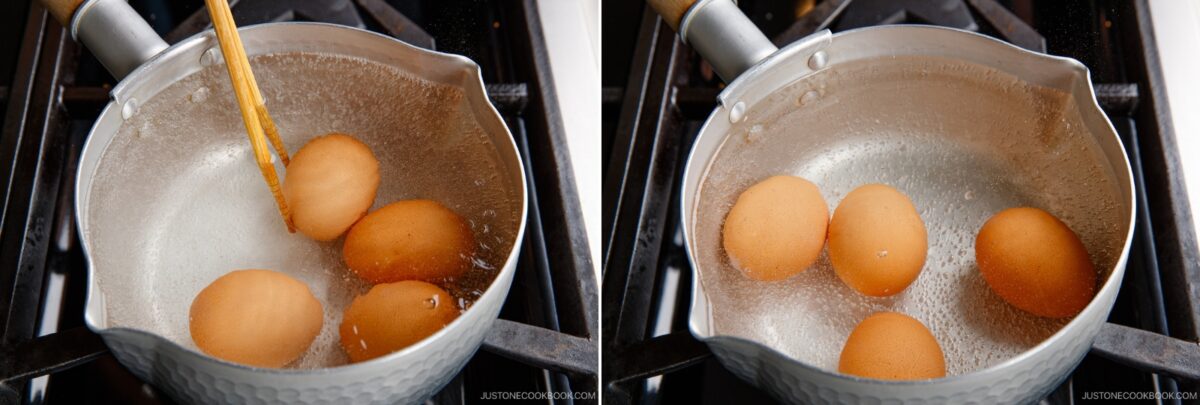
- Boil the eggs. Gently lower cold refrigerator eggs into boiling water. Cook for exactly 7 minutes.
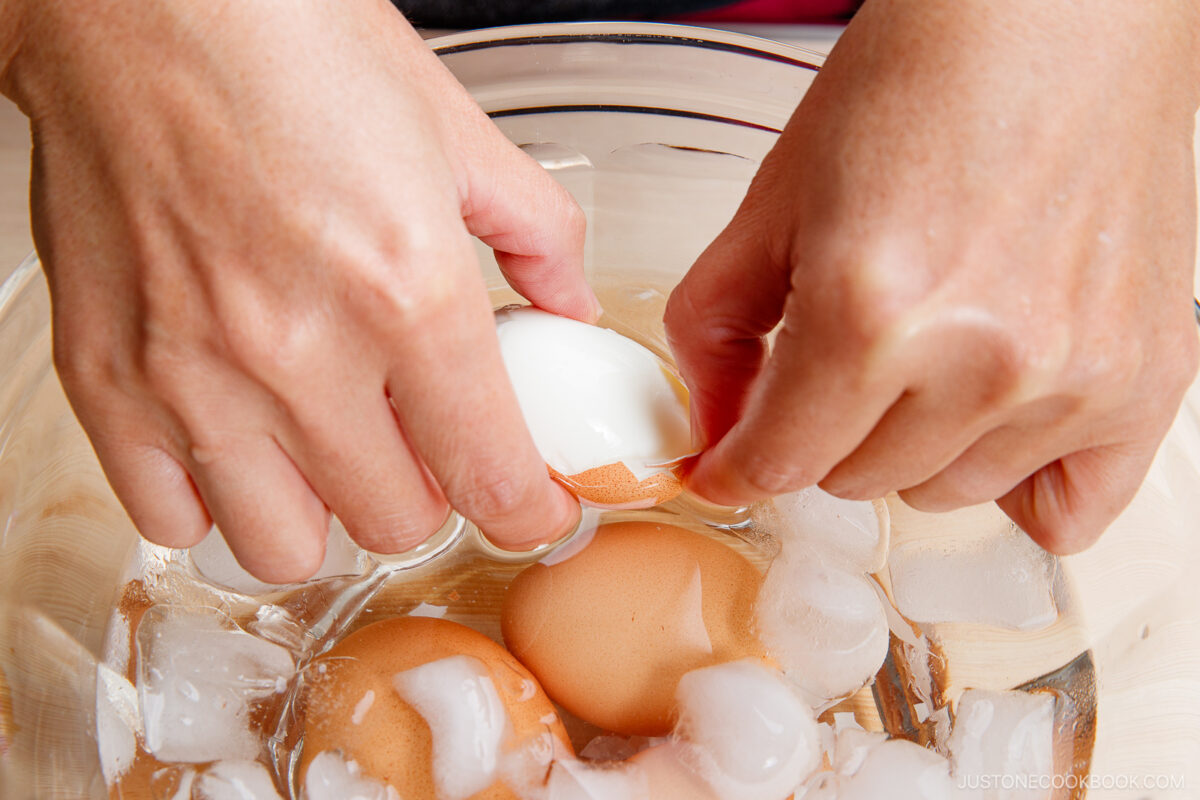
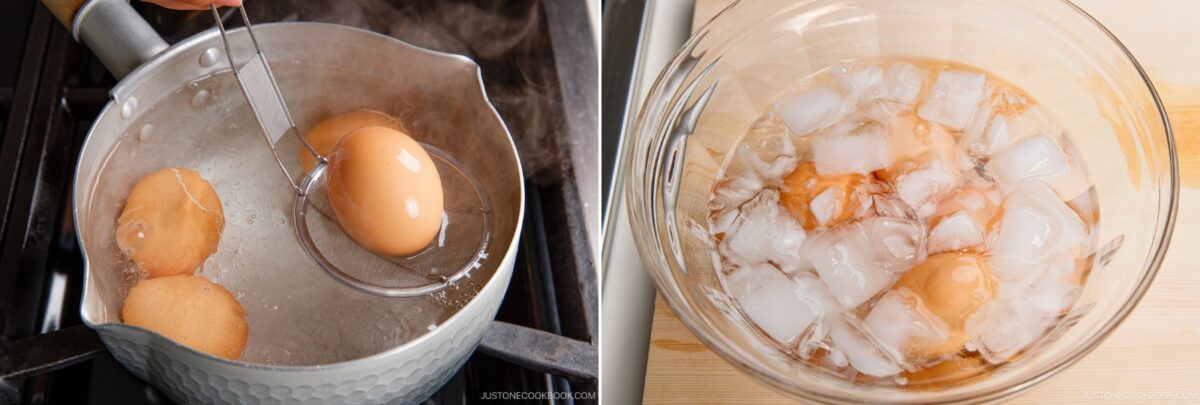
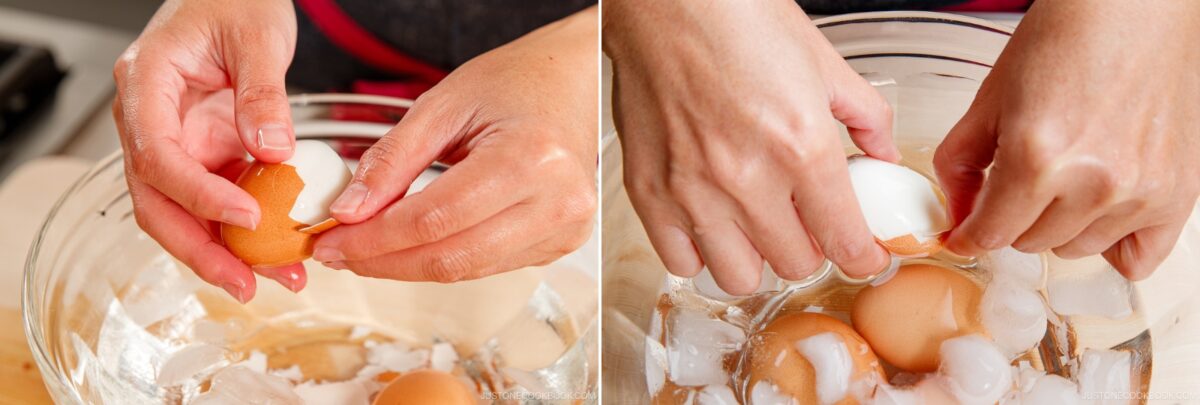
- Cool and peel. Transfer eggs straight to an ice bath. Chill for 15 minutes. Crack the wide bottom first and peel under water to loosen the shell.
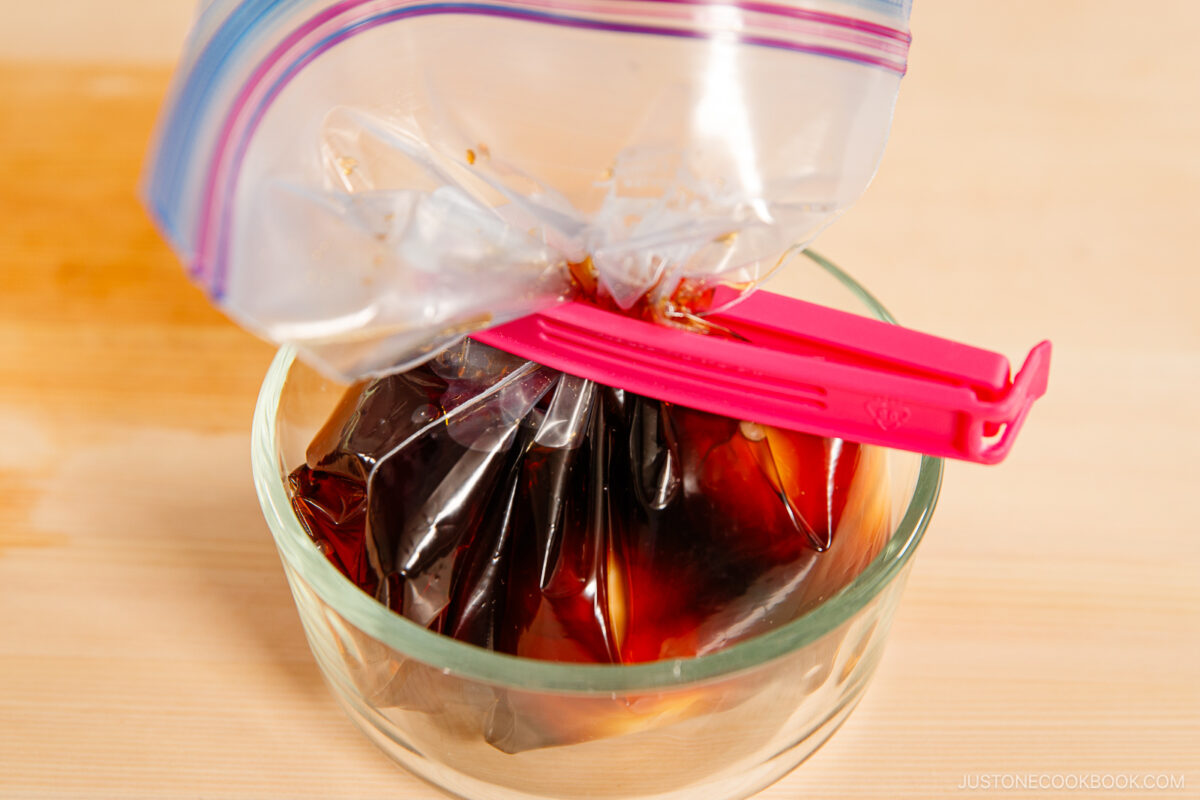
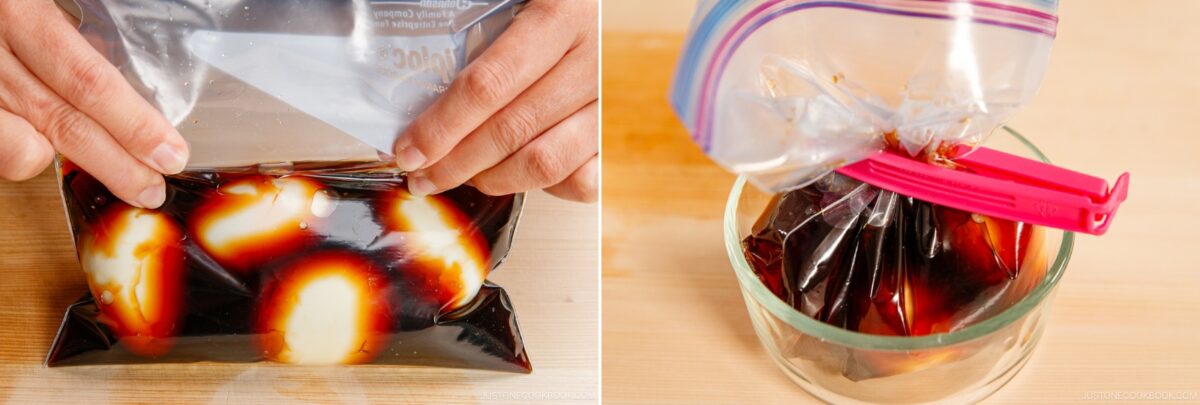
- Marinate. Add peeled eggs to a ziplock bag with the cooled marinade. Remove the air, seal tightly, and refrigerate for 8 hours or overnight.
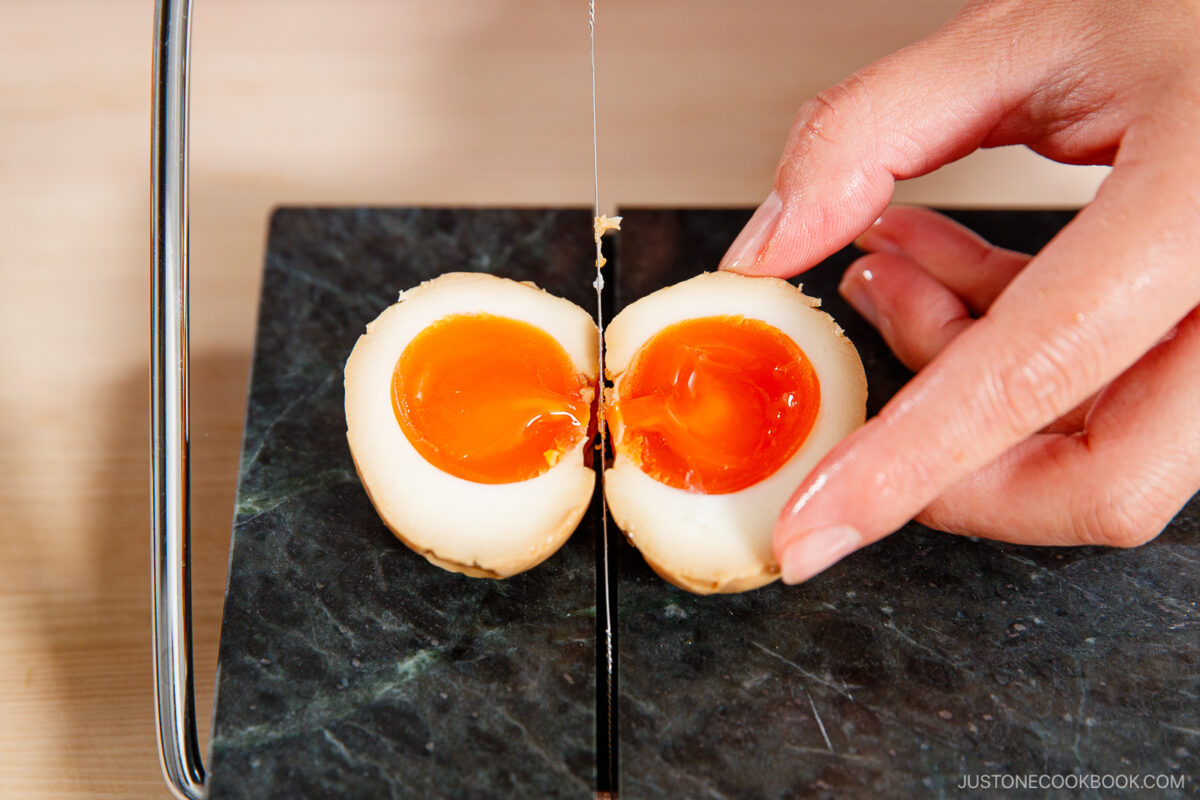
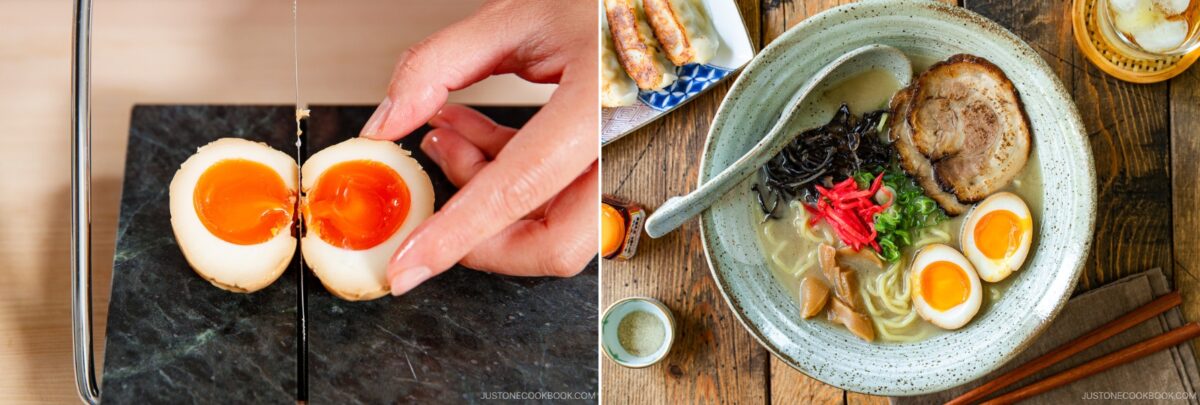
- Slice and serve. Cut cleanly in half using a piece of string or a wire cheese slicer for a clean cut. Enjoy on ramen, toast, or Japanese curry rice.

Nami’s Recipe Tips
- Cook the marinade first to dissolve the sugar and evaporate the alcohol from the sake.
- Use eggs straight from the fridge. Cold eggs help the yolks stay soft while the whites cook through.
- Start your timer when the first egg touches the water. Seven minutes is the sweet spot for jammy yolks with large eggs.
- Shock the eggs in ice water right away. It stops cooking and makes peeling much easier.
- Marinate in a zip-lock bag. It keeps eggs fully submerged with less marinade.
- Rotate eggs gently in the first minute of boiling to help keep the yolk centered.
Variations and Customizations
- Want to switch up the marinade? Try one of these twists:
- Mentsuyu: Swap soy sauce for a lighter, dashi-forward flavor
- Miso: Stir in 1–2 tsp for deeper, richer umami
- Doubanjiang: Adds bold, savory heat
- Gochujang: Sweet and spicy kick
- La-yu (chili oil): Just a few drops for gentle warmth
- Green onions or sesame seeds: Fresh flavor and added texture
- If you prefer runny yolks, cook for 6–6½ minutes. For custard-like yolks, cook for 8–9 minutes.
- Prefer hard-boiled? Cook the eggs a little longer. Hard-boiled ramen eggs keep for up to a week in the fridge.
How to Serve Ramen Eggs
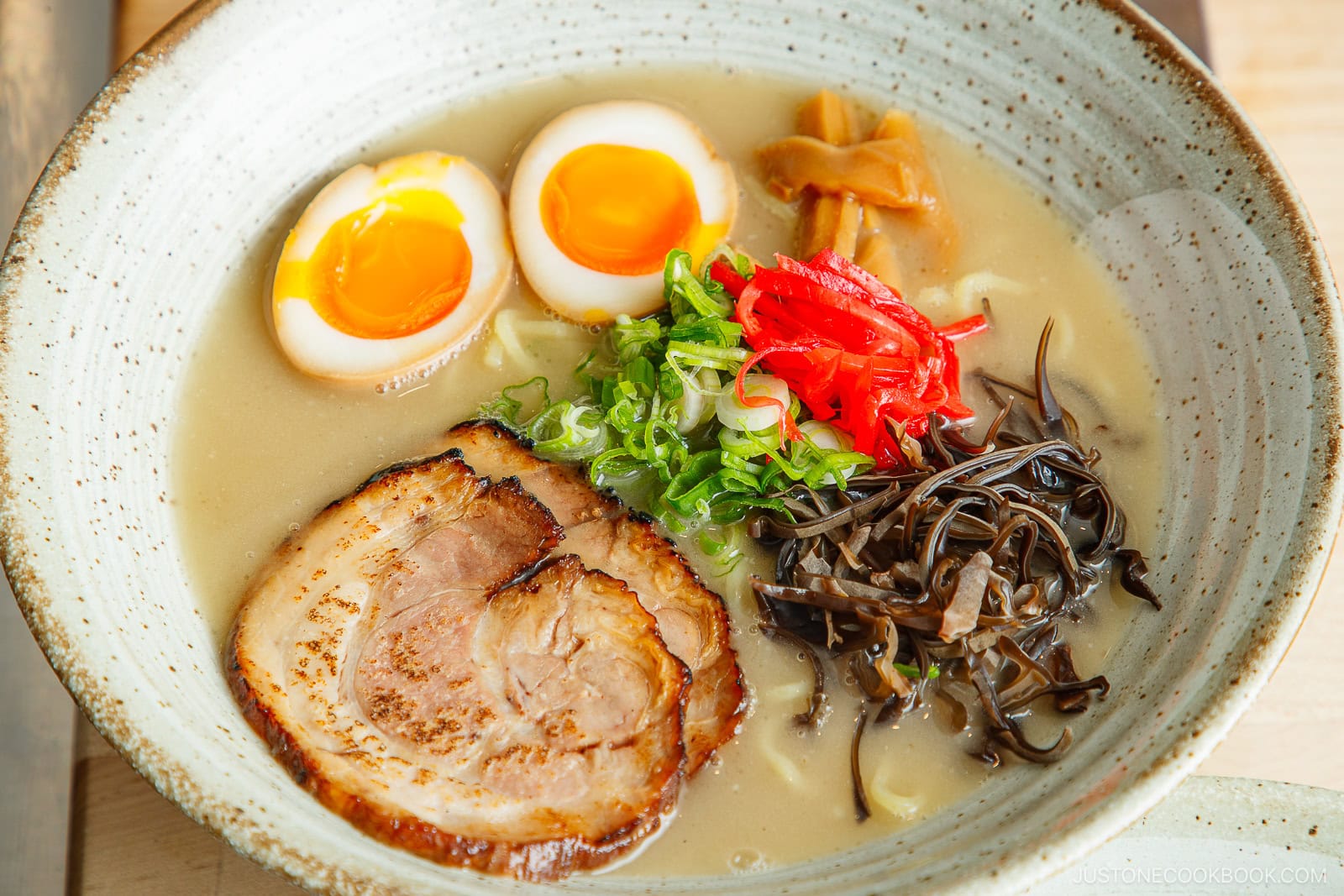
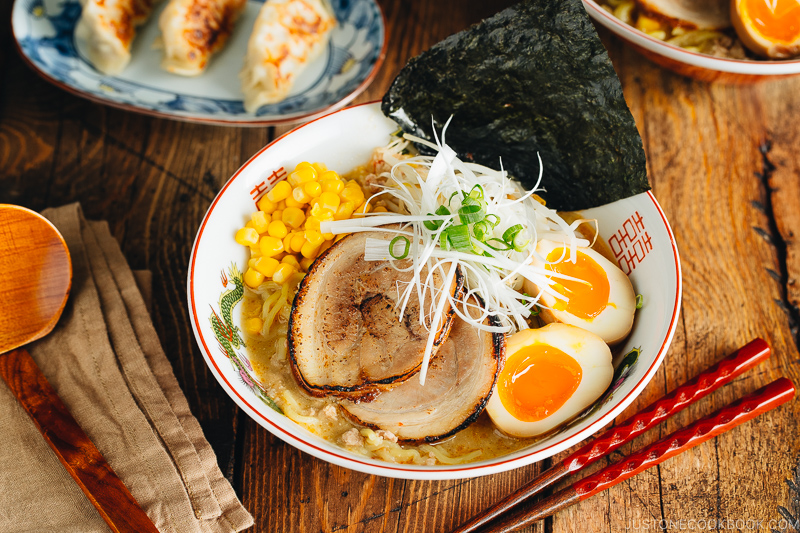
- On ramen: A must-have topping for a bowl of Miso Ramen.
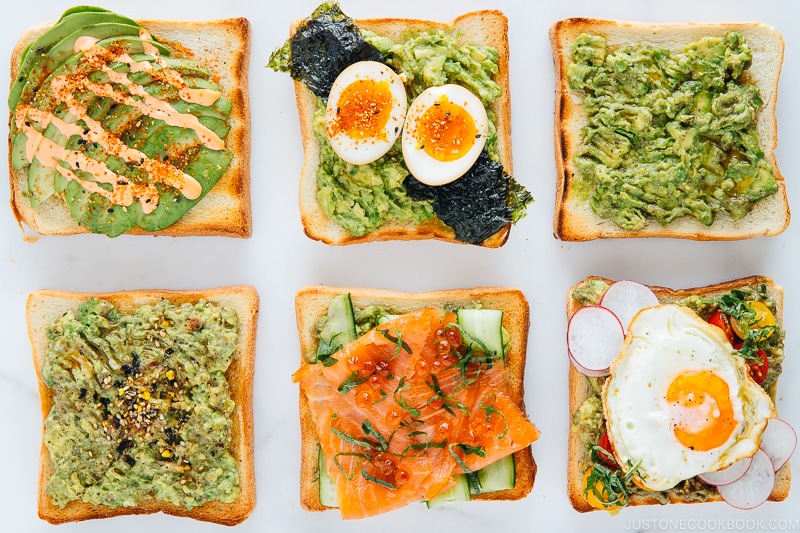
- On toast: Try with Korean seaweed from my 6 Japanese Twists on Avocado Toast.
- On curry rice: Serve alongside Keema Curry.
- As a snack: Slice in half and top with furikake (rice seasoning) and shichimi togarashi (Japanese seven spice).
Storage Tips
To store: Remove eggs from the marinade and refrigerate in a sealed container. Eat within 3-4 days.
Note: Do not reuse the marinade for new eggs. You can cook it into stir-fries or simmered dishes, but use it soon after.
FAQs
Can I make ramen eggs ahead of time?
Yes! Make them the night before and they’re ready the next day. They’re one of my favorite make-ahead toppings for ramen night.
What can I use instead of sake?
Substitute water if you prefer to avoid alcohol. You can also cook sake for a few minutes to let the alcohol evaporate. Sake adds umami depth, but the eggs will still taste great with just soy sauce.
How long should I marinate the eggs?
I recommend 12-24 hours for the best balance of flavor. You can go up to 2 days, but longer may make them very salty. Discard the marinade after that.
Can I reuse the marinade?
For food safety, do not reuse the marinade for new eggs. Cook it into a stir-fry or simmered dish and use it right away.
I’d love to hear how yours turned out! 💛 Please leave a star rating and comment below to share your experience. Your feedback not only supports Just One Cookbook but also helps other home cooks discover recipes they can trust.

Ramen Eggs (Ajitsuke Tamago)
Ingredients
- 4 large eggs (50 g w/o shell) (refrigerated; slightly older eggs are easier to peel)
Instructions
- Before You Start: Please note that this recipe requires a marination time of 8 hours or overnight. Now, gather all the ingredients.
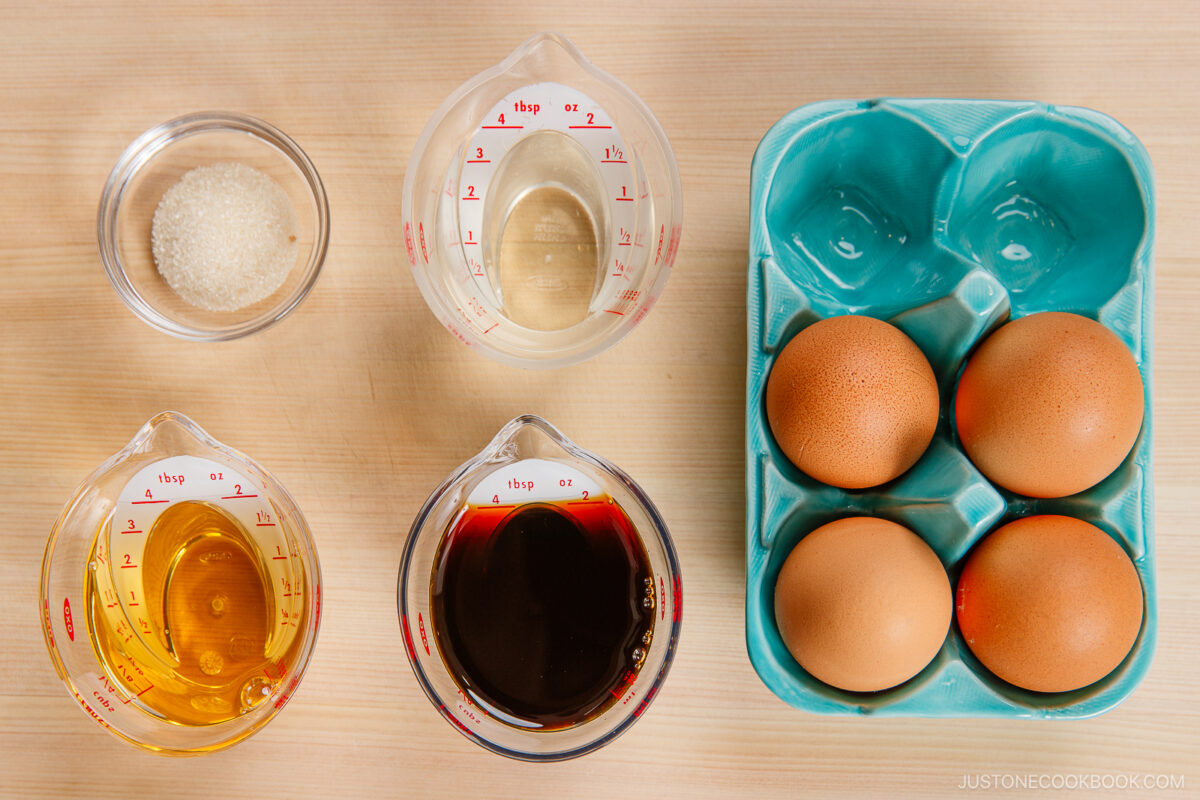
To Make the Marinade
- Combine ¼ cup soy sauce, ¼ cup mirin, ¼ cup sake, and 1 tsp sugar in a small saucepan. Whisk to dissolve the sugar completely. Bring it to a boil, then lower the heat. Simmer for 1 minute. Turn off the heat. Set aside to cool completely.
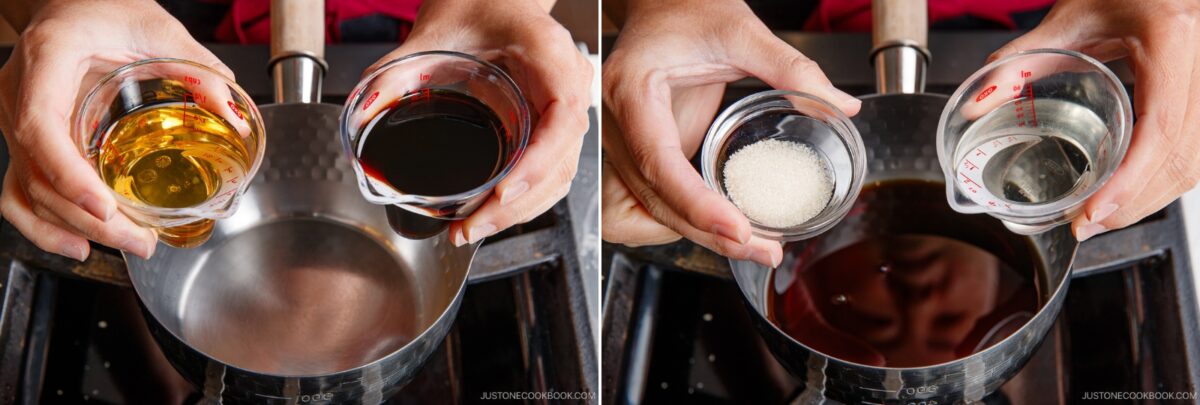
To Boil the Eggs
- Add 4 cups (1L) water to a saucepan. Make sure there's enough water to cover the eggs by 1 inch (2.5 cm) once added. Bring the water to a full boil.Remove 4 large eggs (50 g w/o shell) from the fridge. Gently lower one egg at a time into the boiling water with a ladle or strainer. When you add the first egg, set a timer for 7 minutes.Nami's Tip: If you prefer runny yolks, cook for 6–6½ minutes. For custard-like yolks, cook for 8–9 minutes.
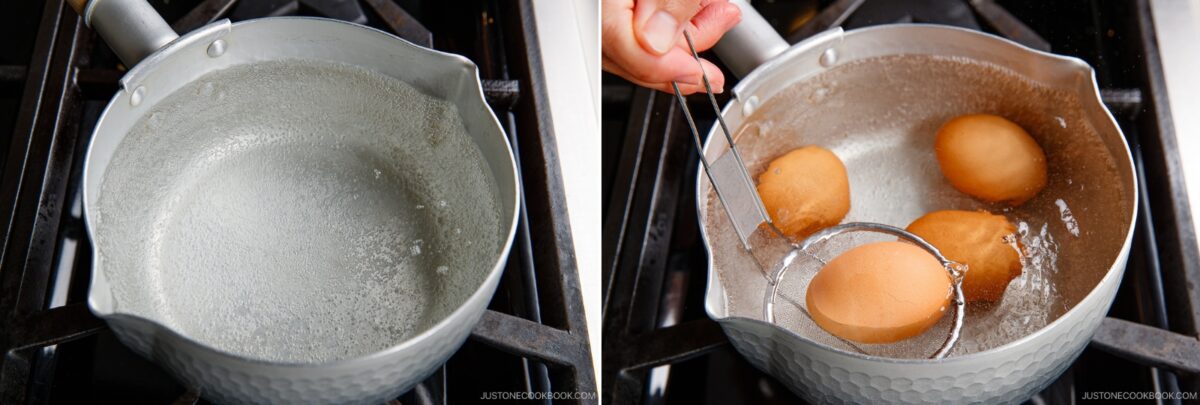
- Keep the water simmering gently, not bubbling vigorously. Don't let the eggs bounce around. Nami's Tip: Gently rotate the eggs with chopsticks during the first 3 minutes if you want to keep the yolks centered.
- After 7 minutes, promptly remove the eggs. Submerge them in a bowl of iced water for 15 minutes until cooled completely.
To Marinate the Eggs
- Gently crack the eggshell at the wide bottom end. Start peeling it vertically toward the pointy top. Dip the egg in the iced water a few times to help with peeling.Nami's Tip: Once you peel one section vertically, the rest of the shell comes off easily.
- Place the peeled eggs in a plastic bag. Add the cooled marinade. Nami's Tip: Why do I recommend a plastic bag instead of a container? It requires less marinade to submerge the eggs. Prepare no more than what you need, since we can only use this marinade once for food safety.
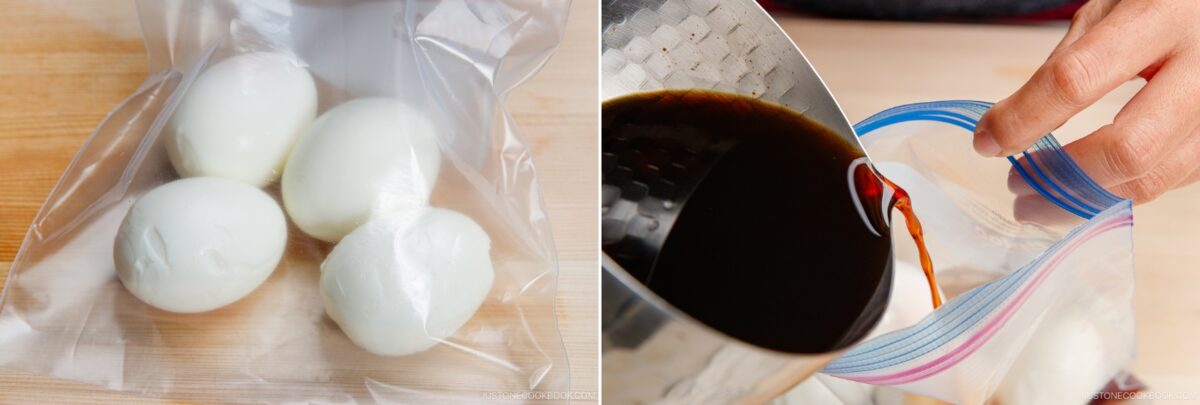
- Remove the air from the bag. Seal the bag right above the eggs with a clip or rubber band to keep them completely submerged. Refrigerate for 8 hours or overnight. Rotate the eggs occasionally, if you like.Nami's Tip: Marinate the eggs no longer than 12–24 hours or they will get too salty.
To Serve
- Remove the eggs from the marinade. Cleanly cut them in half lengthwise with a fishing line or wire cheese slicer. If you want to warm them, first soak the bag in warm water to bring up the temperature.Enjoy Ramen Eggs in bento, as a easy tonkotsu ramen topping, or as a snack sliced in half and sprinkled with furikake (rice seasonings) and shichimi togarashi (Japanese seven spice).
To Store
- Remove from the marinade and store in the refrigerator. Enjoy within 3–4 days if your eggs are soft-boiled and within a week if hard-boiled. Do not freeze, as their texture will change. For food safety reasons, I do not recommend reusing this marinade with new boiled eggs. You can cook this marinade and repurpose it as a seasoning sauce for stir-fries or simmered dishes, but use it soon.
Nutrition
Did you make this recipe?
Tag @justonecookbook on Instagram so we can see your delicious creation!
Editor’s Note: This post was originally published on September 14, 2014, updated with new images and video on September 15, 2021, and republished with more helpful content on March 23, 2026.