One of the secrets to delicious Japanese food is the prep work—those small, thoughtful steps we take before cooking. In this post, I’ll show you simple techniques that make a big difference in flavor, texture, and presentation.
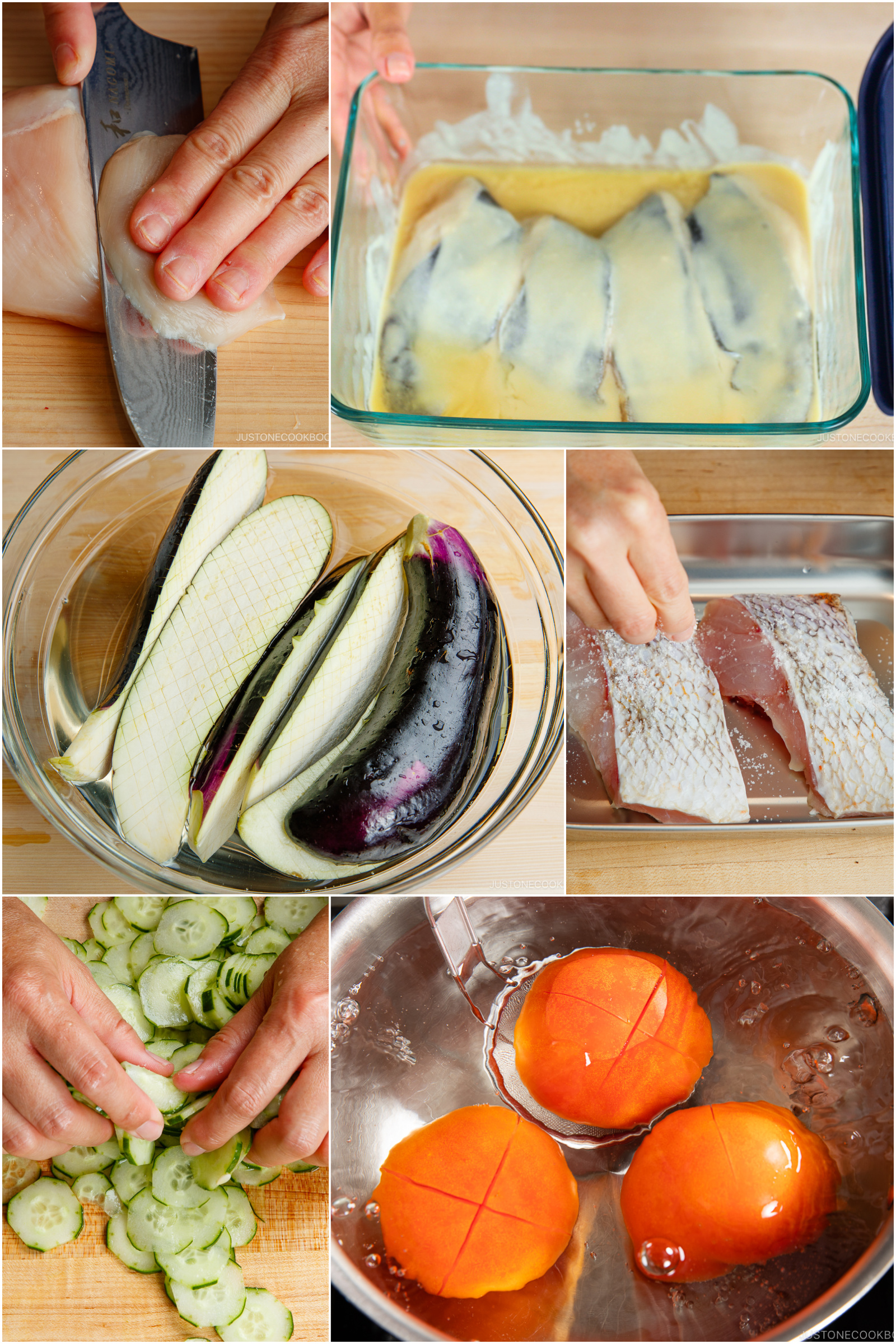
Have you ever wondered why Japanese dishes taste clean and balanced? It’s all thanks to the thoughtful and often simple food prep that happens before you even turn on the stove. In this post, I’ll share what these steps are and why they’ll set you up for a truly delicious dish.
Prep work is one of my five secrets to Japanese cooking. Read about the other four secrets next!
What is Prep Work?
In Japanese cooking, shitagoshirae (shi-ta-go-shi-ra-eh,下ごしらえ) means preparing ingredients before you cook. Small and simple actions like cutting, salting, soaking, rinsing, blanching, and marinating can remove bitterness, boost taste, and make everything cook evenly. That’s why prep work is the foundation of flavor, texture, and beauty in Japanese cuisine.

Why I Love Shitagoshirae (Prep Work)
- Boosts flavor and aroma – Reduces bitterness, removes unwanted odors, and improves absorption of seasonings
- Enhances texture – Softens, firms up, or evenly partially cooks foods
- Elevates presentation – Creates attractive shapes and preserves bright colors
- Easy to incorporate into your food prep routine
Types of Prep Work in Japanese Cooking
I treat shitagoshirae as a natural part of the cooking process. Think of it as the quiet magic that happens before the actual cooking begins.
I believe that anyone can add these steps to their cooking routine. Here’s a roundup of some essential techniques that you may encounter on your Japanese cooking journey.
Vegetable Prep Work
Cutting
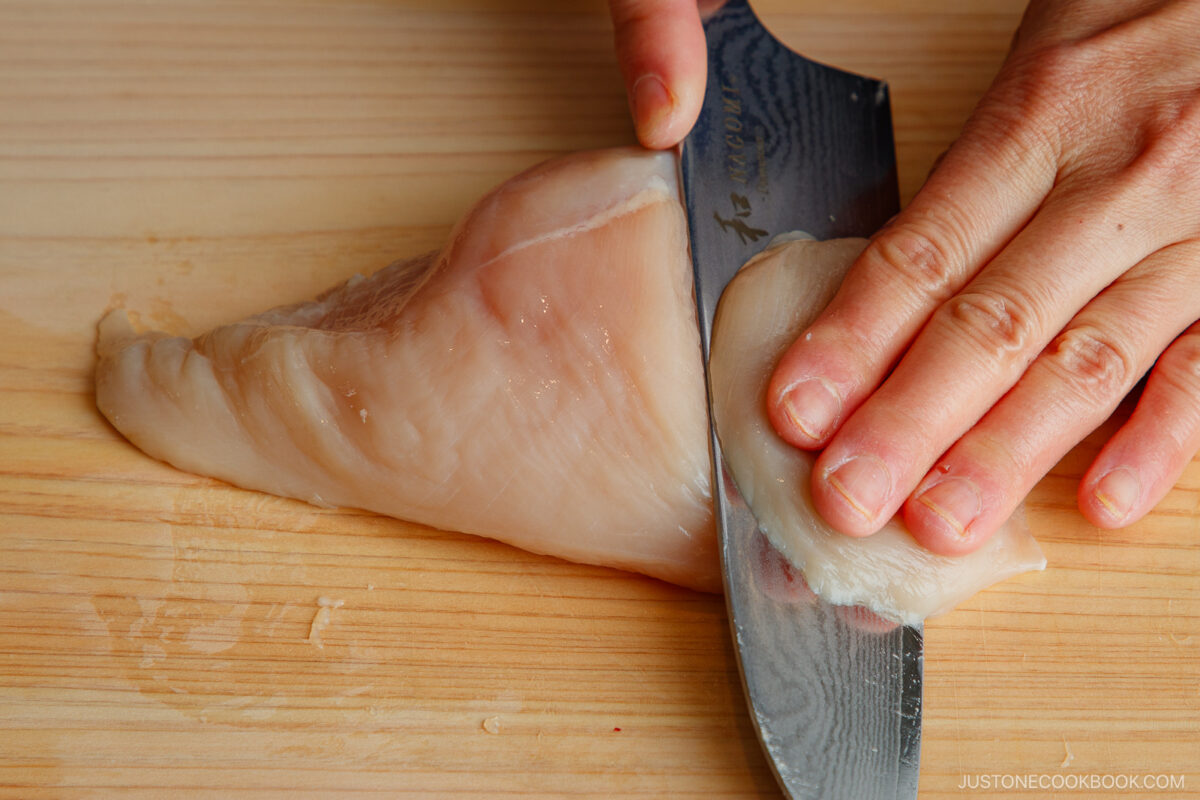
Cutting achieves the best texture, flavor, and presentation with techniques like Sogigiri (slanted slice) and Rangiri (random cut).
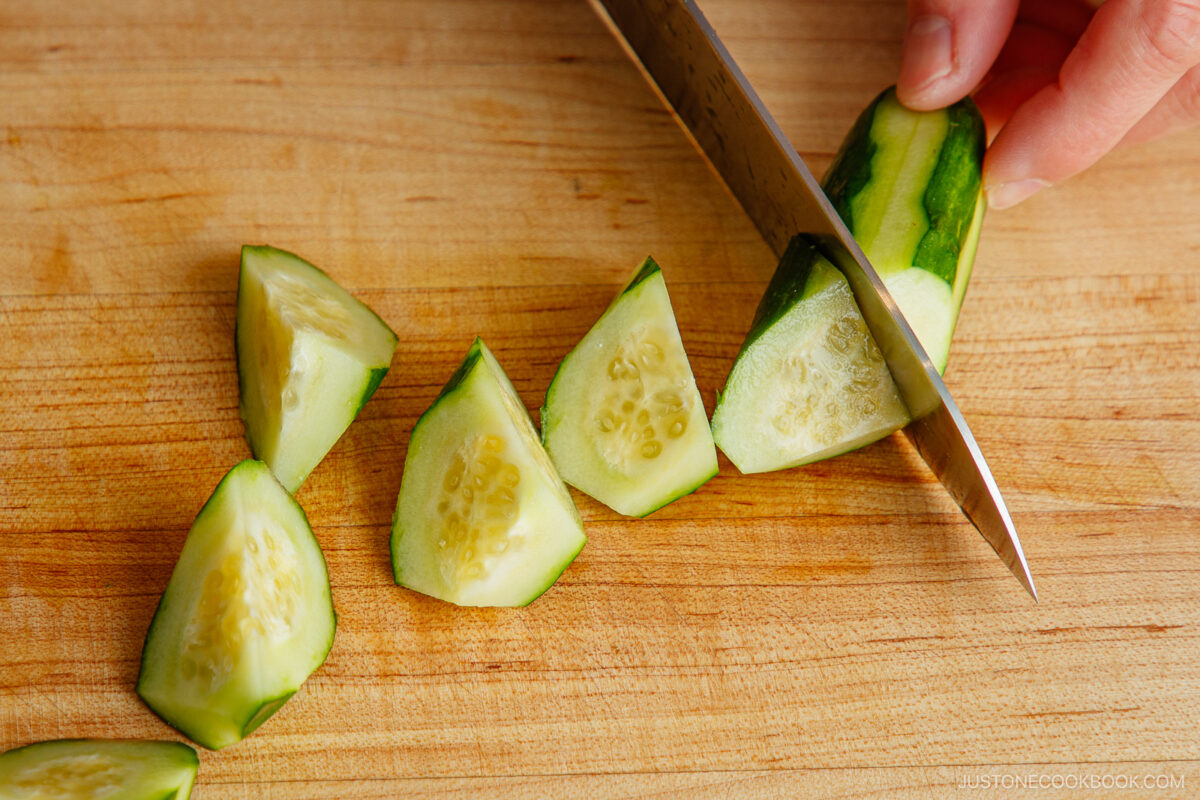
Cucumber – Once you scrub and peel the cucumber, you can slice it many different ways.
- Thinly peeled ribbons
- Thin rounds
- Diagonal slices
- Half-moon slices
- Thin strips
- Stick shapes
- Irregular, random chunks (Rangiri)
- Smashed pieces
Nami’s Tip: Thin slices absorb flavors quickly. Thicker, irregular, or smashed pieces stay crunchy and refreshing.
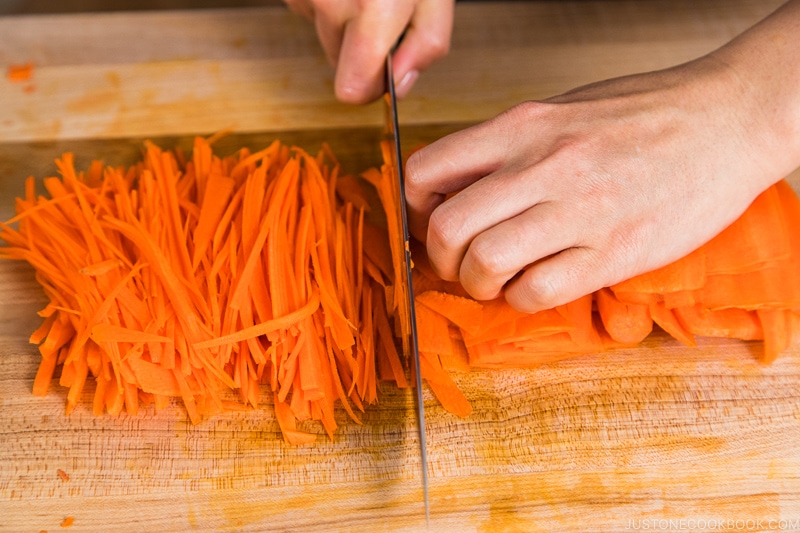
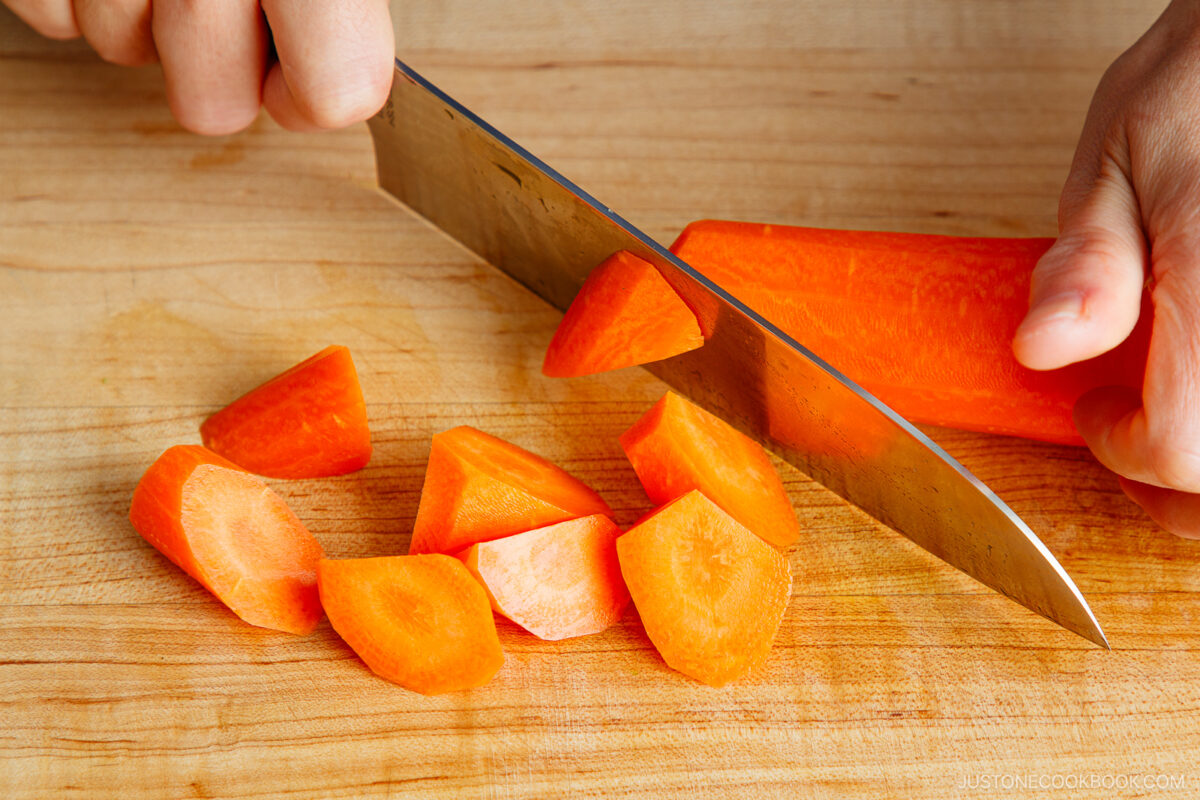
Carrots – Vary how you cut carrots depending on the dish and cooking method.
- Thinly peeled ribbons – salads or Soy Milk Hot Pot
- Julienned thin strips – fresh salads or quick stir-fries
- Matchsticks – beef rolls or stir-fried vegetables
- Random chunks – curries, or braised dishes, or Japanese Cream Stew
- Carrot flowers – shabu shabu, chikuzenni, or sukiyaki. See How to Cut Carrots Into Flower Shapes
Learn how to cut like a pro! See my extensive tutorial and video on Japanese Cutting Techniques & Tips.
Soaking
Soaking in water reduces bitterness/harshness and prevents discoloration (burdock root, eggplant).
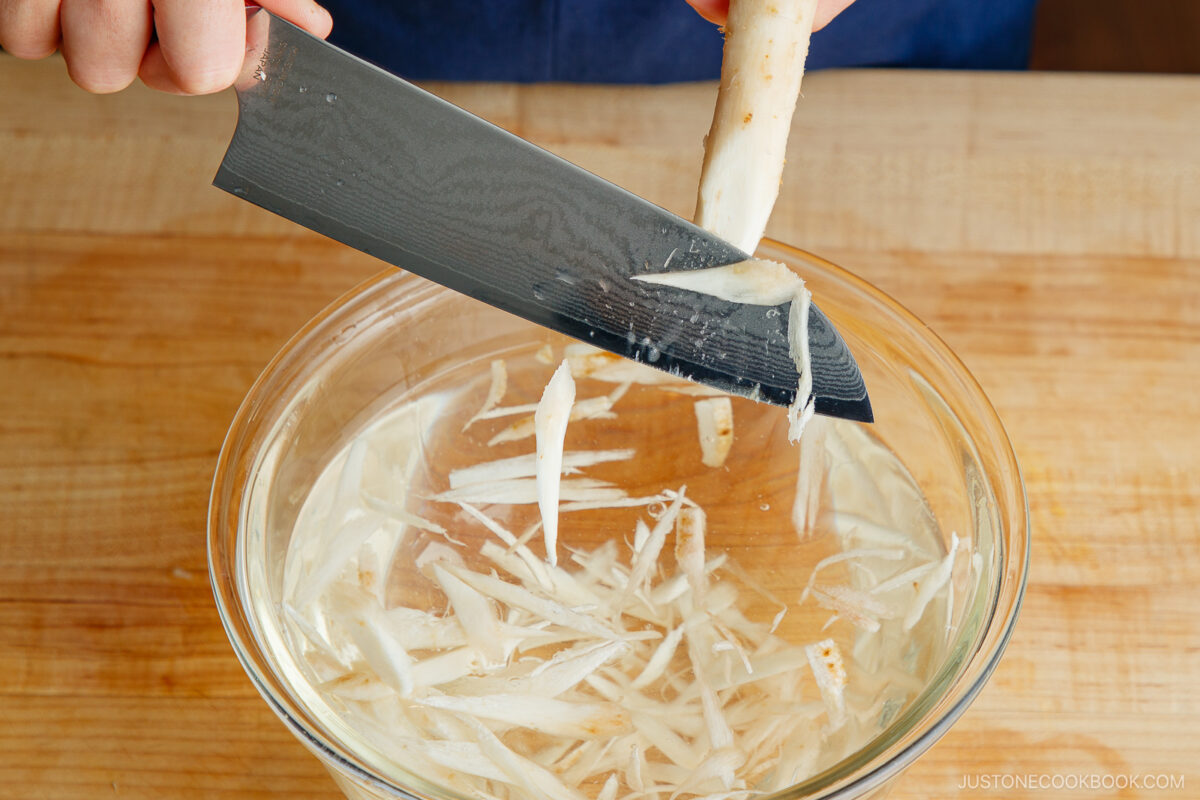
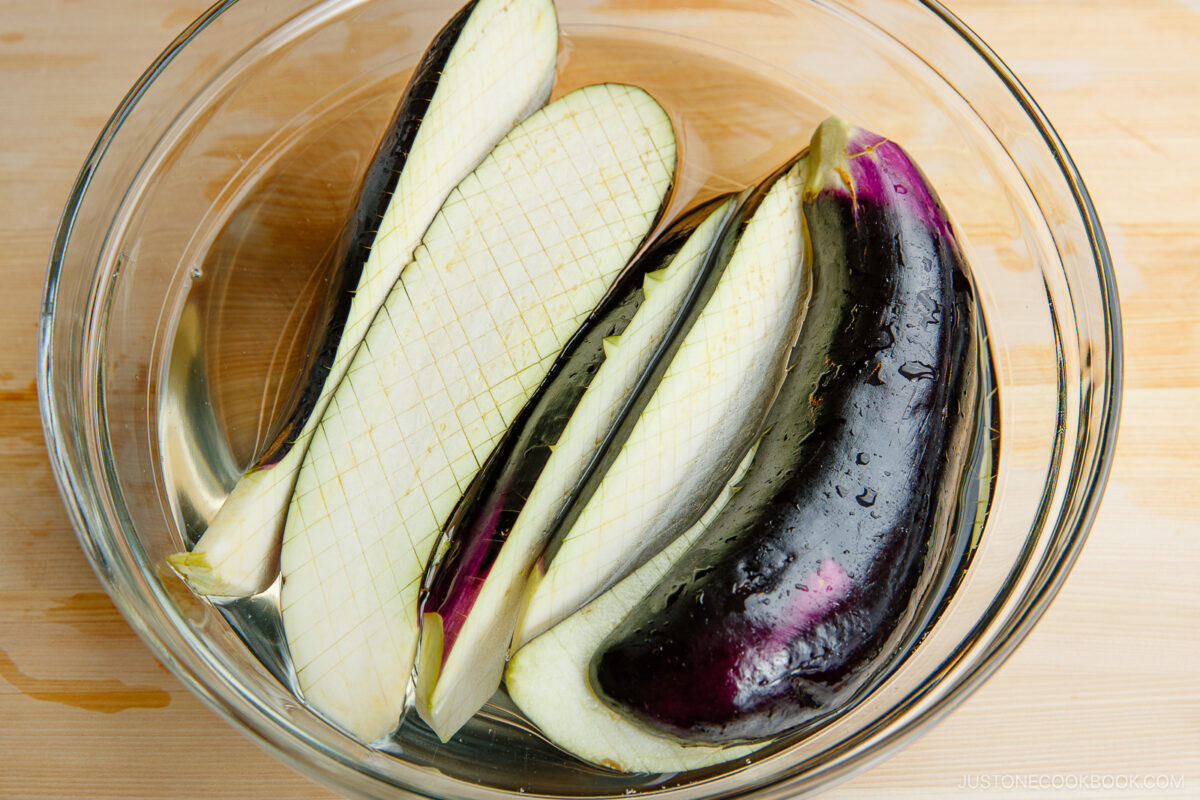
Potatoes – Soaking keeps potatoes from sticking together, falling apart, and making soups and simmering liquids cloudy.
- Cut into pieces.
- Submerge in cold water for 5–10 minutes.
- Drain and use in your recipe.
Mushrooms – DO NOT not wash or rinse mushrooms in water! Instead, brush off mushrooms with a slightly damp paper towel or pastry brush to keep the flavor and aroma intact.
Rubbing with Salt
Rubbing with salt helps remove bitterness and draws out excess moisture from vegetables.
This method helps keep dressings and pickling brine from becoming diluted. We use it when making salads, light pickles, and raw dishes.
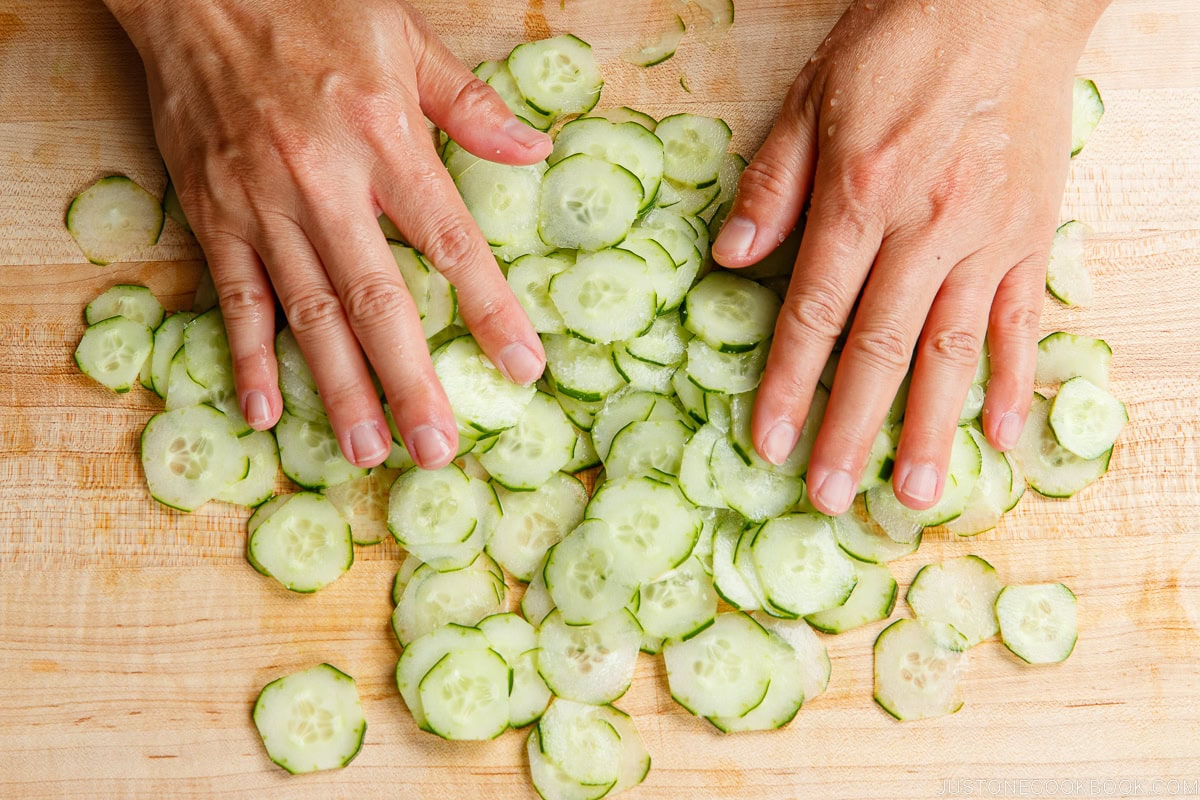
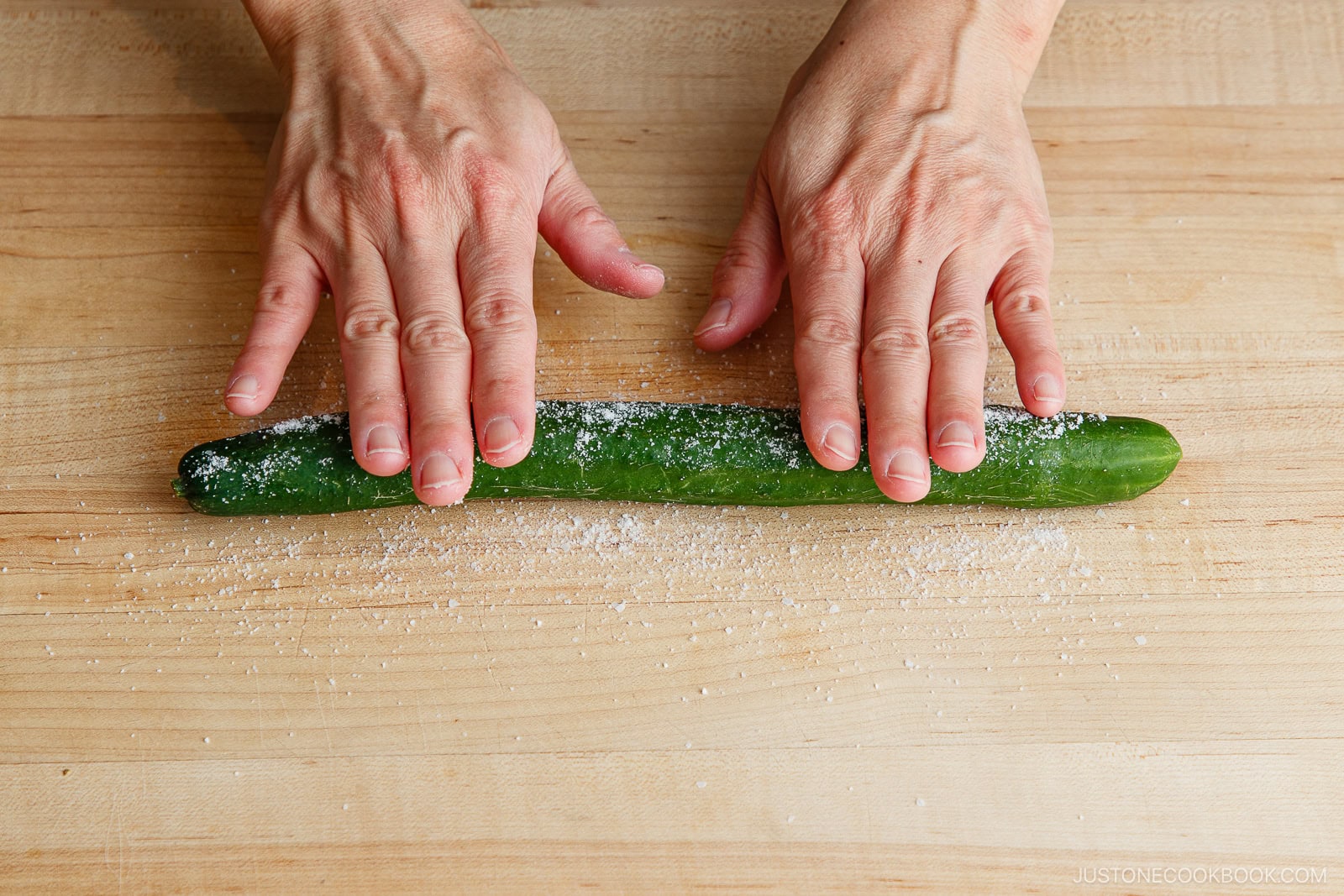
Cucumber – Salting also softens and smooths the cucumber skin (a method called itazuri) and brightens the green color for recipes like Spicy Japanese Pickled Cucumbers.
Here’s how to salt cucumber:
- Slice or leave whole.
- Sprinkle with a pinch of salt.
- Rub the salt into the slices or roll the whole cucumber back and forth with your palm.
- If sliced, rinse lightly and gently squeeze out the moisture.
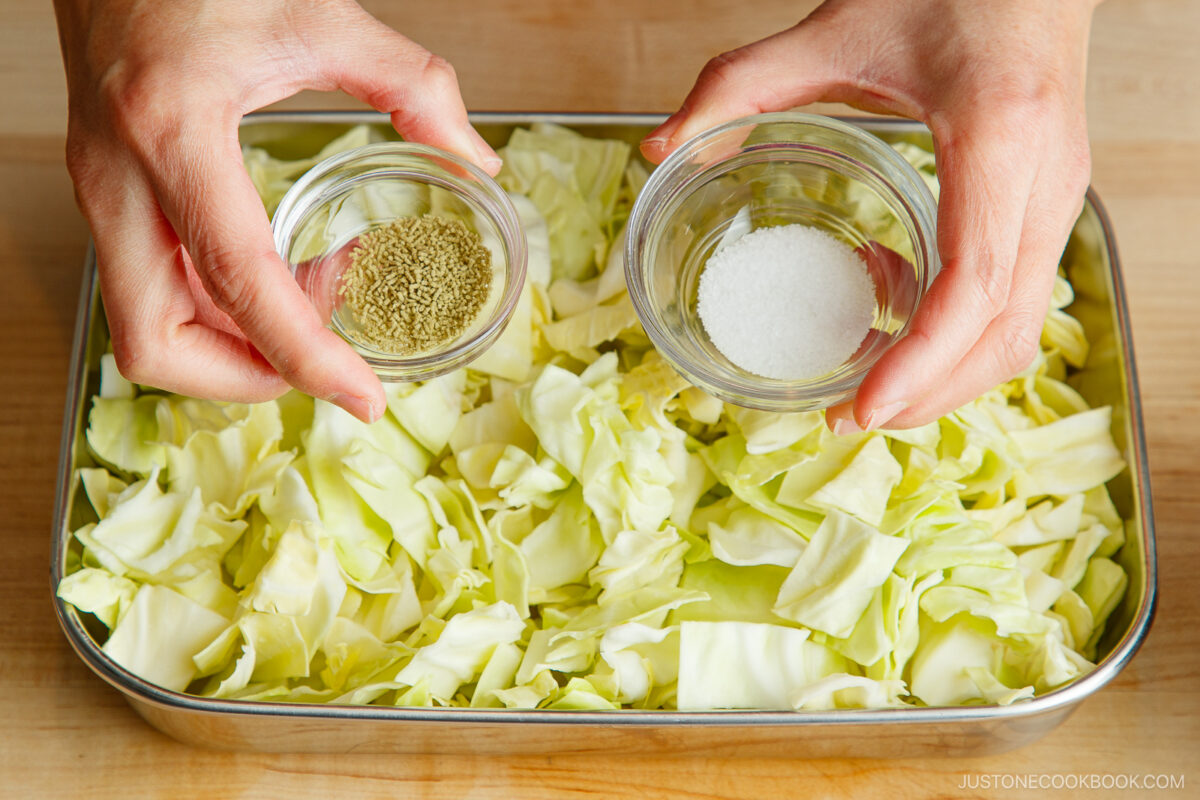
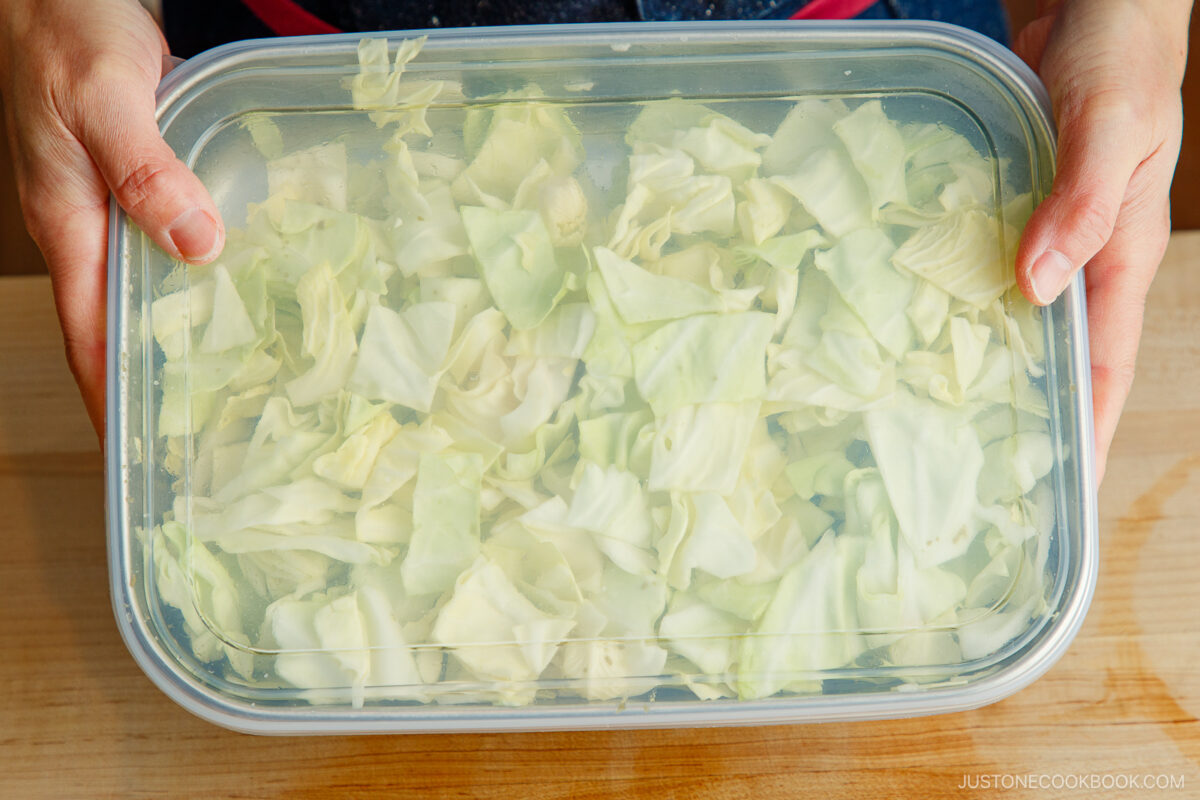
Green cabbage – Salting also keeps cabbage leaves crisp, juicy, and well seasoned.
Here’s how to salt it:
- Cut or tear cabbage leaves into bite-sized pieces.
- Sprinkle lightly with salt and toss.
- Rest it for 5 minutes.
- Gently squeeze out the moisture.
Nami’s Tip: Hand-torn cabbage creates uneven edges that stay crisp and hold sauces well. It’s perfect for stir-fries, pasta, and cozy homestyle salads like Yamitsuki Cabbage.
Blanching/parboiling
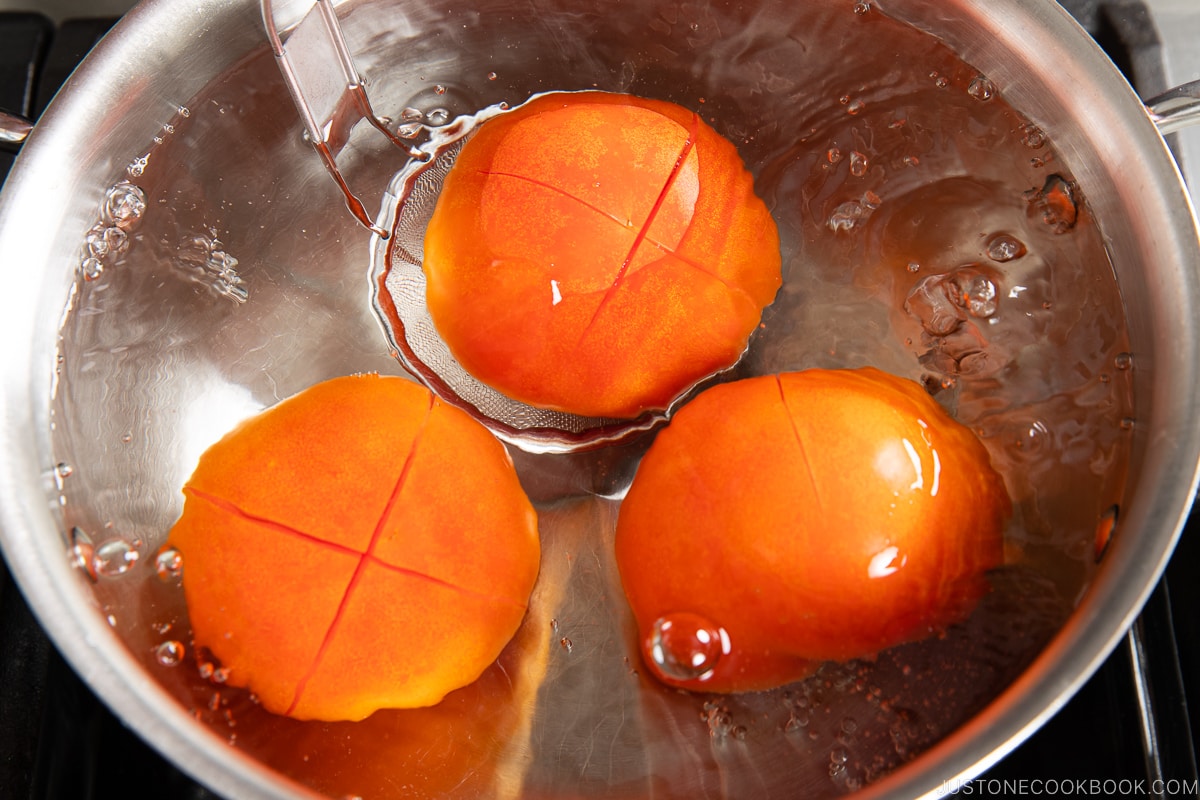
Blanching or parboiling preserves bright color (spinach, green beans), makes peeling easier (tomato), and removes bitterness/harshness.
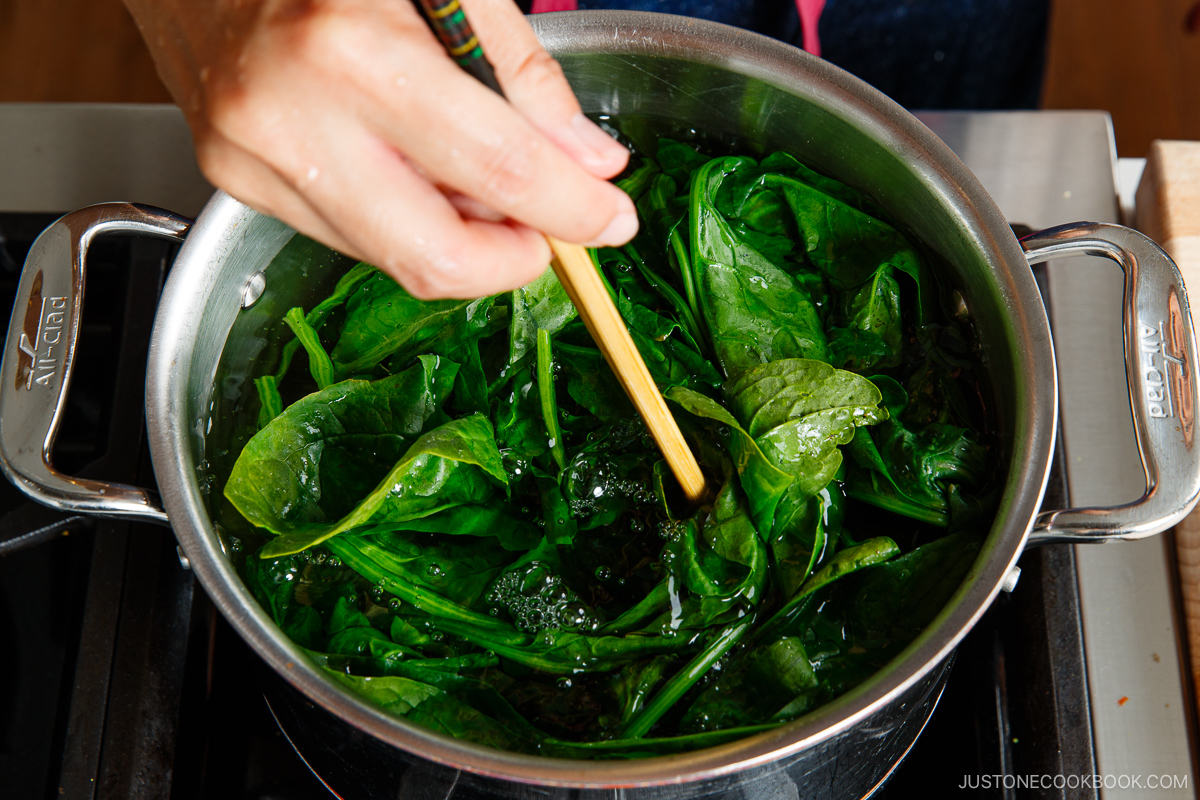
Spinach – It takes just five minutes to blanch spinach! Here’s how:
- Wash thoroughly of grit and dirt, especially around the roots.
- Don’t cut off the stems or roots! We eat the entire plant.
- Salt the boiling water.
- Lower the stems into boiling water for 20 seconds, then submerge the leaves for 30–45 seconds more.
- Shock in ice water for 1 minute to stop the cooking.
- Gently squeeze out the water.
- Cut into bite-size lengths. Include the stems and roots—yes, we eat them!
Once blanched, it’s ready to use now or freeze for up to 3-4 weeks.
Nami’s Tip: Add blanched spinach to rice bowls, soups, gratin, cream stew, tamagoyaki, sautés, stir-fries, and Udon Noodle Soup.
Fish & Meat Prep Work
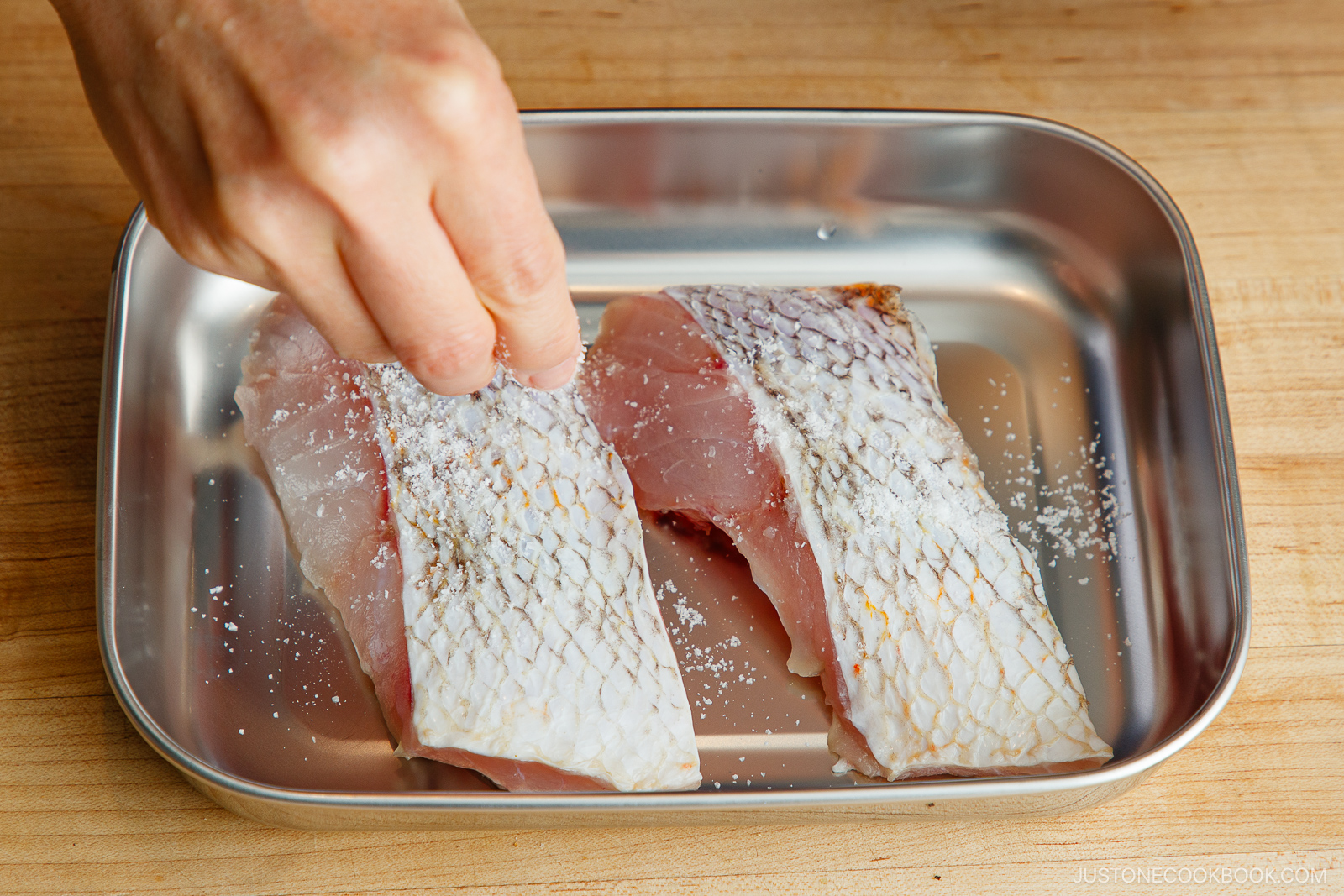
Salting
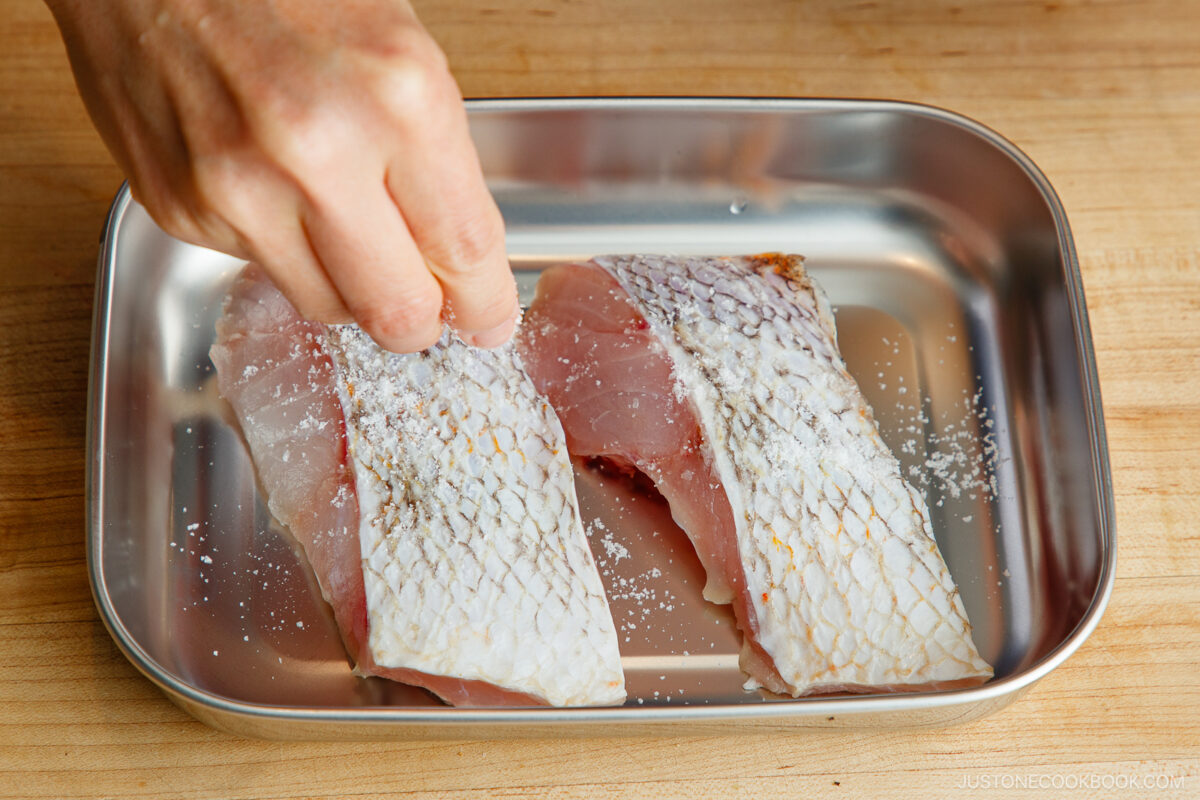
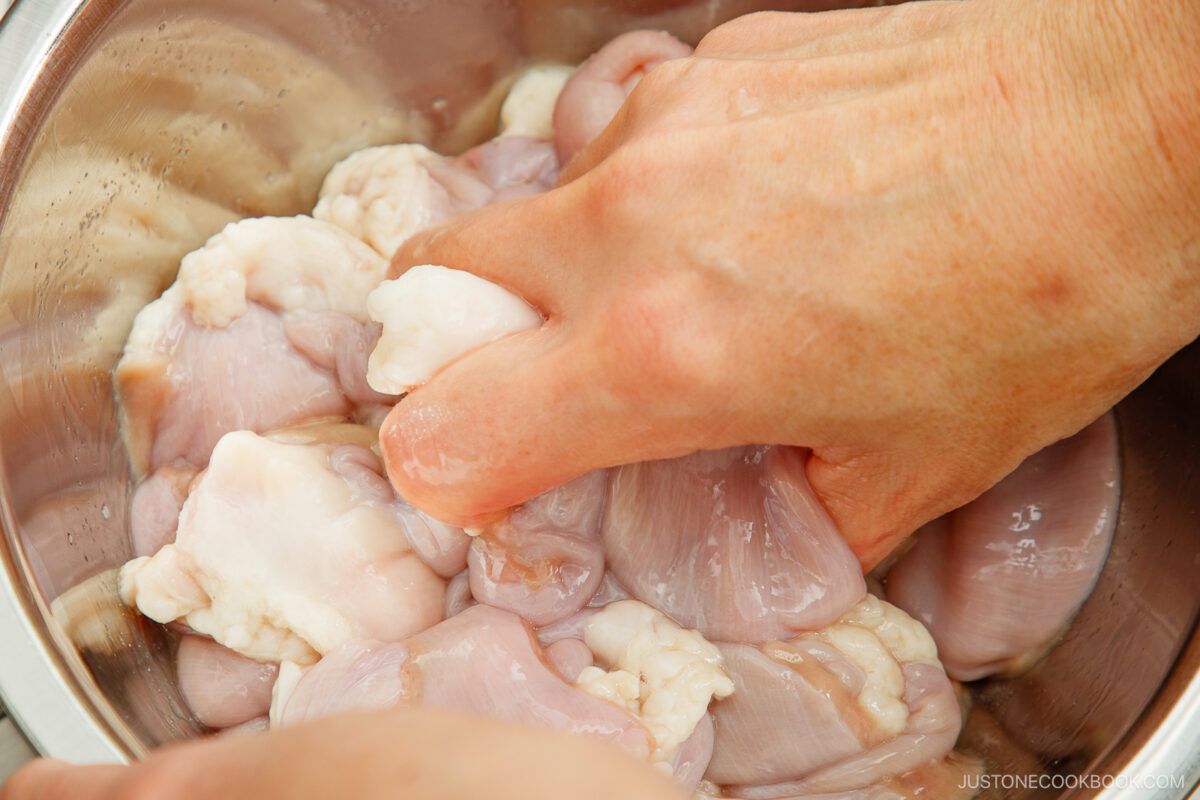
Salting removes unwanted odors (fish and offal).
Rinsing with Sake
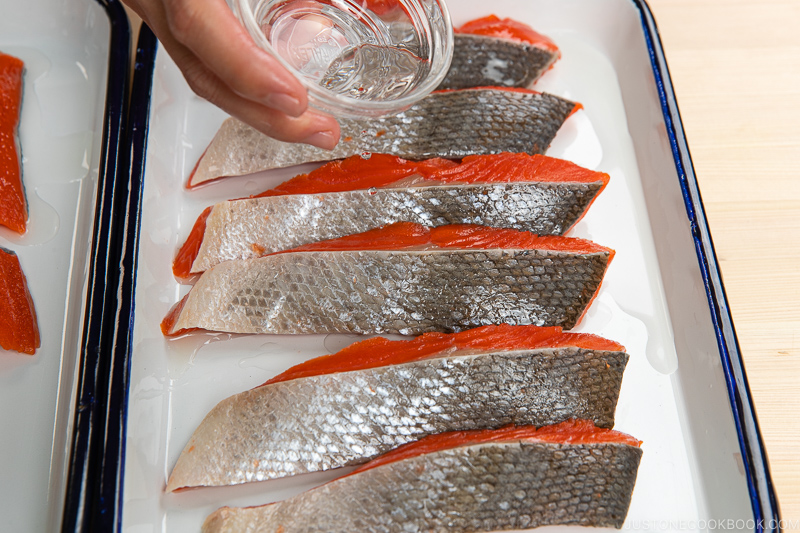
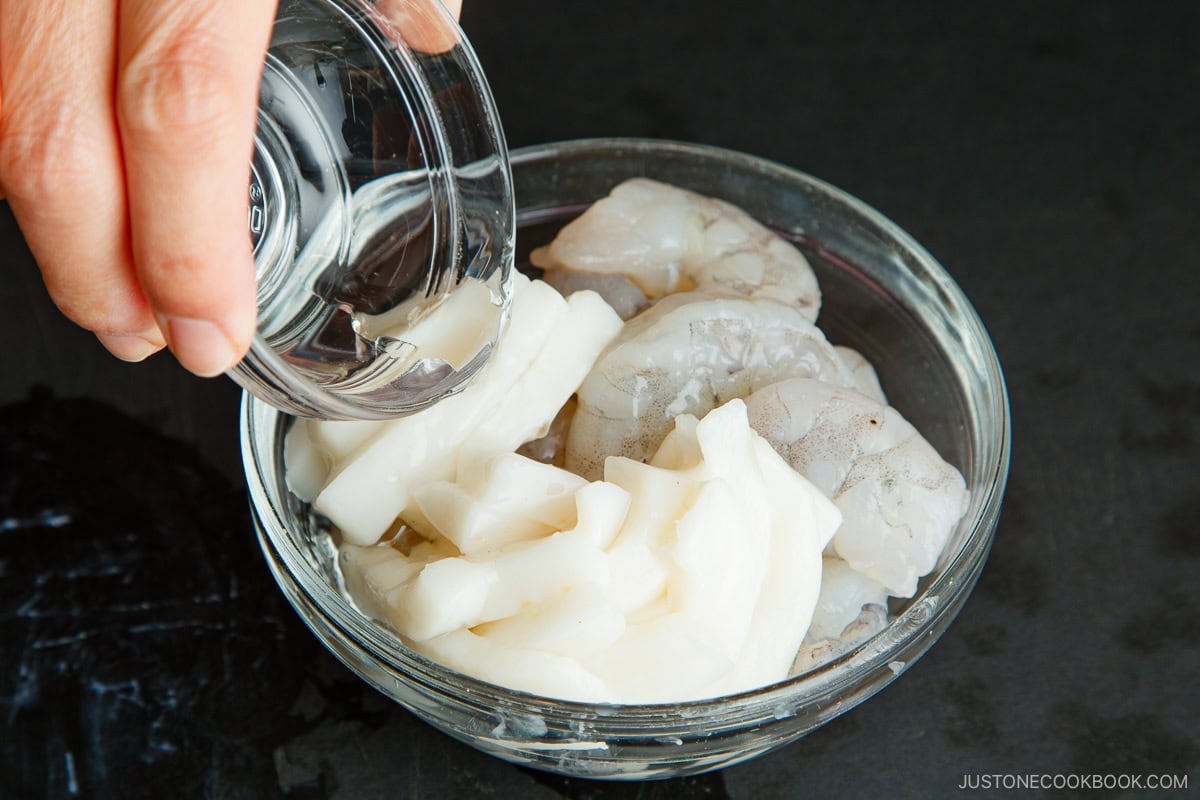
Rinsing with sake removes odors and improves texture.
Blanching/parboiling
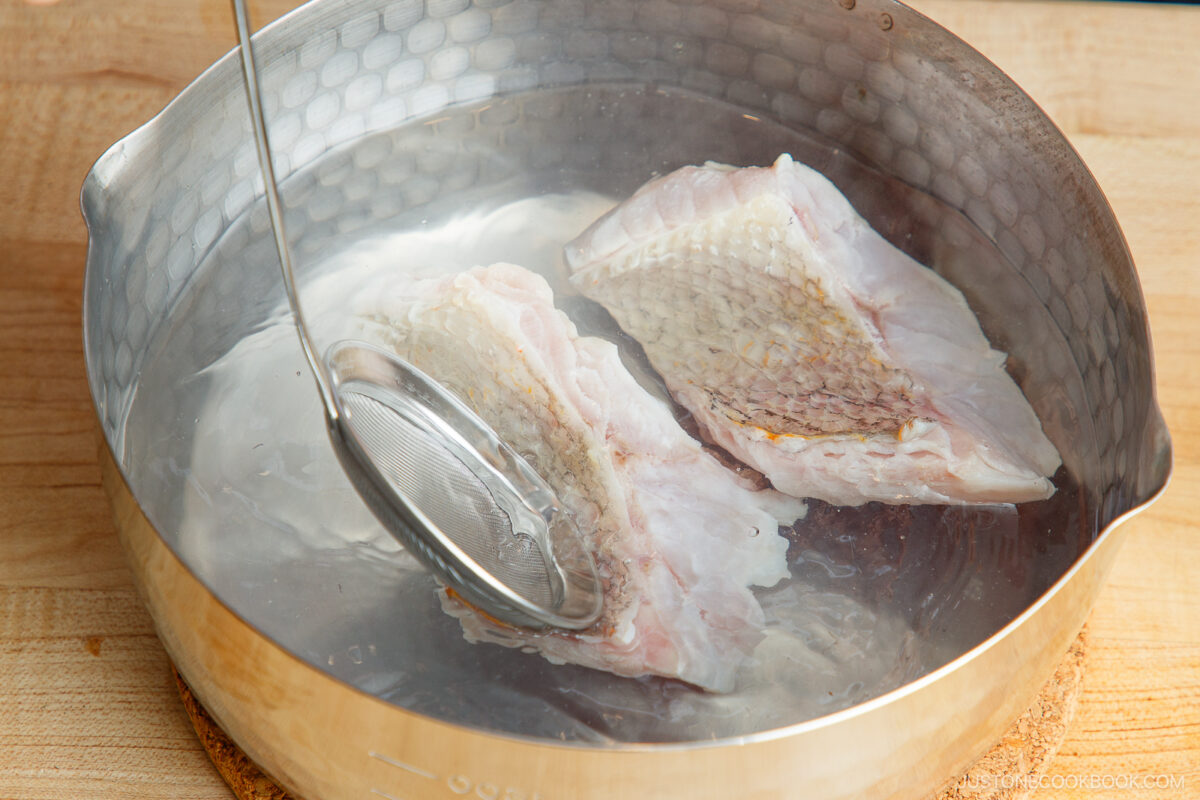
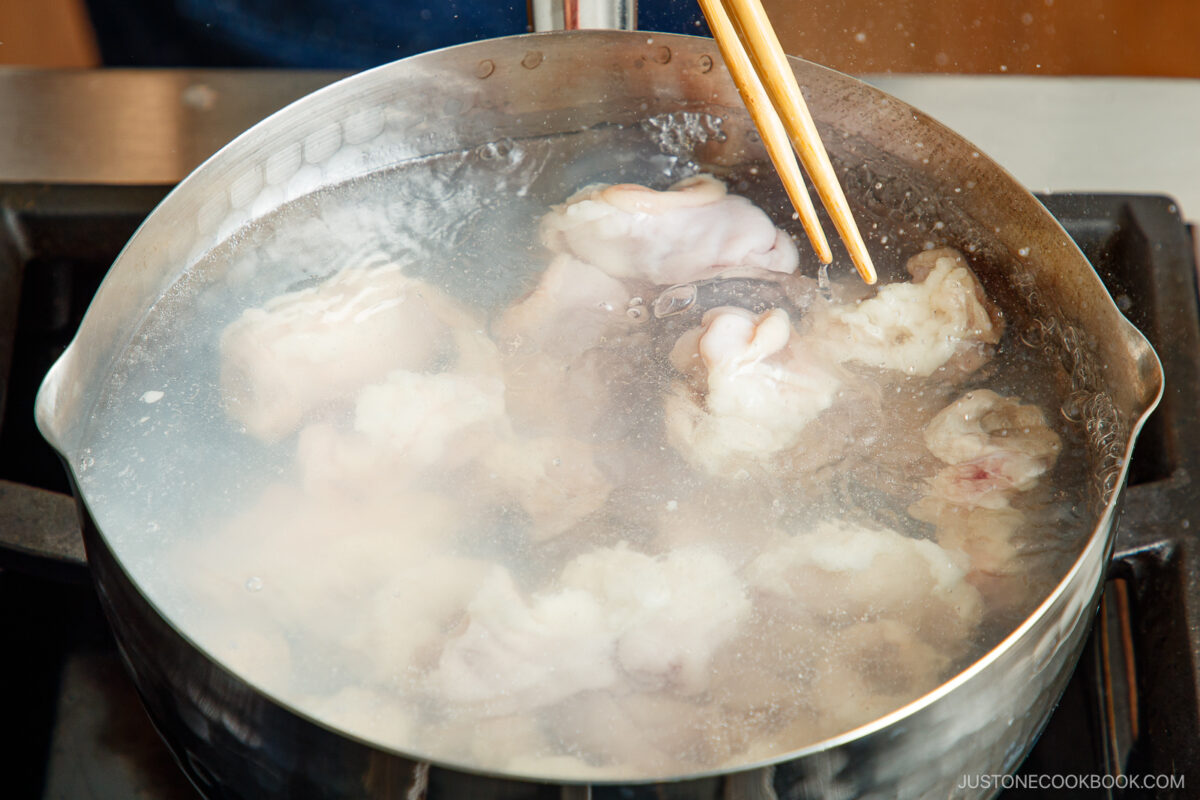
Blanching or parboiling removes odors and impurities and partially cooks the food.
Marinating/seasoning
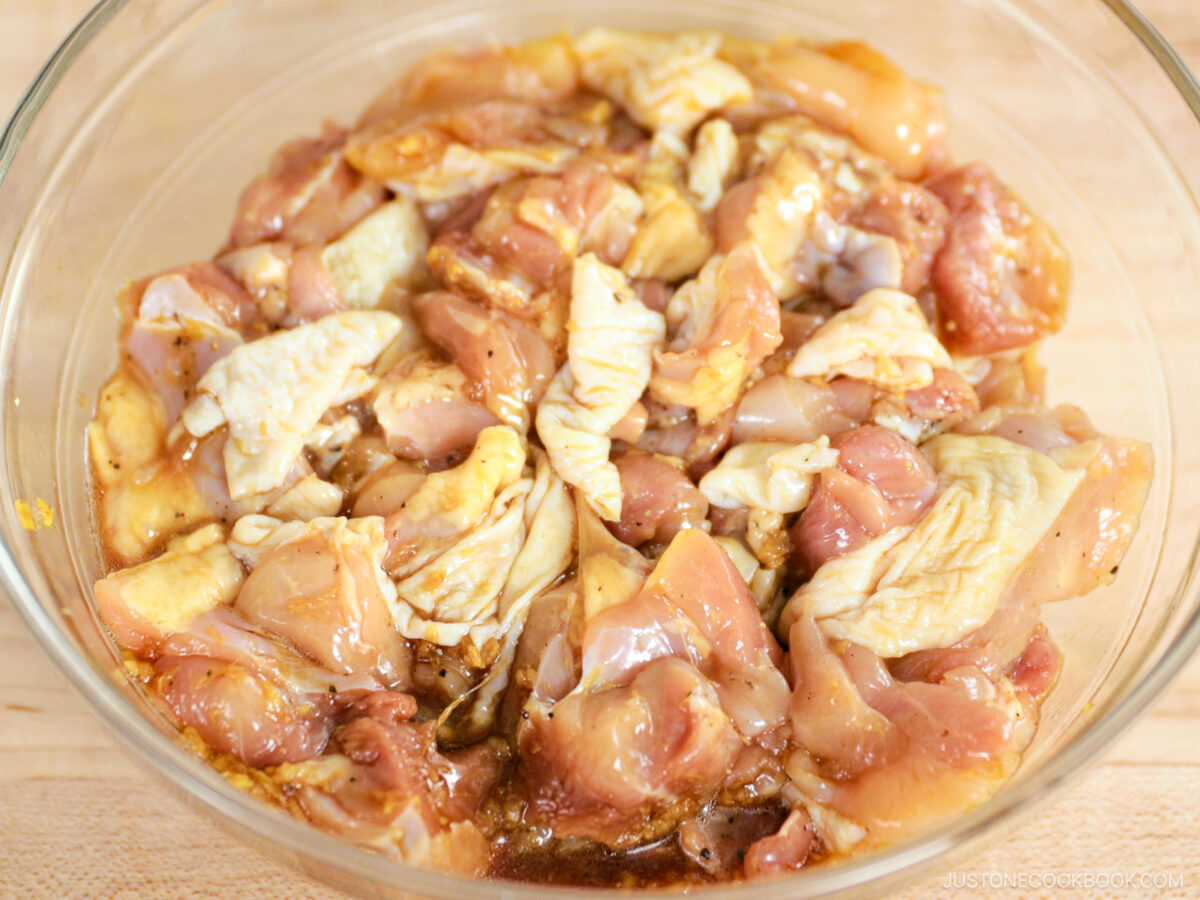
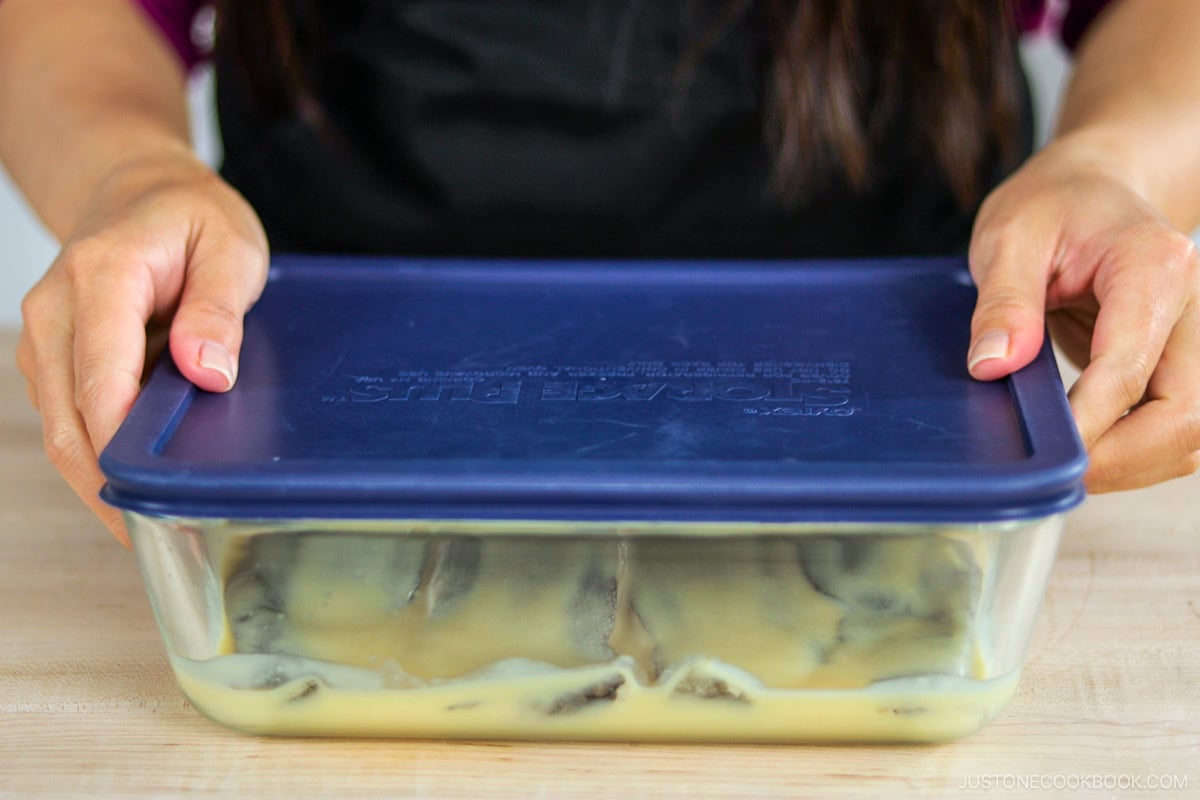
Marinating and seasoning infuse ingredients with flavor and improve seasoning absorption during cooking.
Why Does Prep Work Matter?
Prep work isn’t just busywork. I truly believe that food prep is the first step to a delicious meal! Let me assure you of three things:
- I always explain in my recipes how the prep is done, why it matters, and whether you can skip it.
- You’ll pick up lots of effective and practical techniques for Japanese cooking along the way.
- Your final dish will taste even more delicious because of the prep—sometimes, even without you realizing it!
Recipes to Try Japanese Prep Work
Take care of the ingredients from the start using these simple steps, and you’ll set yourself up for a truly delicious dish! Here’s a sampling of recipes using a variety of prep techniques:
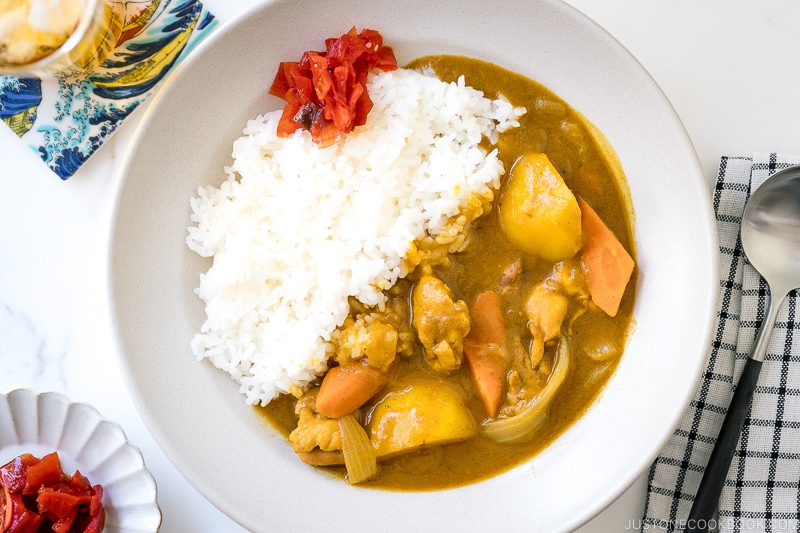
- Cutting – Japanese Chicken Curry; see more in Japanese Cutting Techniques & Tips
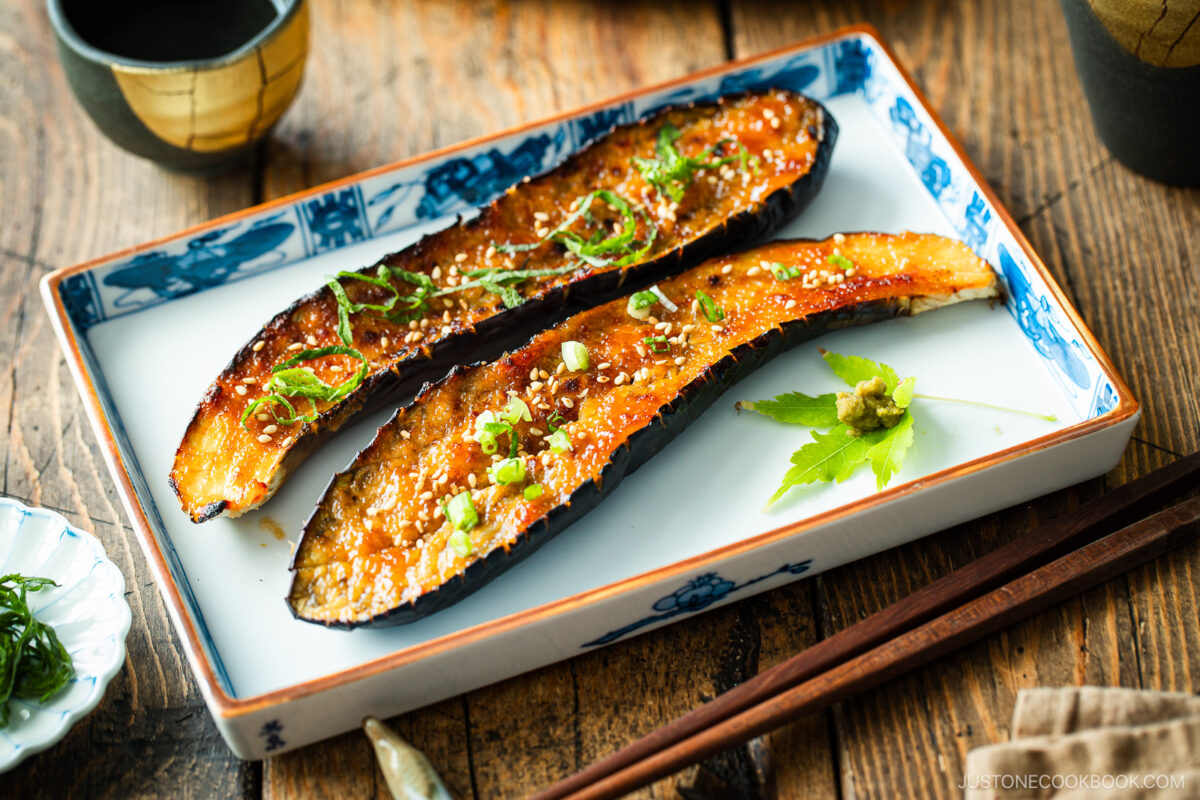
- Soaking – Miso-Glazed Eggplant
- Rubbing with salt – Japanese Cucumber Salad (Sunomono)
- Salting & rinsing – Miso Black Cod
- Blanching – Spinach with Sesame Miso Sauce
- Marinating – Karaage (Japanese Fried Chicken)