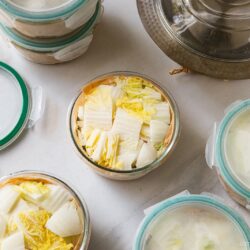
Japanese Hot Pot Meal Prep
Skip the long prep. This Japanese Hot Pot Meal Prep recipe lets you pack and freeze nabe kits ahead of time and cook a full meal straight from the freezer in 10 minutes—no planning or thawing needed.
Ingredients
For the Hot Pot Ingredients
- 3 pieces boneless, skinless chicken thighs
- 3 pieces aburaage (deep-fried tofu pouch)
- 1½ packages shimeji (brown beech) mushrooms
- 12 shiitake mushrooms
- 1 bunch shungiku (chrysanthemum greens)
- ¾ medium napa cabbage
- ¼ medium kabocha squash
- 4 inches daikon radish (about 1 lb or 450 g)
- 1½ medium carrots
- 1 Tokyo negi (long green onion)
For the Broth
- 2 cups water (or use homemade Awase Dashi or Vegan Dashi and skip the dashi packet below)
- 1 dashi packet (get it on Amazon; or use dashi powder)
- 1 Tbsp mirin
- 2 Tbsp soy sauce
Instructions
- Gather all the ingredients. Some ingredients don't freeze well—the texture can turn soft, spongy, or grainy. See Notes below.
To Prepare the Ingredients
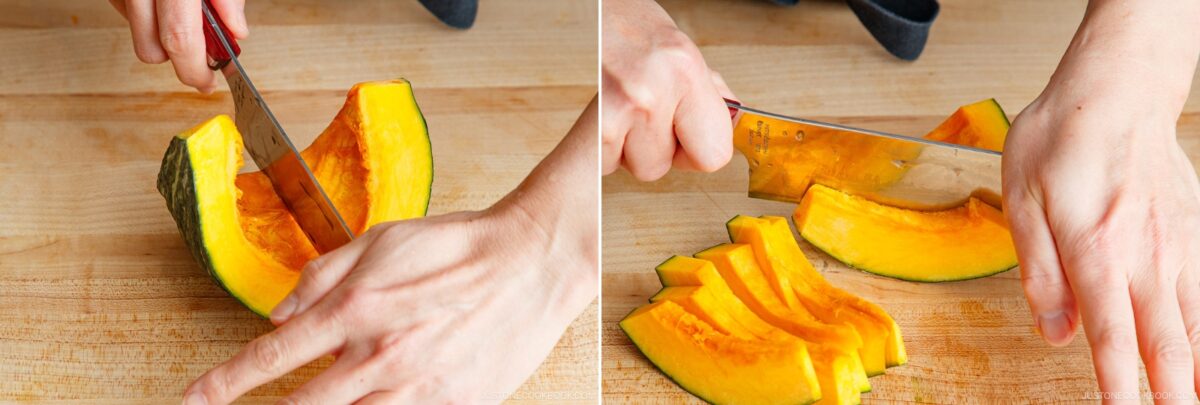
- Cut ¼ medium kabocha squash crosswise in half, then into thin slices. Nami's Tip: For my best tips and step-by-step instructions, see How to Cut a Kabocha Squash.
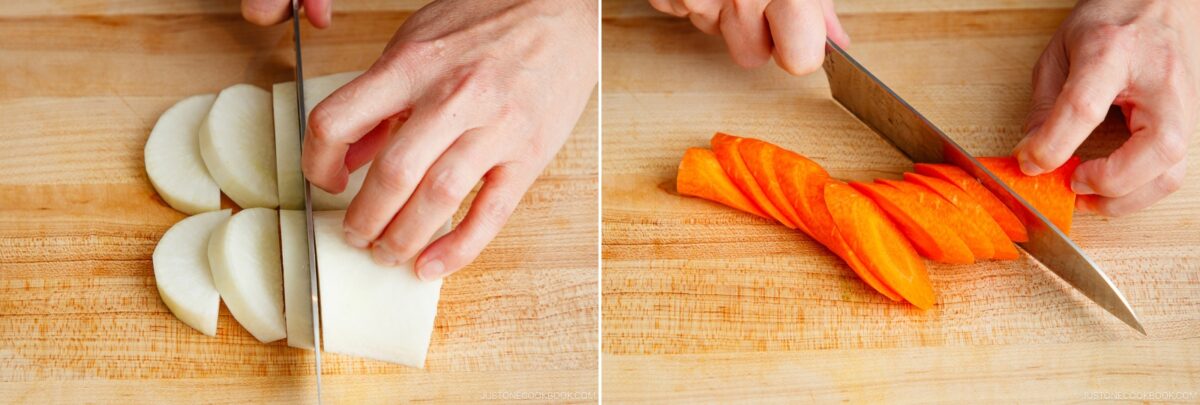
- Cut 4 inches daikon radish in half lengthwise, then crosswise into ⅜-inch (1-cm) half moons. Cut 1½ medium carrots diagonally into ¼-inch (6-mm) slices.
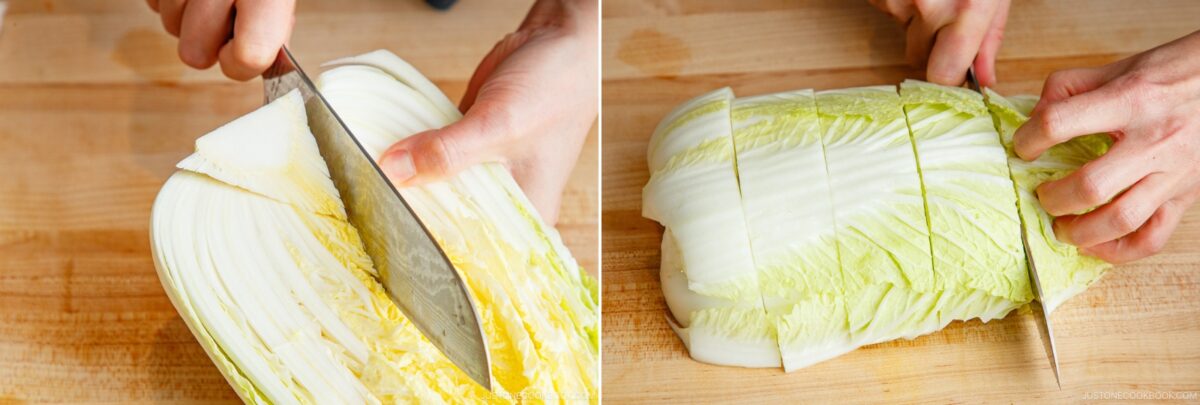
- Remove the core from ¾ medium napa cabbage. Cut the leaves crosswise into 1½-inch (3.75 cm) pieces. Separate the tender leaves and thick white parts.
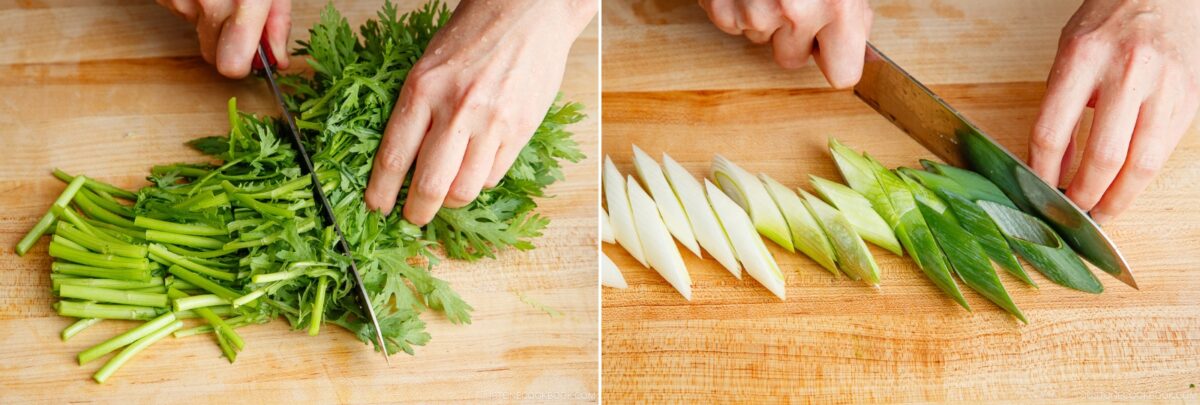
- Cut 1 bunch shungiku (chrysanthemum greens) into 2-inch (5-cm) pieces. Diagonally slice 1 Tokyo negi (long green onion) thinly.
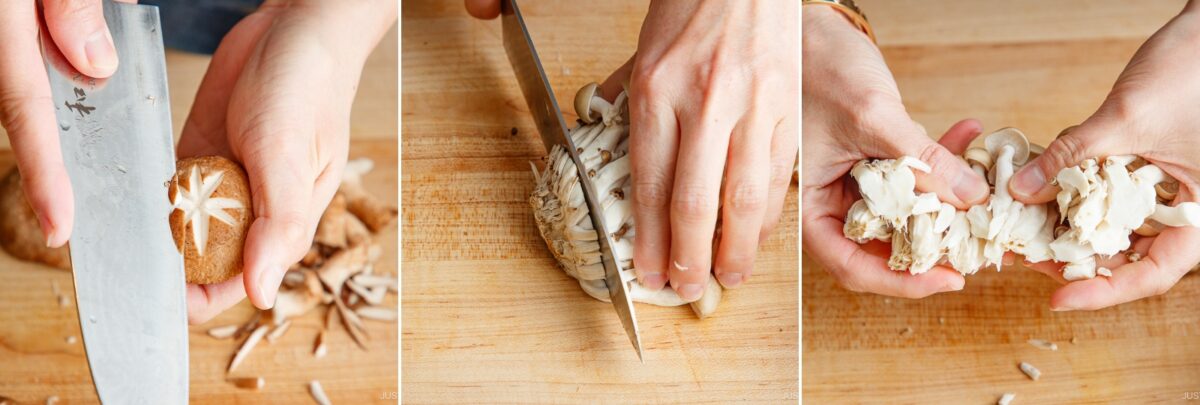
- Cut off the stems from 12 shiitake mushrooms. Make a decorative pattern on the caps, if desired. Cut off the root end from 1½ packages shimeji (brown beech) mushrooms and separate them into small clumps with your fingers.Nami's Tip: It's quite easy to decorate shiitake caps. Follow my step-by-step tutorial for How to Make a Flower Pattern on Shiitake Mushroom Caps.
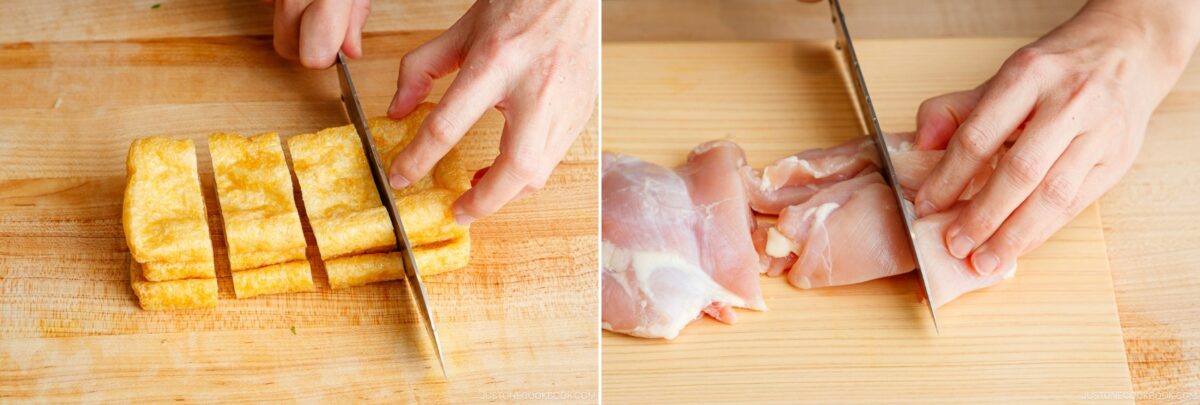
- Cut 3 pieces aburaage (deep-fried tofu pouch) crosswise into 1-inch (2.5 cm) pieces. Slice 3 pieces boneless, skinless chicken thighs into bite-size chunks about 2 inches (5 cm).
To Pack the Containers
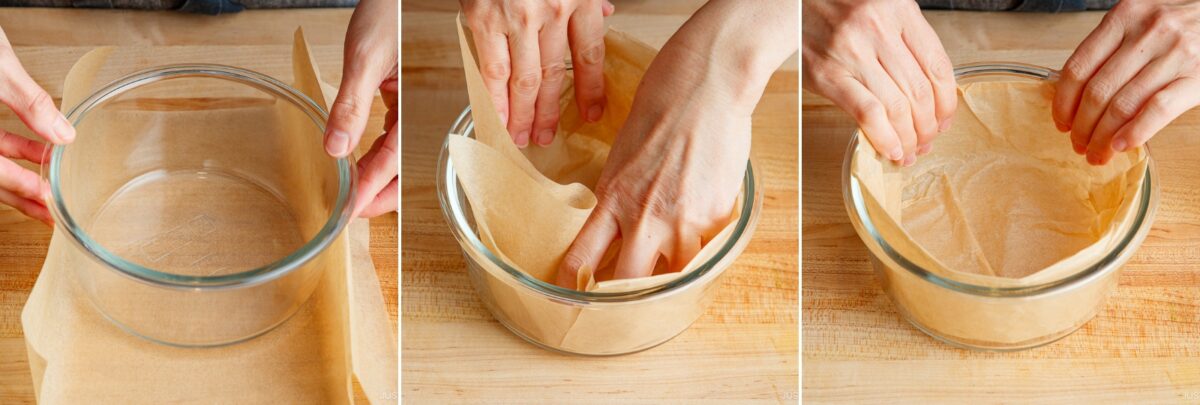
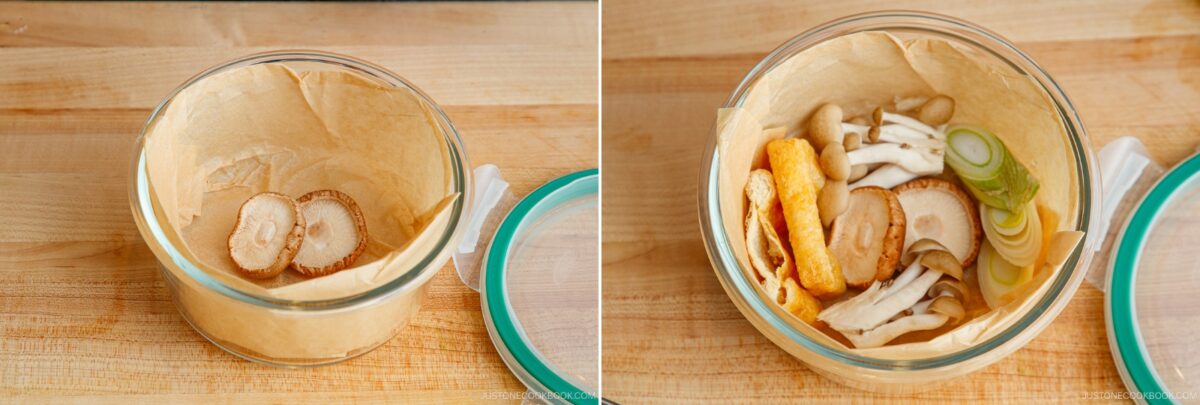
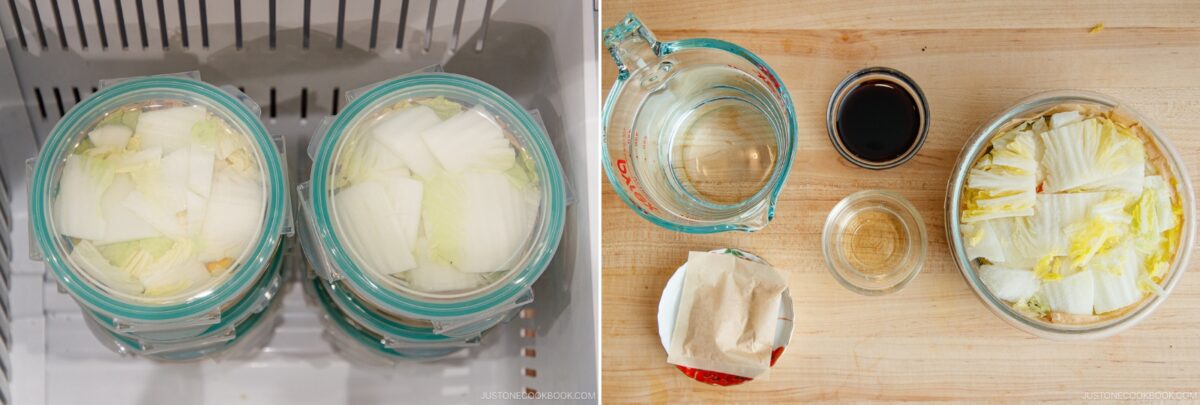
- Line 6 containers with parchment paper. This prevents food from bonding to the container as moisture freezes, making it easy to remove later. I use glass containers with airtight lids, but freezer-safe plastic bags work great too.
- Add the mushrooms, aburaage, and negi to the bottom of the containers, decorative side facing down.Nami's Tip: Flip the frozen block into the pot so the mushrooms land on top—they cook best with gentle heat, not direct boiling.
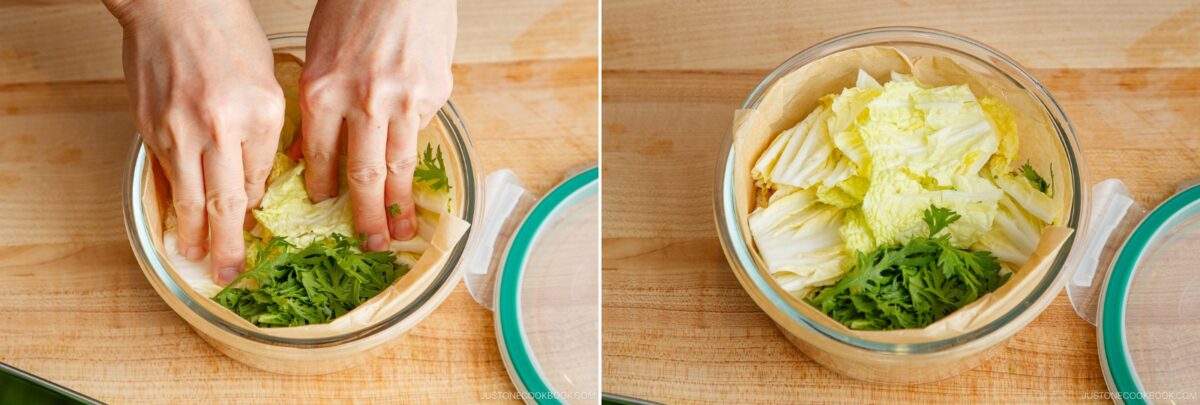
- Add the shungiku and tender napa cabbage leaves. Press down to compact the ingredients.
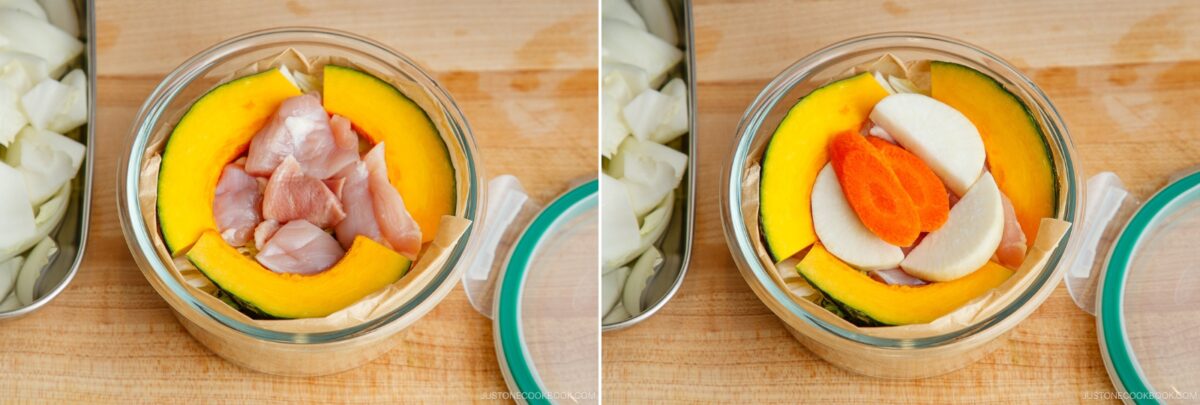
- Add the chicken and kabocha to the next layer. Keep the chicken away from the container walls so it doesn't bond when frozen. Top with the carrot and daikon.Nami's Tip: The thicker, slow-cooking ingredients are toward the top of the container. Once you flip the frozen block into the pot, they sink to the bottom where the heat is strongest.
- Add the thick napa cabbage on top and press down firmly. Pack the ingredients tightly so there's no loose space. Close the lids.
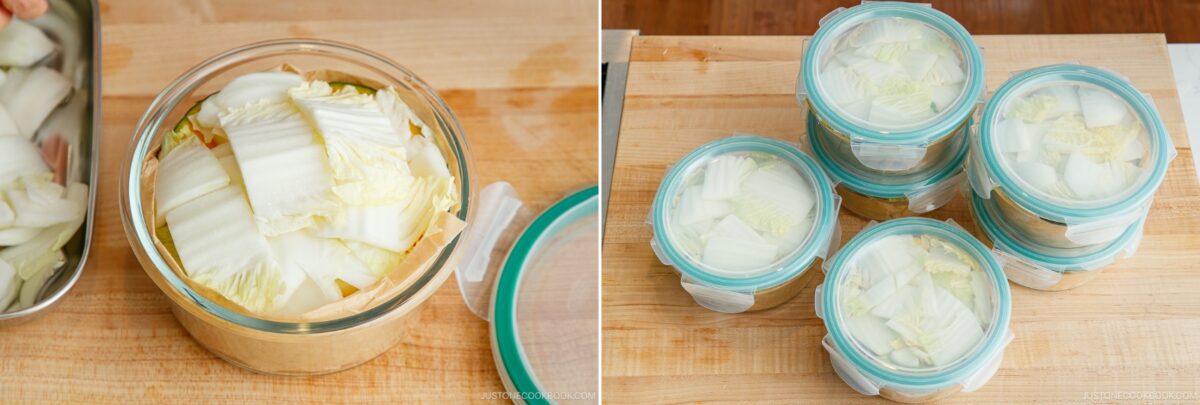
To Freeze
- Store the hot pot kits in the freezer for up to 1 month.Nami's Tip: To refrigerate instead, use within 1–2 days.
To Cook (One Serving)
- Gather the broth ingredients and one frozen meal prep container. Do not defrost—cook straight from frozen. Let it sit for 3–5 minutes before releasing.
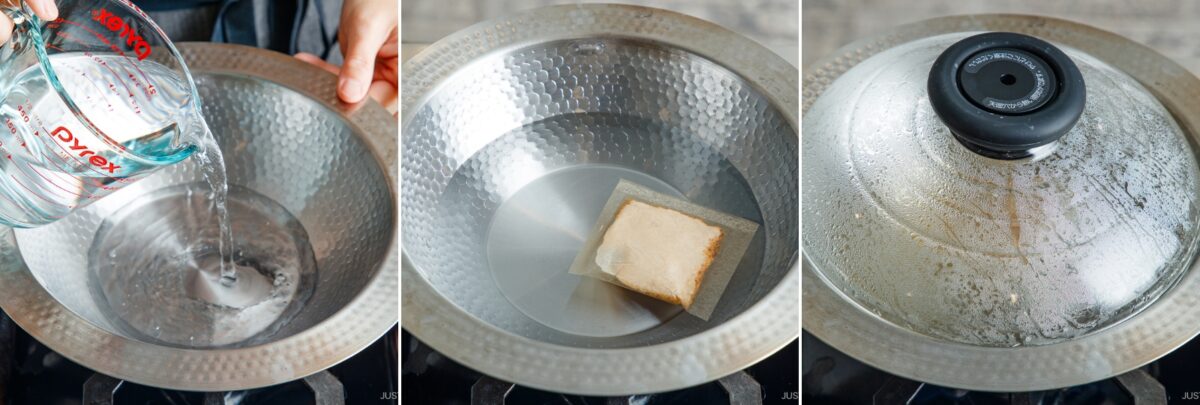
- Add 2 cups water and 1 dashi packet (do not open it) to a donabe or pot. Bring to a boil over medium heat. Shake the packet a few times, then reduce to medium low and simmer for 2–3 minutes.Nami's Tip: Use the dashi packet like a tea bag to steep flavor into the hot water.
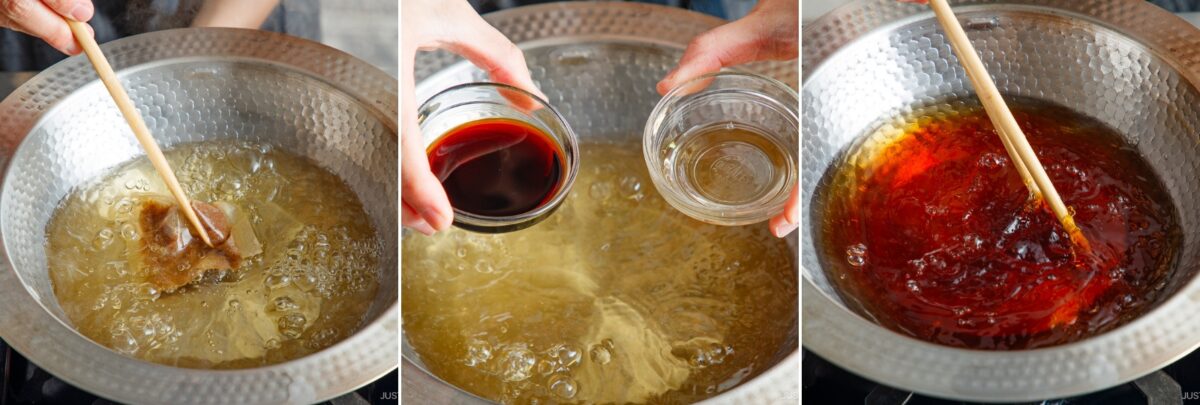
- Discard the packet. Add 1 Tbsp mirin and 2 Tbsp soy sauce to the stock. Stir to combine and bring it to a gentle boil.
- Remove the frozen hot pot ingredients from the container. If needed, run a butter knife along the sides to loosen before tipping out. Peel off the paper lining.
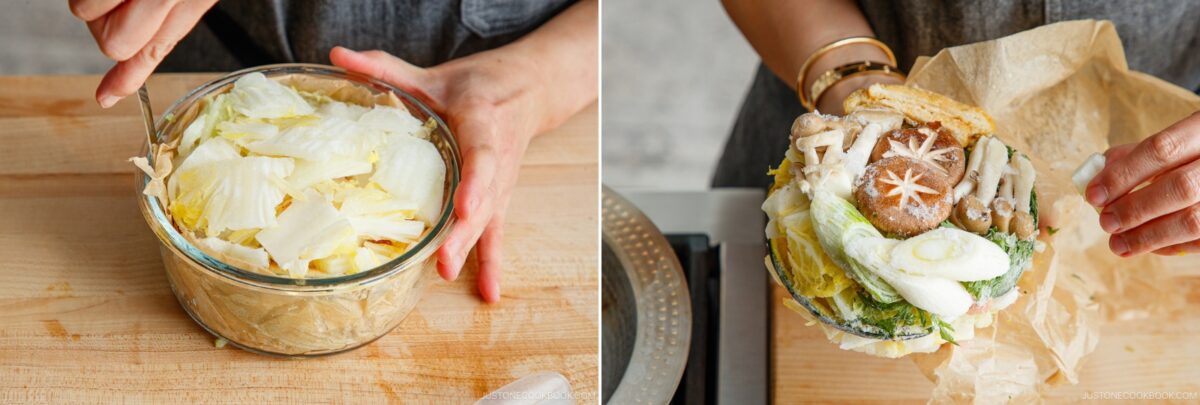
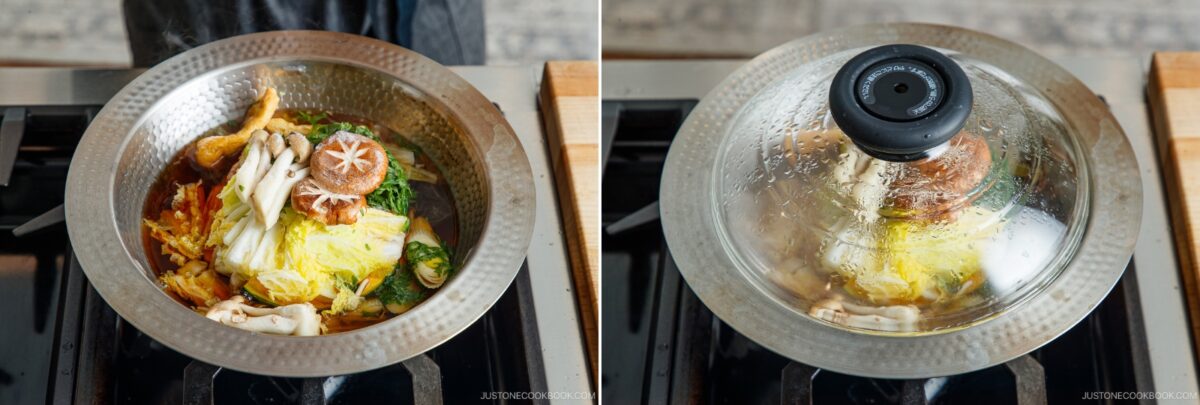
- Add the frozen block to the boiling broth, mushroom side up and napa cabbage side down. Cover and simmer for 10 minutes, until the chicken is opaque and cooked through and the vegetables are tender.
To Serve
- The hot pot is flavorful on its own, but Ponzu Sauce makes a great dipping sauce if desired.
To Store
- Store the leftovers in the refrigerator for up to 2–3 days. I do not recommend refreezing the leftovers.
Notes
Ingredients to avoid: Tofu, potatoes, Japanese sweet potatoes, konnyaku, shirataki noodles, and iceberg lettuce. Deep-fried tofu is exceptional.
Variations and Customizations
Looking to change things up? Try these easy and tasty ideas!
- Swap the protein. Replace the chicken with thinly sliced beef, pork, salmon, cod, scallops and seafood, fish balls, chicken meatballs, or fried tofu for a vegan version.
- Change up the mushrooms. Enoki, maitake, or oyster mushrooms all hold up well in this broth.
- Try different greens. Spinach, bok choy, kale, or watercress can sub for shungiku if it's hard to find.
- Make good homemade dashi. Try our classic Awase Dashi or Vegan Dashi in just 20 minutes.
- Season the broth differently. For more variety, explore other nabe broth styles—miso, sesame, or spicy.
