


This post may contain affiliate links. Please read my disclosure policy.
Years ago when I visited Japan, I had several occasions to eat rice cooked in a donabe (Japanese clay pot) at Japanese inns called ryokan and at rice specialty restaurants. It utterly blew my mind. The rice was unbelievably tender and fluffy—so tasty that I could not stop thinking about it!
At home, I’d been using my reliable rice cooker that made good, decent rice. And I had eaten rice made in a donabe countless times growing up. But this time, I was determined to start using a donabe that’s made just for cooking rice. My quest did not disappoint! Let me show you how I cook rice in a donabe in this tutorial and recipe.

Why You’ll Love This Recipe
I believe that a Japanese clay pot has the best capability to cook rice. In today’s recipe, I’m using a donabe rice cooker, which is specifically designed just for this task.
- Cook your rice perfectly in a donabe.
- Make the most delicious rice, simply put—so fluffy and tender!
- Retain heat and moisture. A donabe keeps your food so warm.
- Simple, rustic, and gorgeous tableware in which to serve your rice.
- Easy to use and maintain.
What is Donabe?
Donabe (土鍋) is a centuries-old Japanese cooking vessel made of special clay. It holds heat exceptionally well, which makes it ideal for dishes that require liquid and long cooking times. A highly versatile tool for everyday cooking, donabe comes in different sizes and variations to suit the ingredients or servings you’re preparing.

Donabe is essentially the ultimate one-pot wonder. You may be familiar with these earthenware vessels used to make Shabu Shabu and other hot pot dishes. Donabe is excellent for making soups, stews, and braised dishes as well as steamed and roasted foods. It also cooks the most amazing rice you’ve ever had!
The Right Rice-to-Water Ratio
Making rice with a handmade donabe also brings a more profound and sacred experience of the tradition of cooking rice. A high-quality donabe is not cheap, but it’s the best rice cooker your money can buy. The donabe will be your lifelong companion in the kitchen.
In Japan, we measure uncooked rice using the plastic rice cooker cup that comes with the rice cooker. This rice cooker cup measures ¾ cup (180 ml) and we call that amount ichi go (一合).
The Japanese golden ratio for white rice to water is 1 to 1.1 (or 1.2). This means to cook 1 part Japanese short-grain white rice in 1.1 or 1.2 parts room-temperature water.
Here’s how much water you need for each rice cooker cup:
1 rice cooker cup (180 ml) = add 200 ml of water
2 rice cooker cups (360 ml) = 400 ml
3 rice cooker cups (540 ml) = 600 ml
Calculation: 180 ml x 1.1 (or 1.2) = 198 ml (or 216 ml)
Can I Cook Brown Rice in a Donabe?
Yes, you can. However, the soaking time, cooking time, and steaming (resting) time for Japanese short-grain brown rice are all much longer than for white rice. Also, the rice-to-water ratio is 1 to 1.6 (or 1.7) for Japanese short-grain brown rice, so you’ll have to add more water for brown rice compared to white rice.
For the purposes of this tutorial, I’ll explain the process for cooking white rice. Please see the recipe card below for the complete instructions for how to cook brown rice in a donabe.

Ingredients You’ll Need
- Japanese short-grain white rice
- Water (at room temperature)
How To Cook Short-Grain White Rice in a Donabe
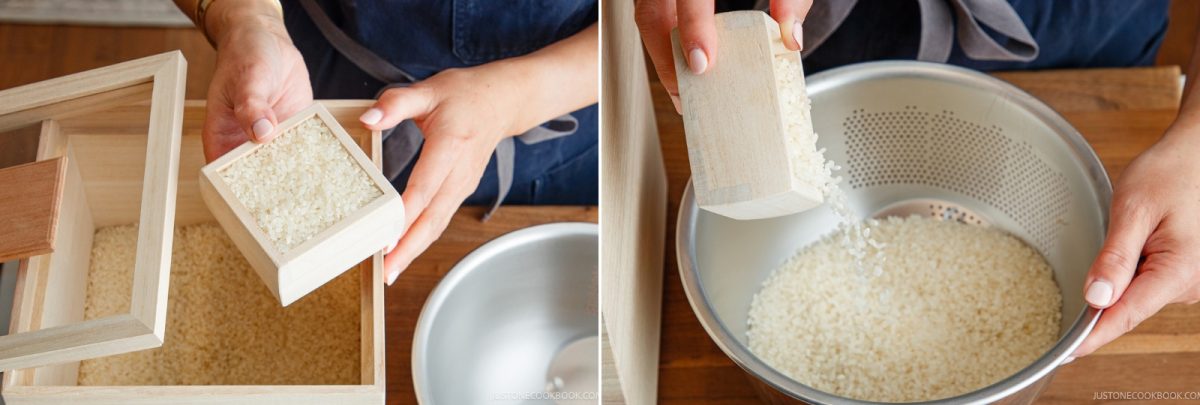
- Measure the rice. Overfill your rice cooker cup (or US measuring cup) with uncooked rice, then level it off.
- Wash and rinse. Start with an initial quick rinse, then wash and rinse the rice three times. See the recipe card for my detailed step-by-step instructions.
- Drain the rice very well. Use a fine-mesh sieve and shake off any excess water. Place in the donabe.
- Add the measured water.
- Soak the white rice for 20–30 minutes. This is very important! Don’t skip soaking.
- Set the donabe on a gas stove top. Make sure to dry the bottom of your donabe with a towel, first. Place the lid on top.
- Cook the white rice over medium-high heat for 13–15 minutes. Turn off the heat.
- Steam the cooked white rice for 20 minutes with the lid on (don’t open the lid).
- Fluff the rice. Insert a rice paddle vertically into the cooked rice and turn over a scoop from the bottom. Then, use a slicing motion to fluff it. Repeat, then enjoy!
How Much Rice Do I Need to Cook?

See how much rice to cook for how many servings you need:
- 2 rice cooker cups (360 ml, 1½ cups, 300 g) of uncooked rice
- 4⅓ cups, 660 g of cooked rice
- 4 rice bowls
- 6 onigiri rice balls
- 2.5 donburi bowls
- 4⅓ cups, 660 g of cooked rice
- 3 rice cooker cups (540 ml, 2¼ cups, 450 g) of uncooked rice
- 6⅔ cups or 990 g of cooked rice
- 6 rice bowls
- 9 onigiri rice balls
- 4 donburi bowls
- 6⅔ cups or 990 g of cooked rice
Helpful Notes to Remember:
- A typical rice bowl serving is 1 cup (150 g) of cooked rice.
- A typical donburi bowl serving is 1⅔ cups (250 g) of cooked rice.
- A typical onigiri (rice ball) weighs 3.9 oz (110 g) each.
- One cup of cooked brown rice weighs 5.3 oz (150 g).

Cooking Tips for Donabe Rice
- Always rinse and wash the rice. We always quickly rinse and wash the rice a few times. This is important to help remove impurities and the natural occurrence of arsenic on the rice.
- Short-grain rice always requires soaking (20–30 minutes), unlike other kinds of rice. The rice grains are rounder and fatter, so they need a head start to absorb moisture to the core of the kernel.
- Dry the bottom of the donabe with a towel. Otherwise, the donabe will crack.
- Never use high heat. Use medium-high (or medium heat for the commercial-grade stove).
- Let the cooked rice steam for 20 minutes when it’s done cooking. Steaming is essential! It’s the final step in cooking Japanese rice. Without it, your rice will not cook fully. Resist the urge to peek under the lid during this time. If you open the lid, you’ll release the precious steam crucial for this resting period.
- When you use new crop rice (新米), reduce the water slightly.
- When you get a different brand of rice, test cooking the rice and adjust the amount of water, if needed.
- The more rice you have in the pot, the more delicious your cooked rice will be. That’s because the most evenly cooked rice is in the center of the pot. The rice near the bottom and top simply cooks too fast. More rice in the pot means you’ll increase the central proportion of steamed rice for a more delicious outcome. That’s why I recommend cooking at least 2–3 rice cooker cups of uncooked rice at a time, even if you need less. You can always freeze the extra rice with good results.
My Two Favorite Donabe Rice Cookers


- Non-stick Comfort 3-Cup Rice Donabe
- Ginpo Kikka Lapis 3-Cup Rice Donabe
- Ginpo Kikka Lapis 3-Cup Rice Induction Compatible Donabe
- Hario Gohangama
You can also see my page on How To Choose the Best Donabe for your overall cooking needs.
Season Your Donabe Before First Use

Before you use a new donabe, learn How to Season Your Donabe and season it properly before using it. In this post, I also share some incredibly useful tips on how to care for your donabe so your precious earthenware pot can last you for a lifetime.
Other Ways to Cook Japanese Short-Grain Rice
- How To Cook Rice in a Rice Cooker
- How To Cook Rice in a Pot over Stovetop
- How To Cook Rice in an Instant Pot
How To Cook Rice in a Donabe

Ingredients
★ WHITE RICE (Base Ratio 1 : 1.1)
For 4–5 Rice Bowls (2 rice cooker cups):
- 1½ US cups uncooked Japanese short-grain white rice (2 rice cooker cups (360 ml))
- 1⅔ US cups water (400 ml)
For 6–7 Rice Bowls (3 rice cooker cups):
- 2¼ US cups uncooked Japanese short-grain white rice (3 rice cooker cups (540 ml))
- 2½ US cups water (600 ml)
★ BROWN RICE (Base Ratio 1: 1.5)
For 4–5 Rice Bowls (2 rice cooker cups):
- 1½ US cups uncooked Japanese short-grain brown rice (2 rice cooker cups (360 ml))
- 2¼ US cups water (540 ml)
For 6–7 Rice Bowls (3 rice cooker cups):
- 2¼ US cups uncooked Japanese short-grain brown rice (3 rice cooker cups (540 ml))
- 3½ US cups water (810 ml)
Instructions
Before You Start
- Do not scale this recipe (2 x or 3 x). Always cook at least 2–3 rice-cooker cups (360–540 ml) for optimal heat circulation, uniform steam distribution, and better texture. Extra rice freezes and reheats wonderfully—tasting significantly better than a small batch cooked from just 1 cup.
- Do not skip soaking rice. Soak white rice for 20–30 minutes and brown rice for 6–12 hours.
To Wash the Rice
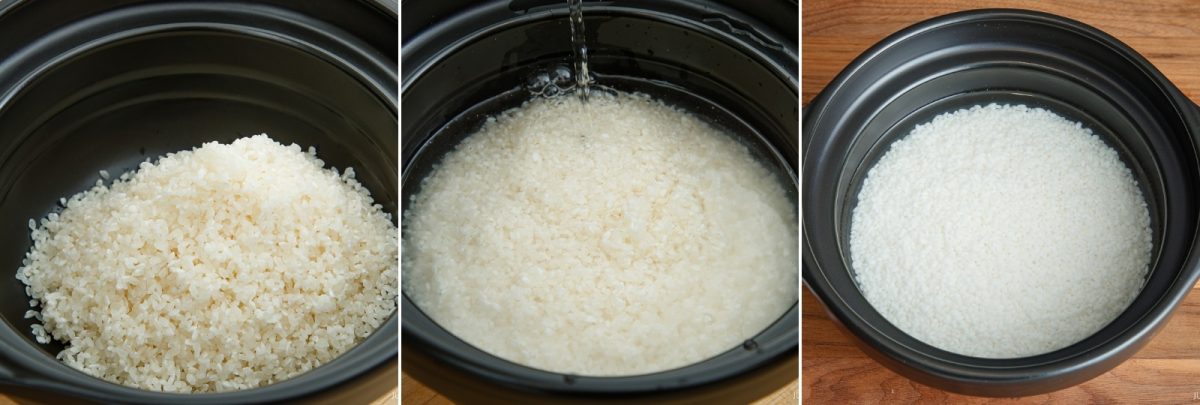
- Measure: Level off a rice-cooker cup (¾ US cup / 180 ml) of uncooked short-grain rice and add to a rice washing bowl. Repeat until you have the desired amount.
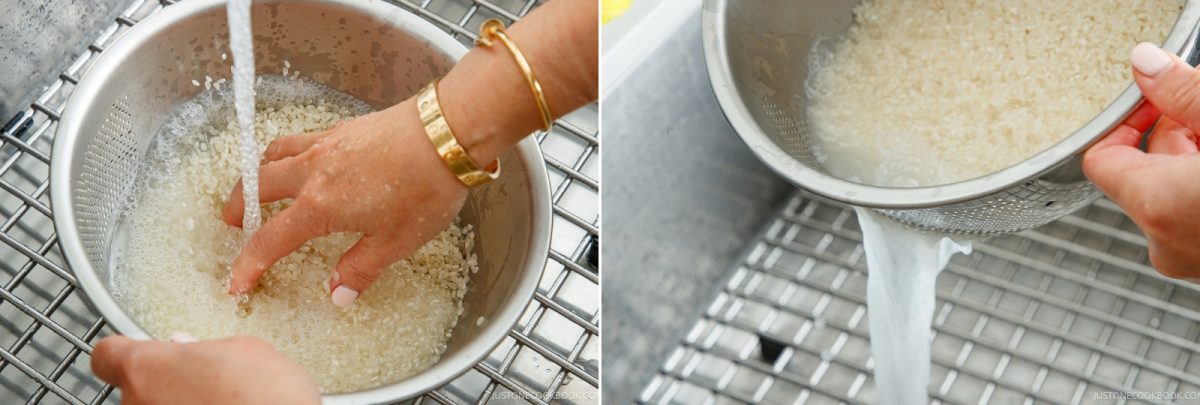
- Quick Rinse: Cover with water, swirl briefly, and drain immediately. Repeat once to prevent the rice from absorbing stale starch water.
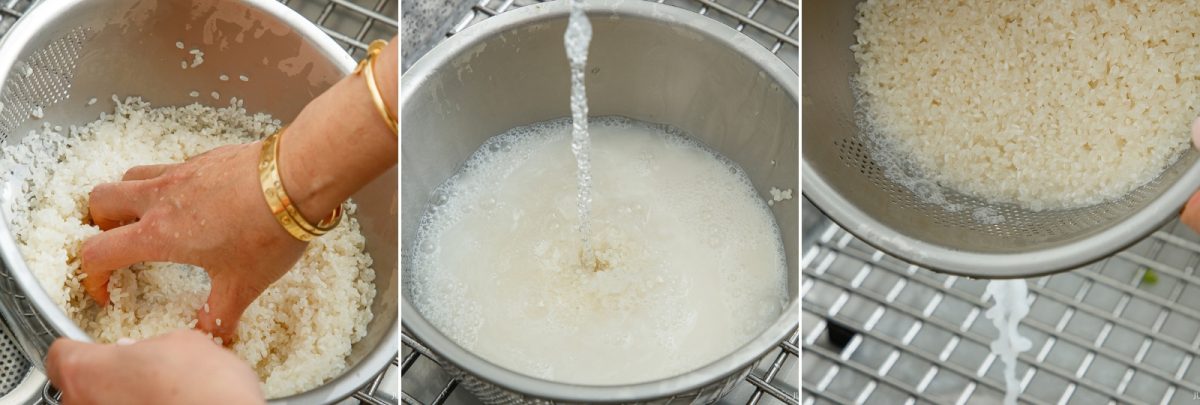
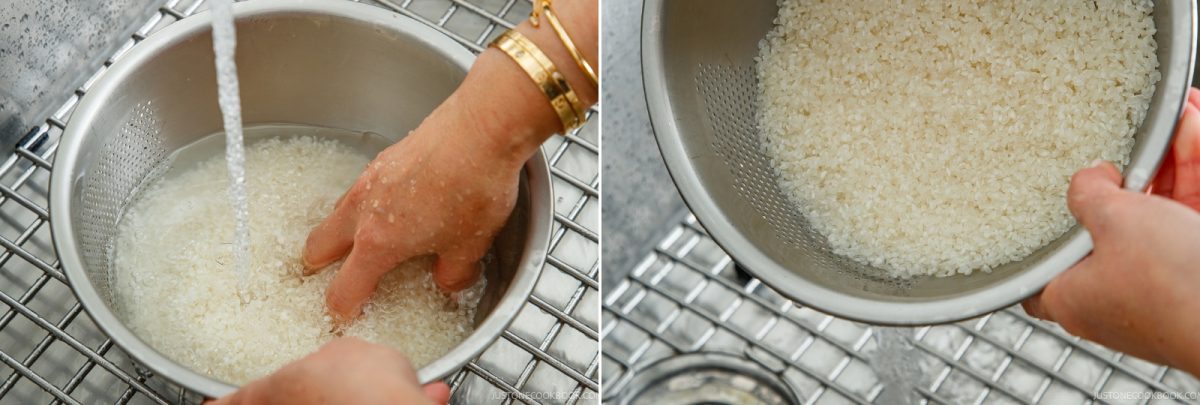
- Wash: Gently rub the wet rice in a circular motion with minimal water for 10–15 seconds so the grains scrub each other.Rinse: Add fresh water, swirl, and drain immediately.Repeat Repeat the Wash and Rinse steps two more times until the water runs mostly clear.
- Drain: Drain thoroughly using a fine-mesh sieve, gently shaking off excess water.
To Soak the Rice
- Combine: Transfer drained rice to the donabe and add room-temperature water. Level the rice evenly.Soak: Cover with the glass lid and soak 20–30 minutes for white rice or 6–12 hours for brown rice (optional: add a pinch of salt to help reduce brown rice's bitterness).
To Cook the Rice
★ WHITE RICE (about 12–14 minutes)
- Cook the white rice on a gas stove over medium-high heat.
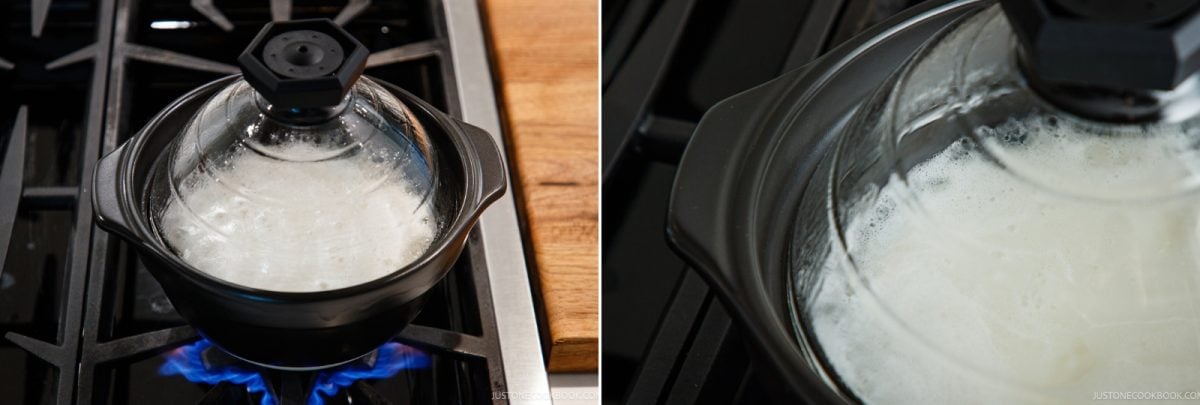
- It takes about 10 minutes to reach a boil—watch for bubbles building up inside the glass lid.When the whistle blows, cook for 1 minute (or 2 minutes for okoge, the scorched rice at the bottom).
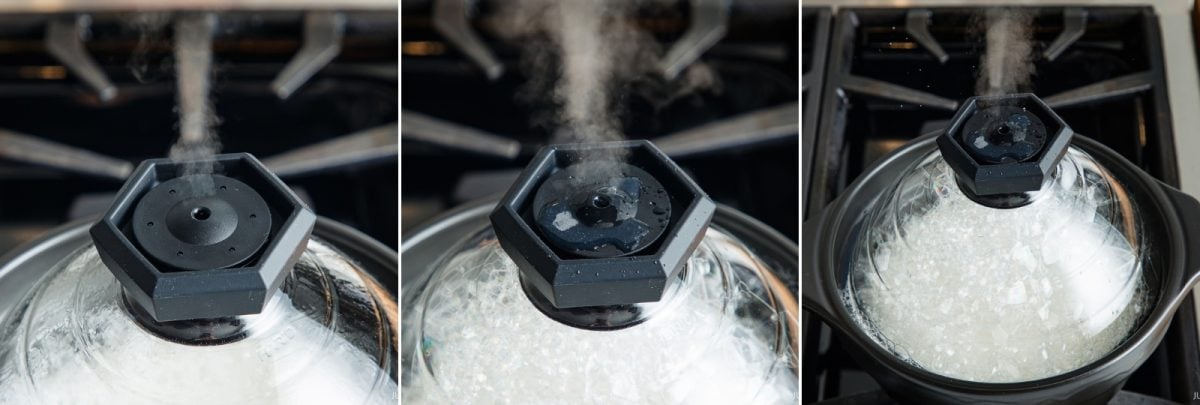
★ BROWN RICE (about 30 minutes)
- Cook the brown rice on a gas stove over high heat. When the whistle blows, reduce to low heat and cook for about 20 minutes.
To Steam the Rice
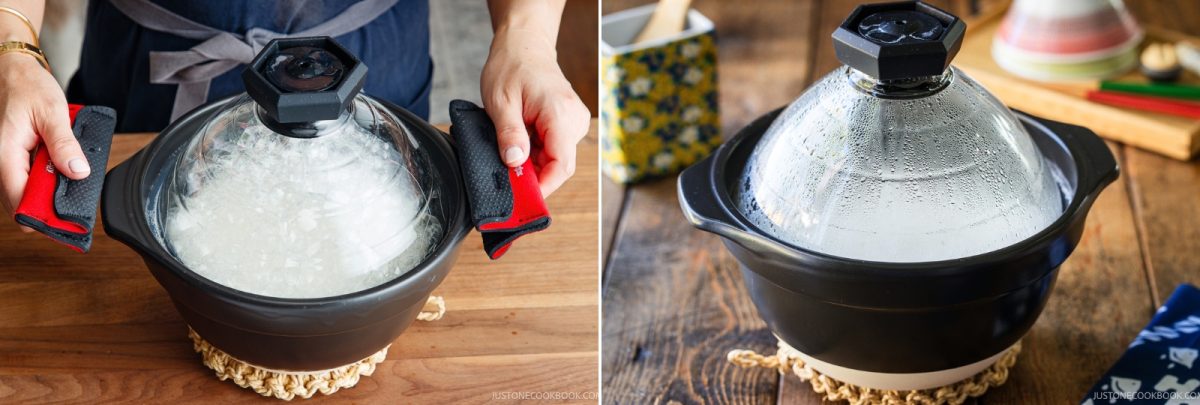
- Turn off the heat and remove the donabe from the hot stove. Keep the lid on and let it steam for 15 minutes for white rice and 20 minutes for brown rice. You can also bring the donabe to the table. Nami's Tip: This resting time is essential for proper steaming—avoid lifting the lid and releasing steam.
To Serve
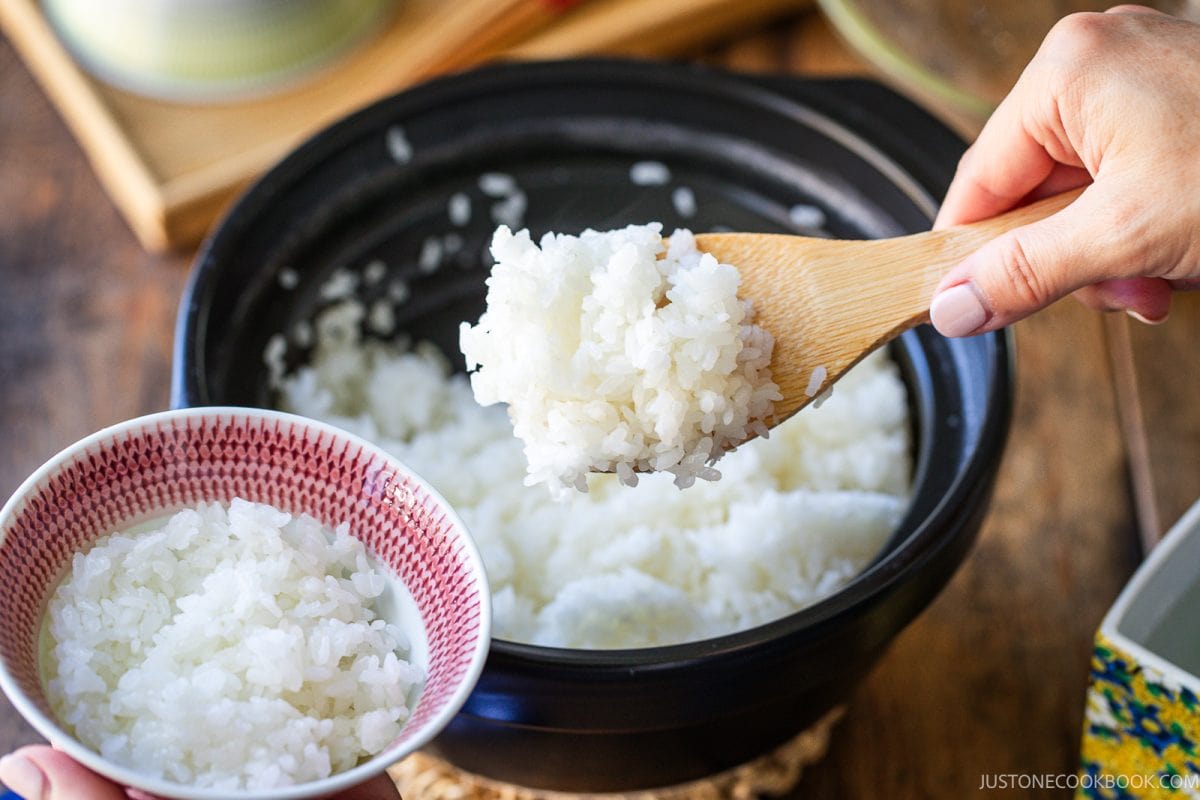
- Fluff the rice with a rice paddle, and it‘s ready to serve.
To Store
- Transfer rice to airtight containers, close the lid to retain moisture, and cool completely before freezing. Read this post for details.

Notes
- 1 rice-cooker cup (180 ml) of uncooked white rice weighs 5.3 oz (150 g).
- 1 rice-cooker cup yields 2 rice bowls, 3 onigiri (about 110 g each), or 2¼ cups / 330 g cooked rice.
- 1 US cup (240 ml) of cooked white rice weighs about 5.3 oz (150 g).
Nutrition
The nutrition facts shown are generated by an online calculator and are estimates only. Please consult a professional nutritionist for specific dietary needs.
Did you make this recipe?
Tag @justonecookbook on Instagram so we can see your delicious creation!