

Recipe Highlights
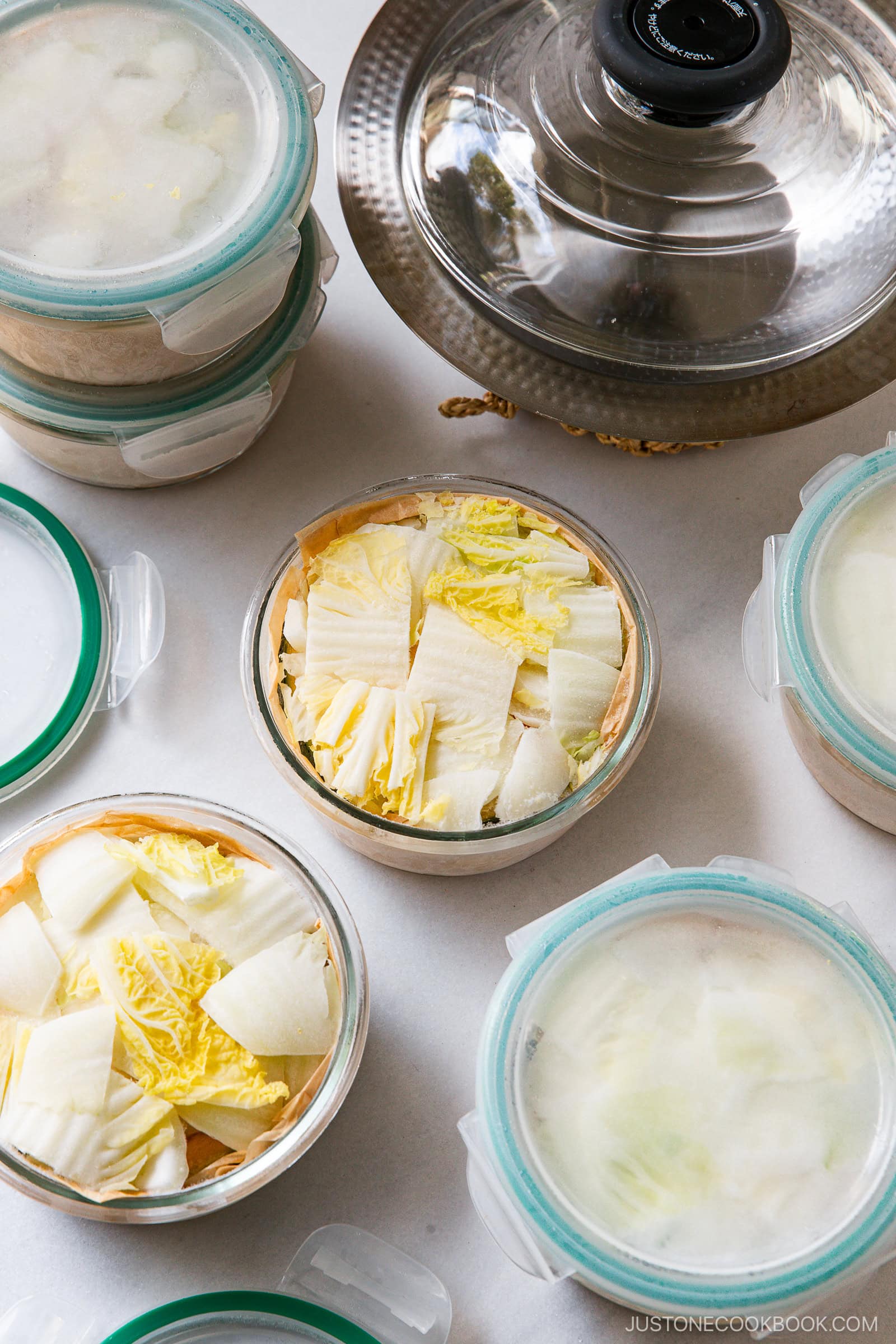
My son is always juggling studying, work, and a social life, so I taught him to meal prep his favorite hot pot. He packs individual containers of vegetables, chicken, fried tofu, and mushrooms and stashes them in the freezer. They’re ready to cook after a long day.
A weeknight nabe takes almost no effort. With a frozen Japanese Hot Pot Meal Prep kit, a quick dashi broth, and seasonings, dinner is on the table in 10 minutes.
- Prep once, eat six times – makes 6 individual frozen kits
- Cook straight from frozen – no defrosting needed
- Fully customizable – switch it up with in-season vegetables and your favorite proteins
If you love nabe and Japanese hot pot, try my Sukiyaki Recipe, Mille-Feuille Nabe, and Chanko Nabe recipes next!
What is Japanese Hot Pot Meal Prep?
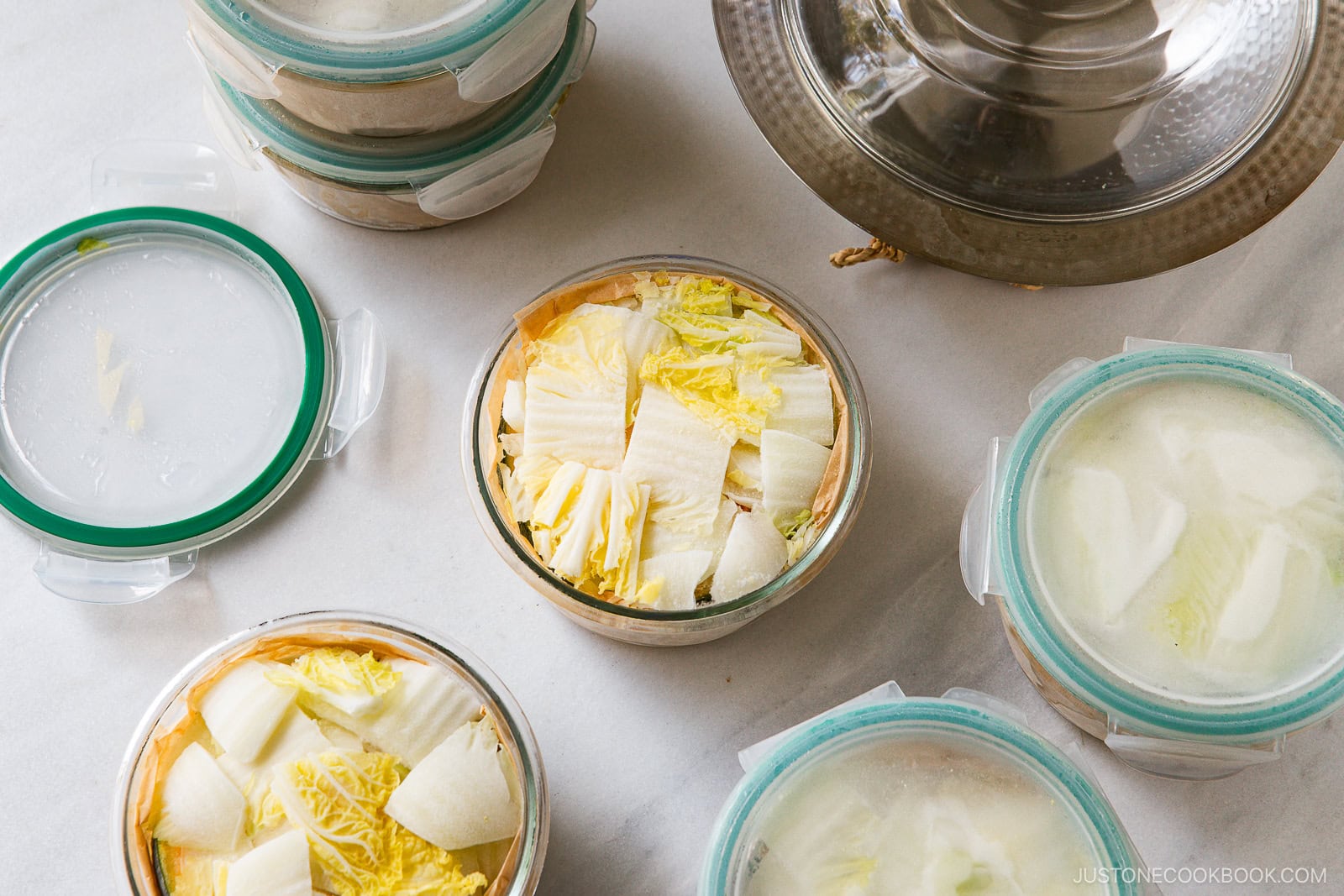
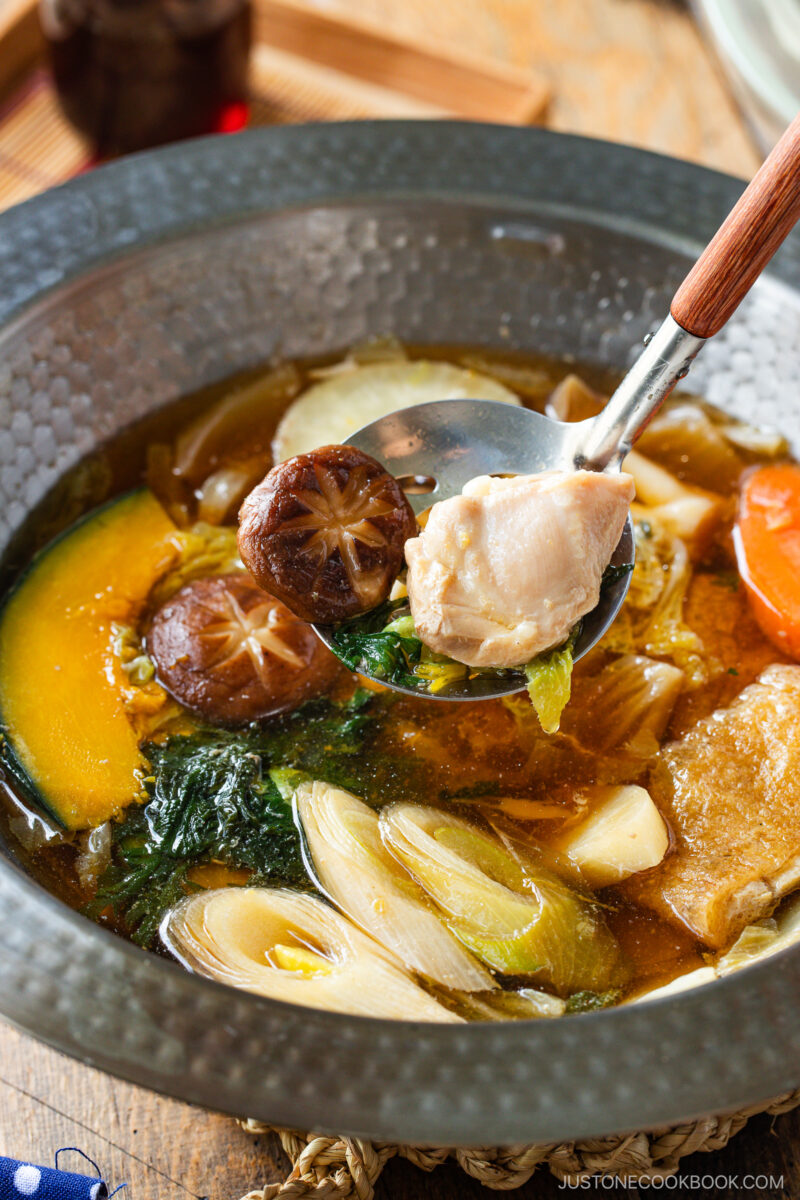
Japanese hot pot, or nabe (鍋), is a one-pot dish in Japanese cooking where proteins, tofu, and vegetables simmer together in a light, savory broth. This meal prep version lets you pack and freeze individual kits ahead of time, then cook them straight from frozen. Nabe is ideal for meal prep because most of the ingredients freeze well without texture loss.
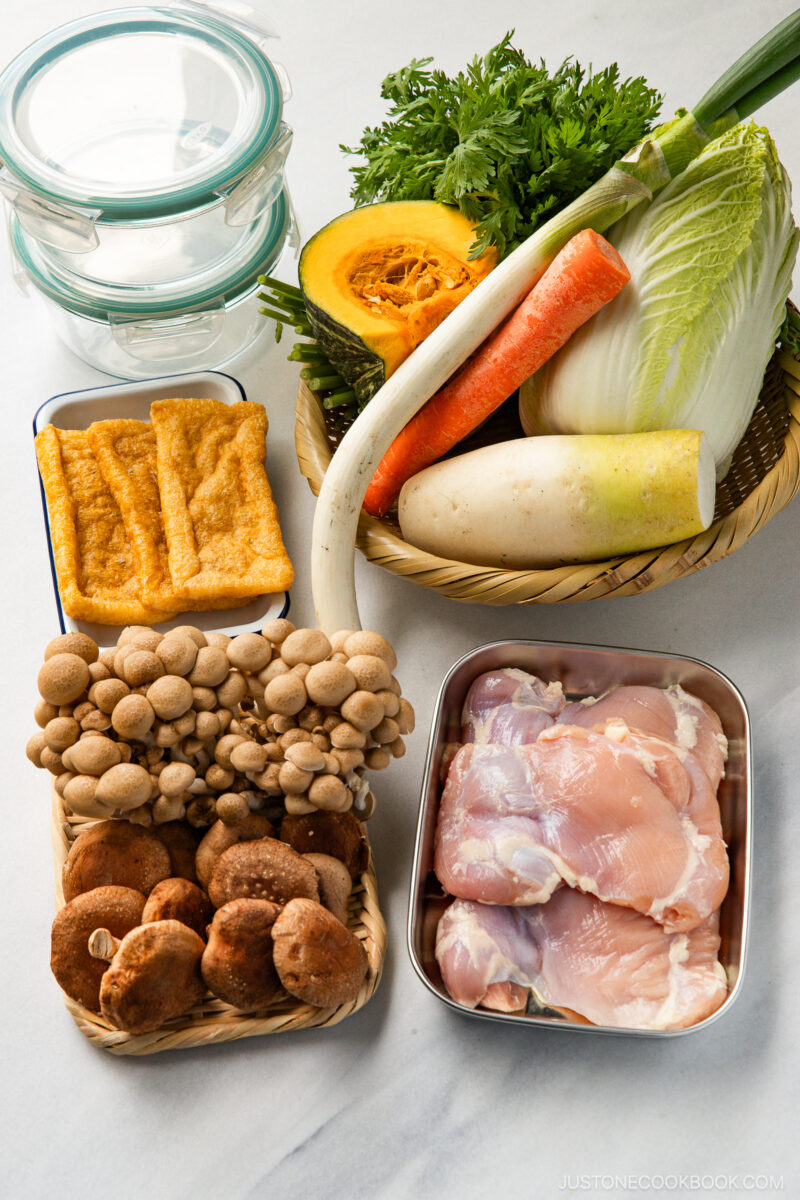
Ingredients for Japanese Hot Pot Meal Prep
- boneless, skinless chicken thighs
- aburaage (deep-fried tofu pouch)
- shimeji (brown beech) mushrooms
- shiitake mushrooms
- shungiku (chrysanthemum greens)
- napa cabbage
- kabocha squash
- daikon radish
- carrots
- Tokyo negi (long green onion)
Avoid freezing: Tofu, potatoes, Japanese sweet potatoes, konnyaku, shirataki noodles, and iceberg lettuce
Note: Deep-fried tofu such as aburaage and atsuage are the exception.
Broth:
- dashi packet or dashi powder + water
- mirin
- soy sauce
Find the printable recipe with measurements below.
Jump to RecipeHow to Make Japanese Hot Pot Meal Prep
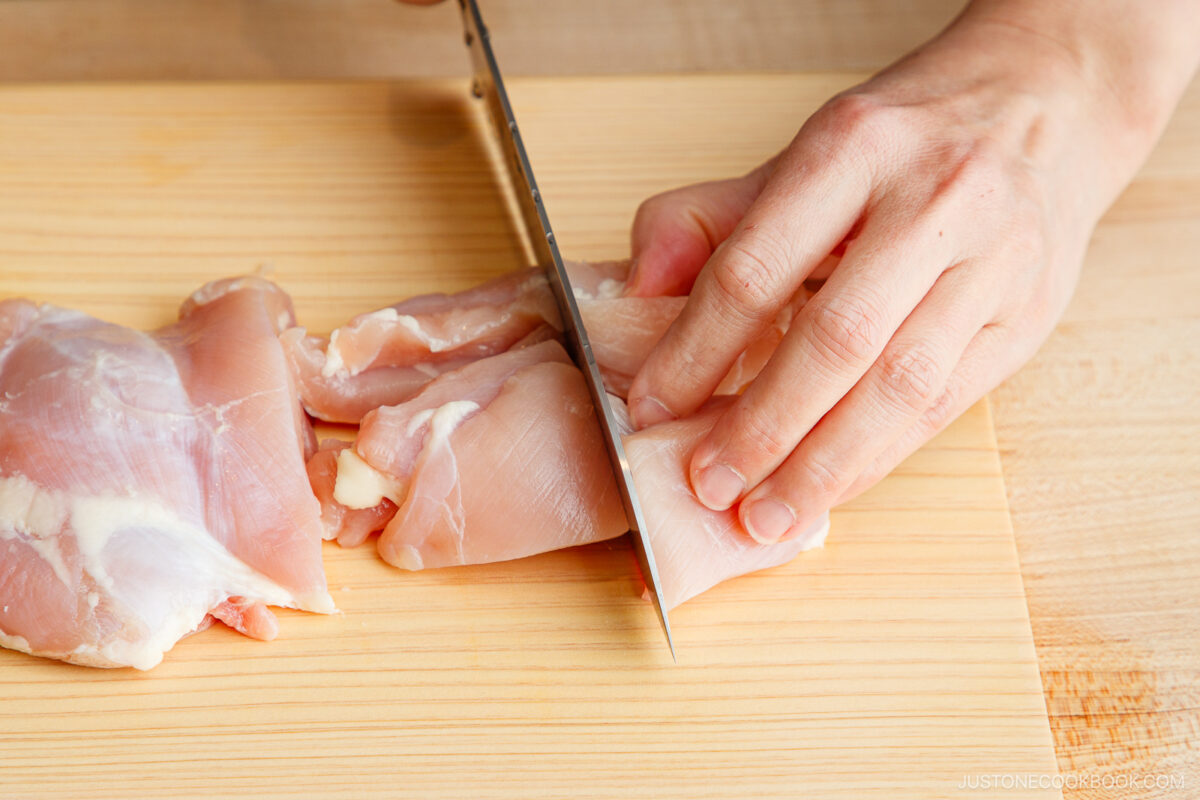
- Prep the ingredients. Cut the chicken, vegetables, mushrooms, and aburaage to size.
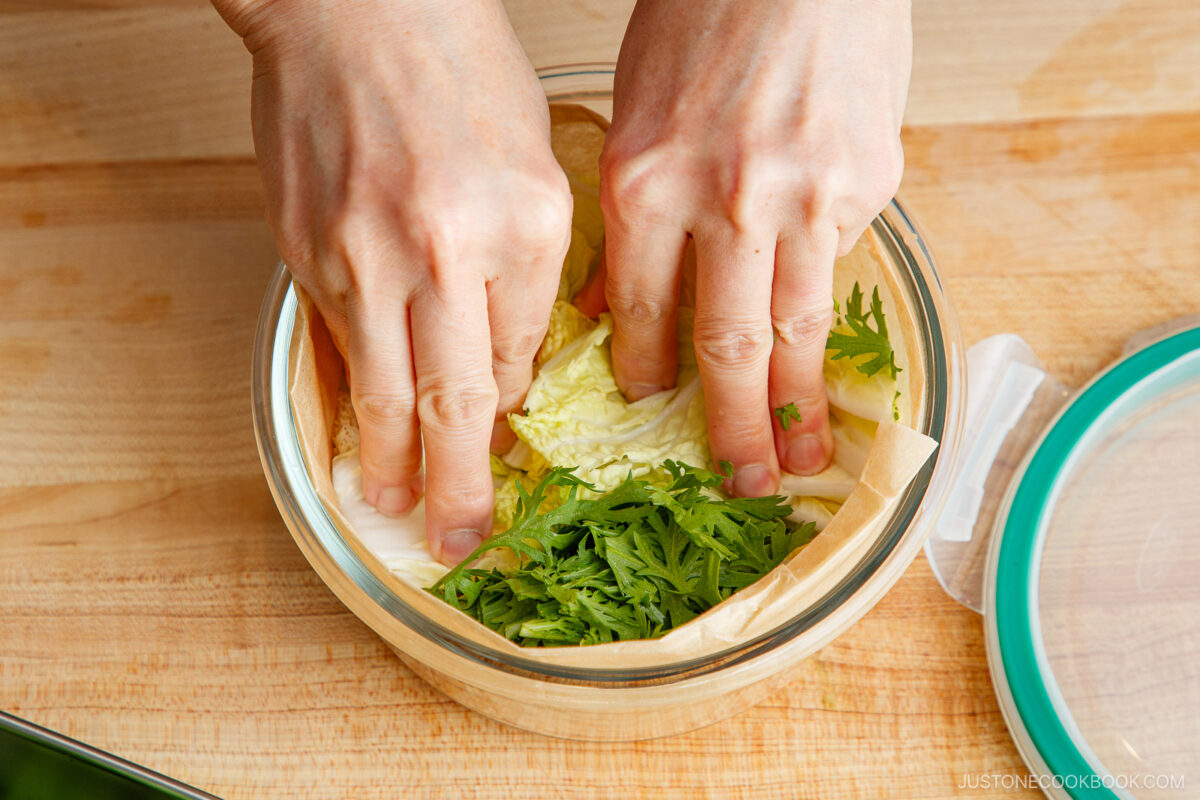
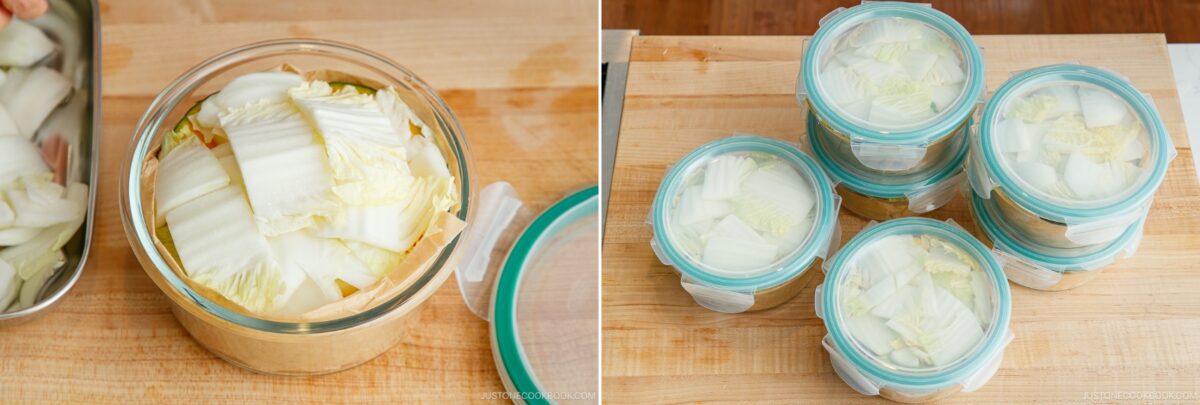
- Pack the containers and freeze. Line containers with parchment paper and layer in the ingredients. Seal the lids and freeze. You can alternatively use freezer-safe plastic bags.
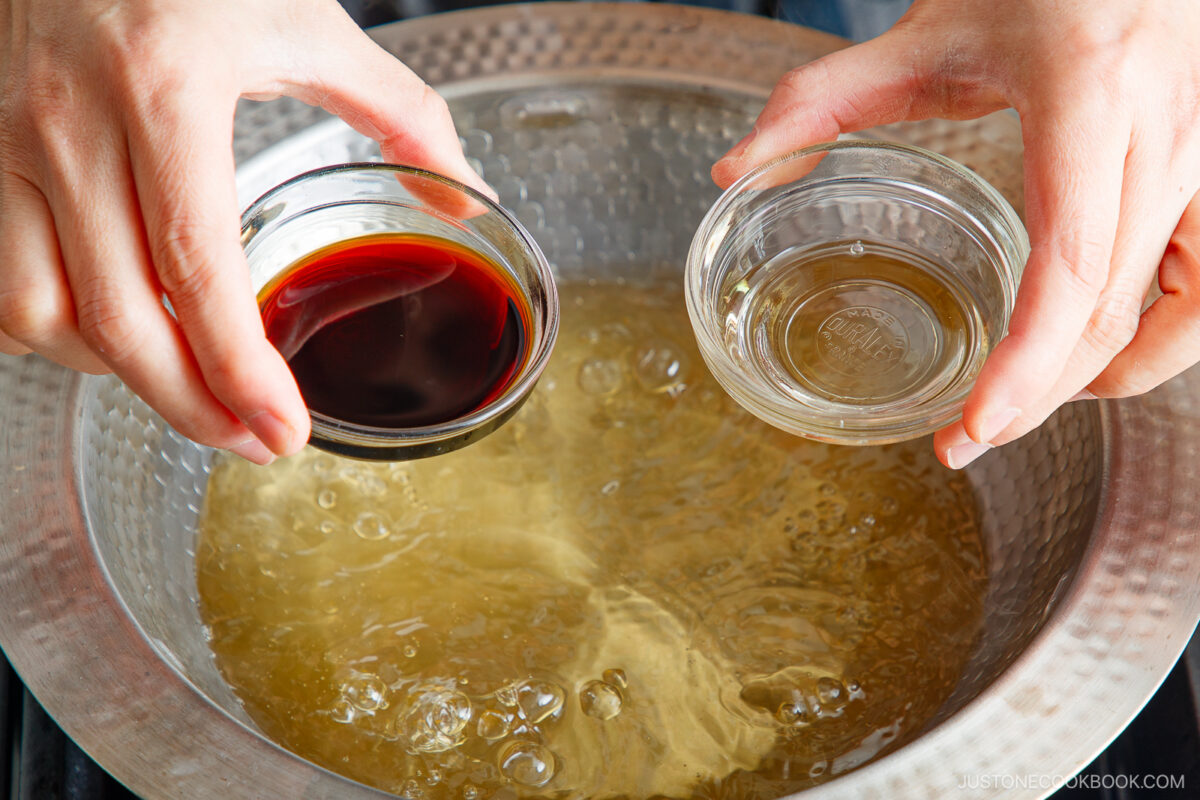
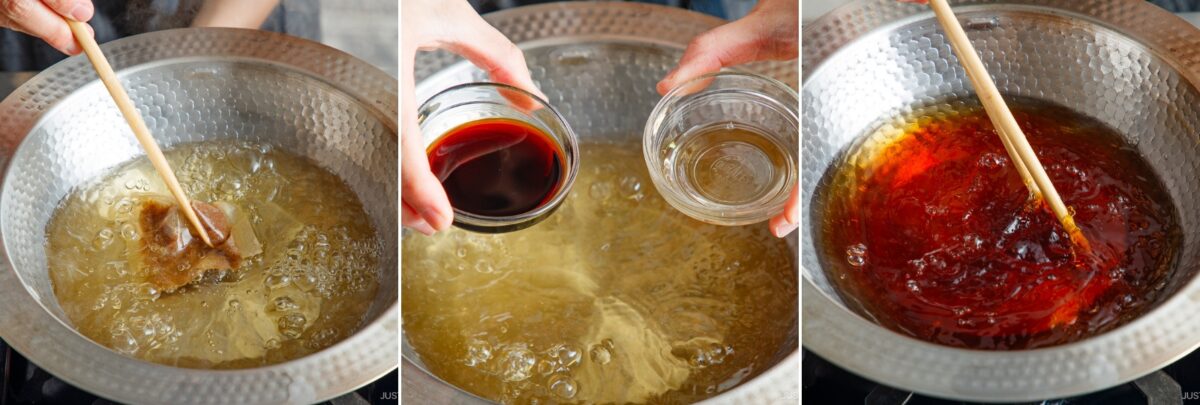
- Make the broth. When ready to cook, add water and a dashi packet to a pot or donabe. Bring to a boil, steep for 2–3 minutes, then discard the packet. Add mirin and soy sauce.
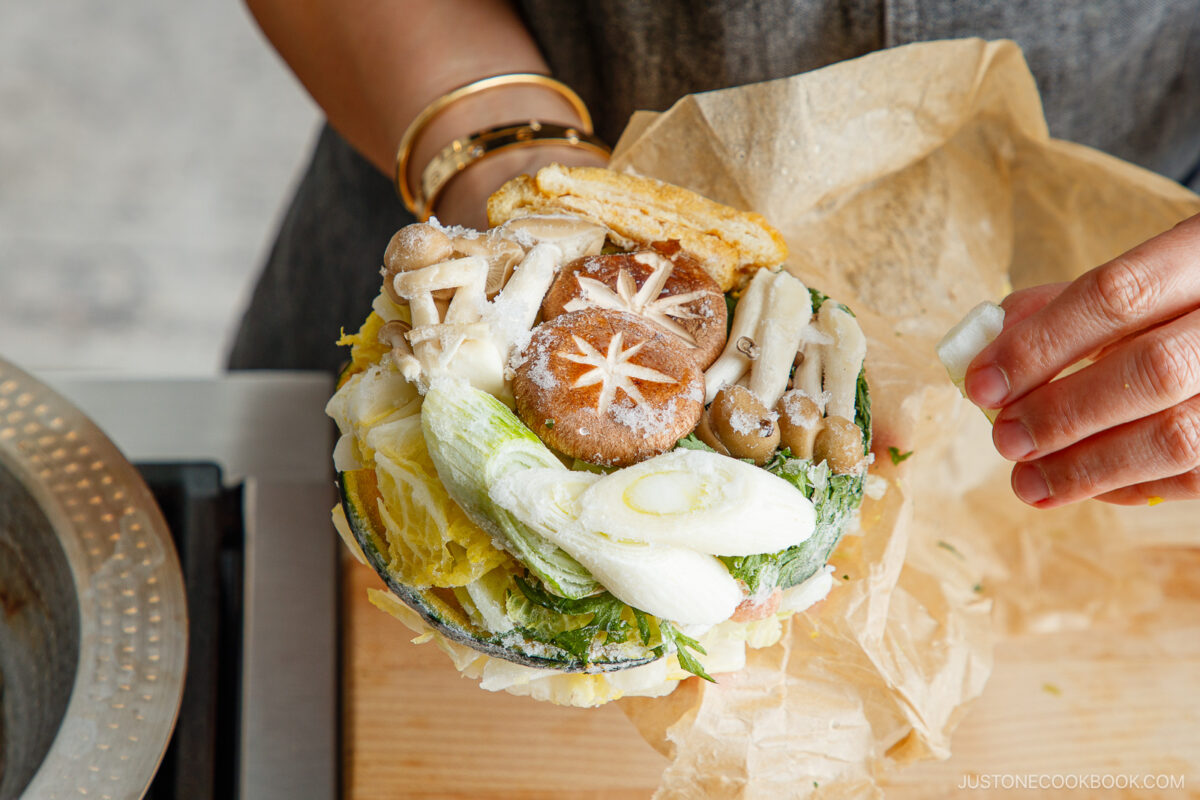
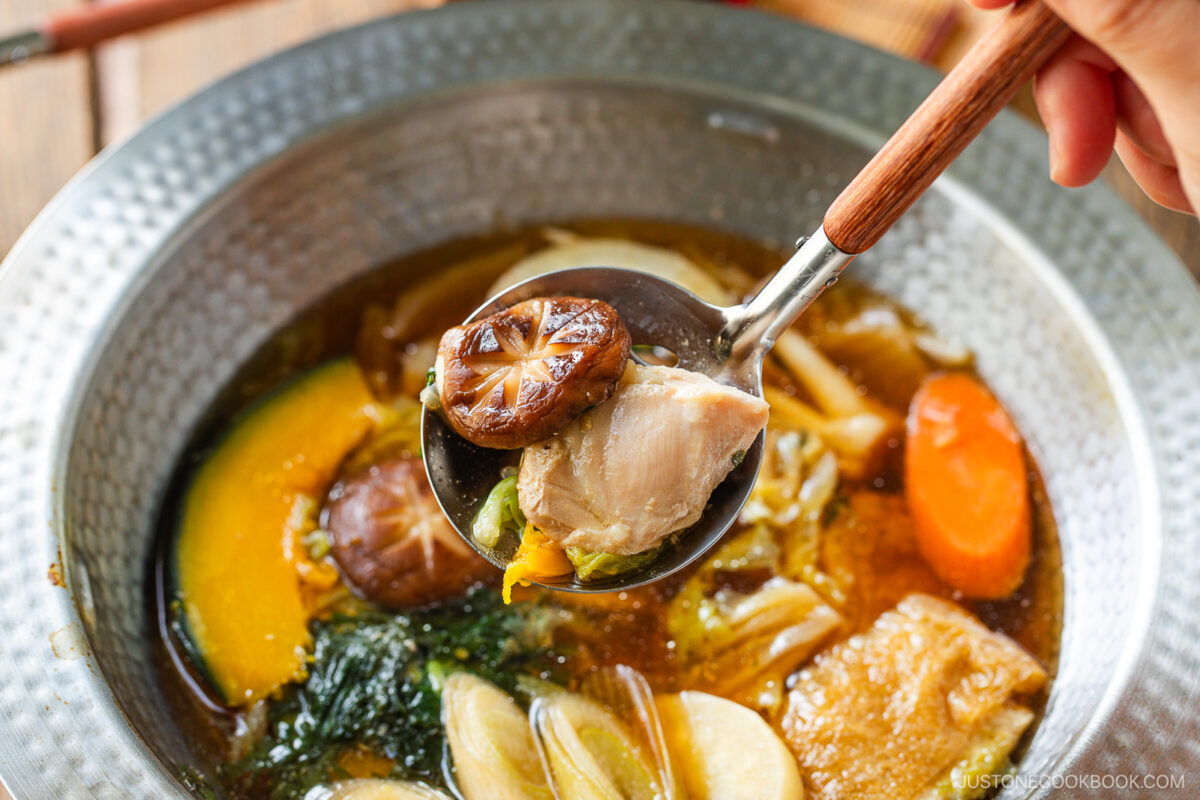
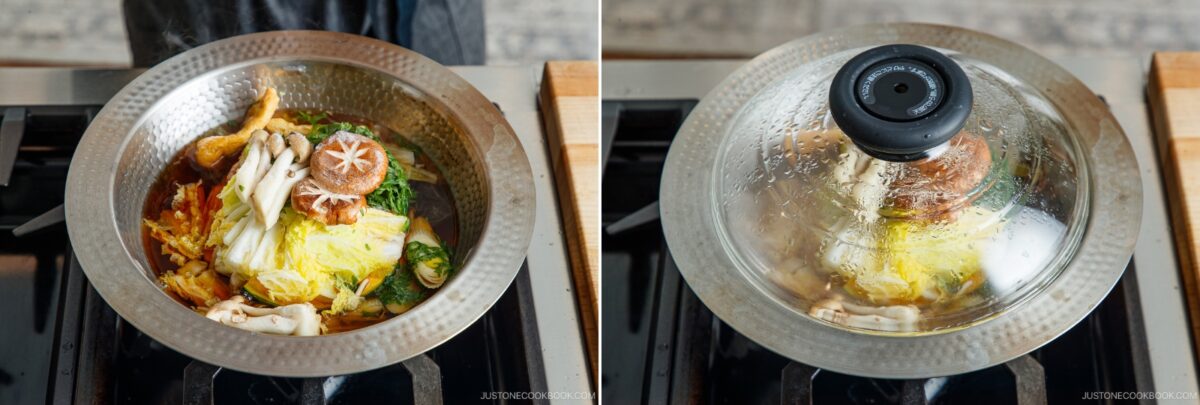
- Cook. Add the frozen hot pot kit to the broth, mushroom side facing up. Cover and simmer 8–10 minutes—until the chicken is opaque and cooked through and the cabbage is tender.
- Serve. Enjoy with ponzu, if desired.

Nami’s Recipe Tips
These simple tips will help you make Japanese Hot Pot Meal Prep kits perfectly every time.
- Line the containers with parchment paper. It makes the frozen block easy to remove. Let it sit for 3 minutes before releasing. If needed, run a butter knife along the sides to loosen before tipping out.
- Layer with texture in mind. Place dense vegetables like napa cabbage and daikon at the bottom of the pot so they get the most heat. Tender greens and mushrooms go on top.
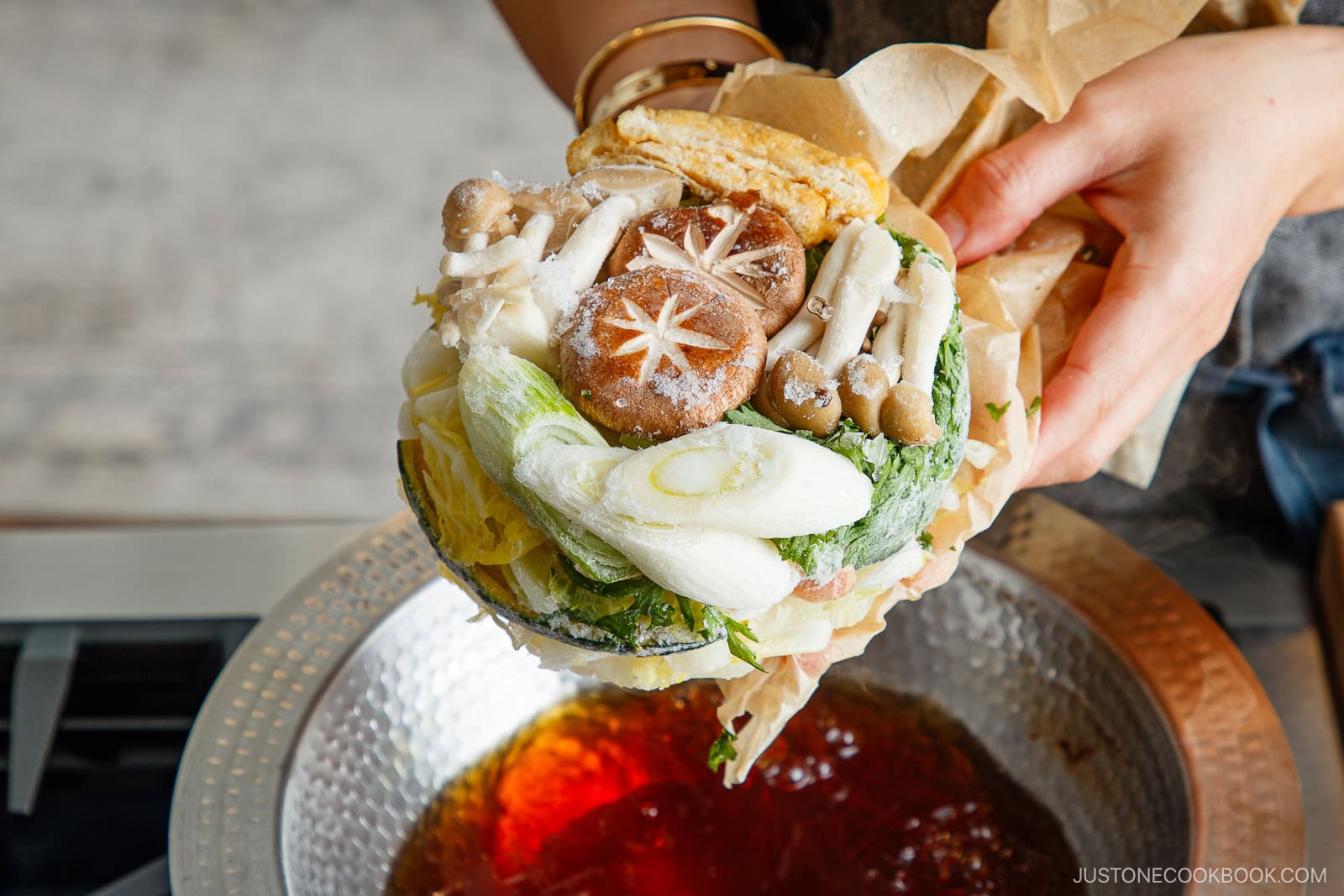
- Cook straight from frozen. Do not defrost before adding to the pot. Placep the frozen block directly in the boiling broth. This keeps the vegetables from getting waterlogged.
- Steep the dashi packet like a tea bag. Do not open it. To make stock, add the packet to cold water, bring it to a boil, simmer, and discard the packet.
- Use glass containers with airtight lids. They prevent freezer odors from transferring and make stacking easy. Each container holds one full serving.
Variations and Customizations
Looking to change things up? Try these easy and tasty ideas!
- Swap the protein. Replace the chicken with thinly sliced beef, pork, salmon, cod, scallops and seafood, fish balls, chicken meatballs, or fried tofu for a vegan version.
- Change up the mushrooms. Enoki, maitake, or oyster mushrooms hold up well in this broth.
- Try different greens. Spinach, bok choy, kale, or watercress can sub for chrysanthemum greens if it’s hard to find.
- Make good homemade dashi. Try our classic Awase Dashi or Vegan Dashi in just 20 minutes.
- Season the broth differently. For more variety, explore other nabe broth styles—miso, sesame, or spicy.
See my complete Nabe: Your Ultimate Japanese Hot Pot Guide for broth, protein, vegetable, and condiment ideas.
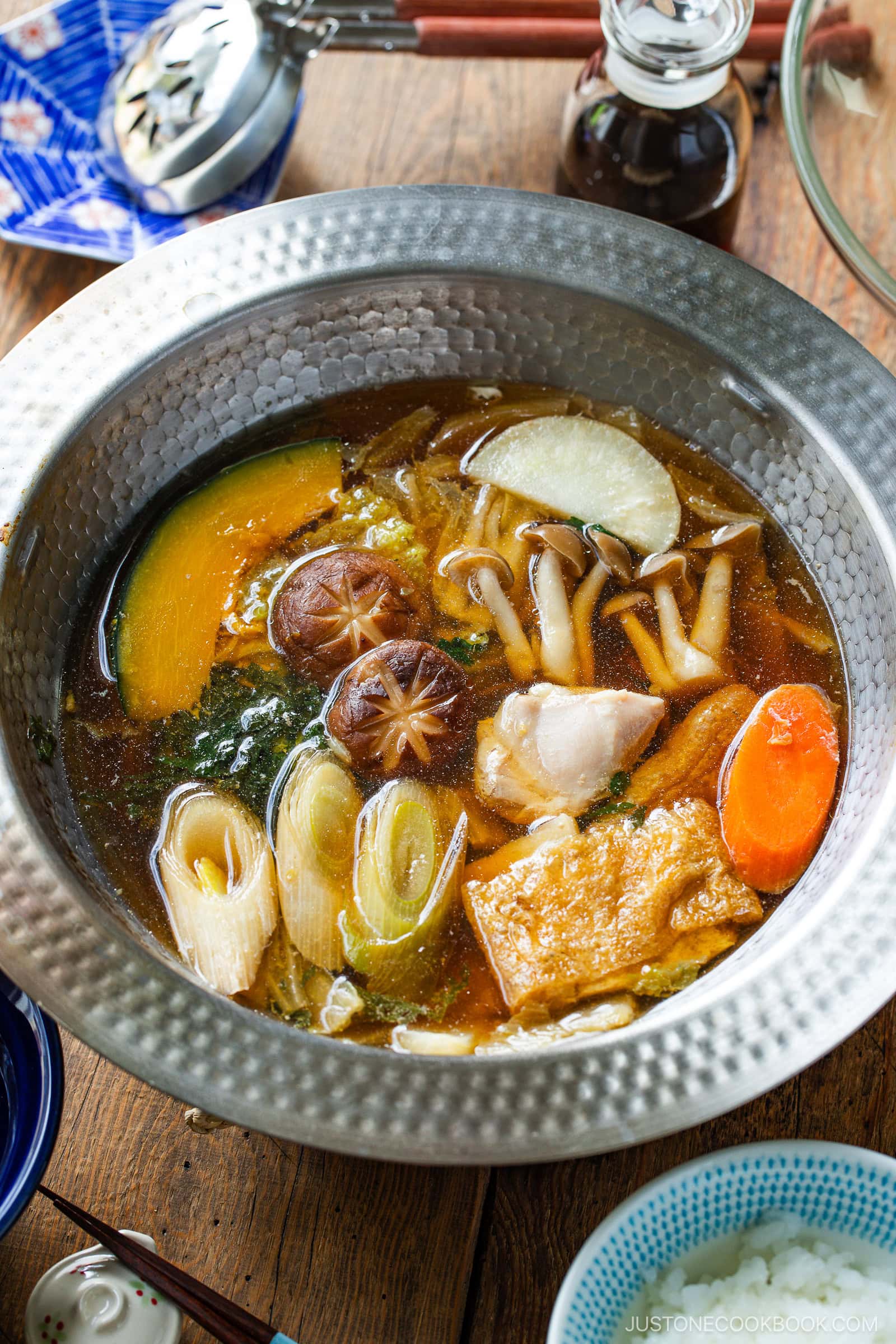
How to Serve Japanese Hot Pot Meal Prep
I serve this with a dipping sauce on the side to let everyone season their bowl to taste. Here are my picks:
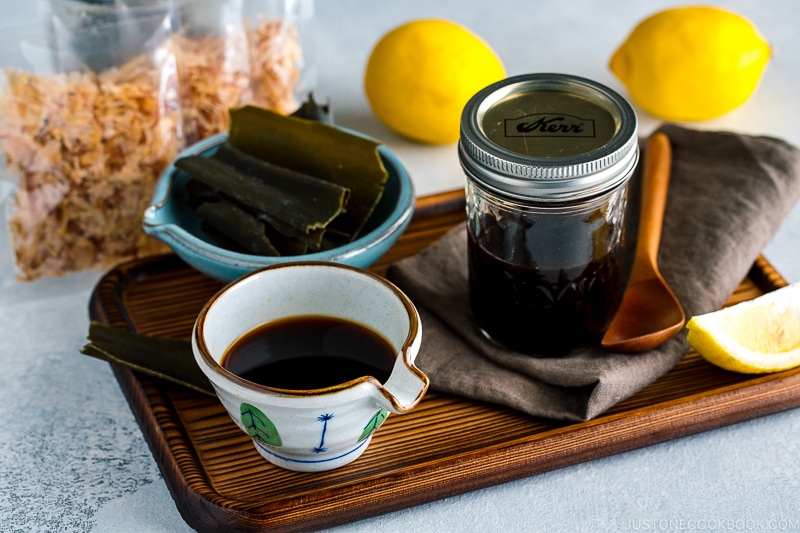
- Homemade Ponzu Sauce – A citrusy, soy-based dipping sauce that cuts through the richness of the broth. Light and refreshing.
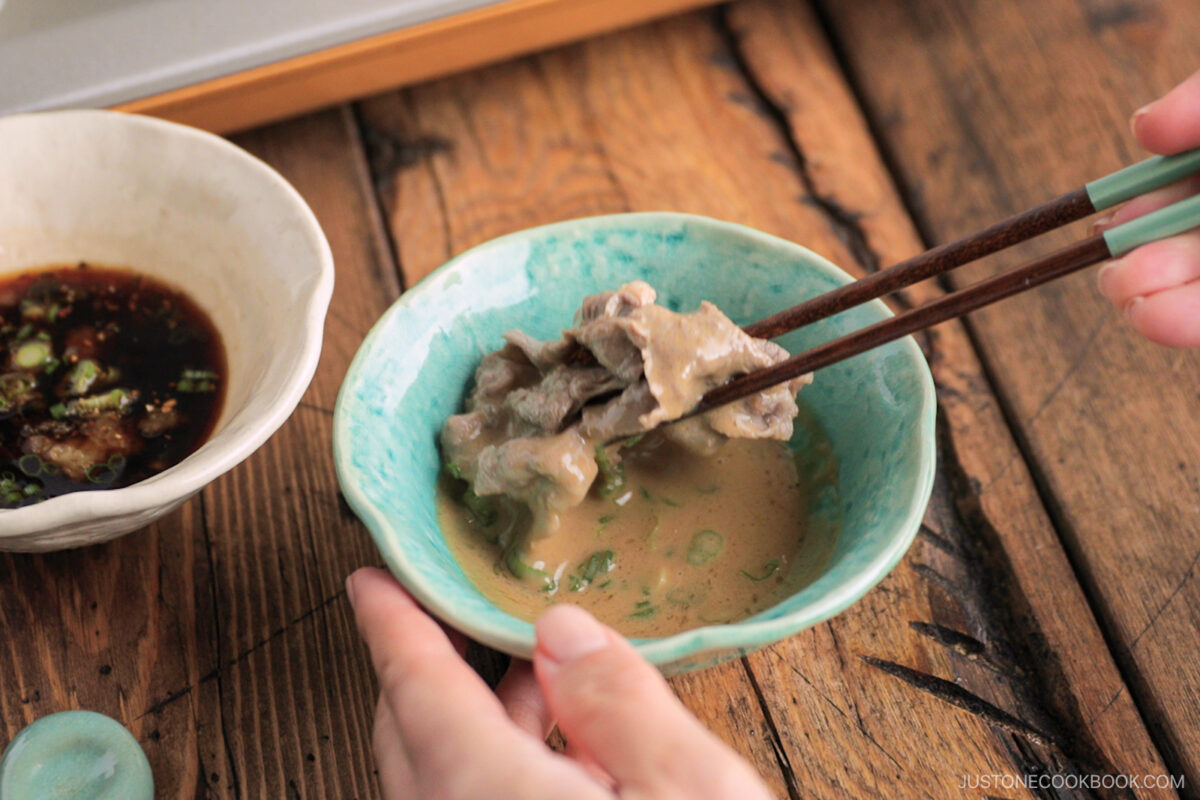
- Sesame Sauce (Goma Dare) – Nutty, rich, and creamy. A satisfying contrast to the clean broth. See How to Make Sesame Sauce at home.
- Shime (〆) Course – Add cooked Japanese short-grain rice or precooked udon noodles to the remaining broth and simmer until warmed through. It’s the best part.
Storage and Reheating Tips
To store the prepped kits: Store in containers lined with parchment paper and seal with airtight lids. Freeze for up to 1 month, or keep in the refrigerator and use within 1–2 days.
To store cooked leftovers: Refrigerate for up to 2–3 days. Do not refreeze.
To reheat: Return to a pot with a splash of water or broth and warm over medium-low heat until heated through.
FAQs
Can I use a different broth?
Yes. You can use any nabe broth you like—dashi soy, miso, sesame, a chicken broth base. For inspiration, see Nabe: Your Ultimate Japanese Hot Pot Guide.
Do I really add the ingredients straight from frozen?
Yes! A frozen hot pot kit includes both dense and leafy vegetables cooked together. While not ideal for texture, it’s designed for convenience—leafy vegetables hold up well as they cook and readily absorb the broth.
Why did the texture of the ingredients change after freezing?
Ice crystals form inside and puncture the cell walls. Once thawed, the cells can’t hold their shape, so the texture changes—often turning soft, spongy, or grainy.
See the ingredient list above for suggestions.
How many servings does one kit make?
Each container holds one full serving. This recipe makes 6 kits total.
I’d love to hear how yours turned out! 💛 Please leave a star rating and comment below to share your experience. Your feedback not only supports Just One Cookbook but also helps other home cooks discover recipes they can trust.
Japanese Hot Pot Meal Prep
Ingredients
For the Hot Pot Ingredients
- 3 pieces boneless, skinless chicken thighs
- 3 pieces aburaage (deep-fried tofu pouch)
- 1½ packages shimeji (brown beech) mushrooms
- 12 shiitake mushrooms
- 1 bunch shungiku (chrysanthemum greens)
- ¾ medium napa cabbage
- ¼ medium kabocha squash
- 4 inches daikon radish (about 1 lb or 450 g)
- 1½ medium carrots
- 1 Tokyo negi (long green onion)
For the Broth
- 2 cups water (or use homemade Awase Dashi or Vegan Dashi and skip the dashi packet below)
- 1 dashi packet (get it on Amazon; or use dashi powder)
- 1 Tbsp mirin
- 2 Tbsp soy sauce
Instructions
- Gather all the ingredients. Some ingredients don't freeze well—the texture can turn soft, spongy, or grainy. See Notes below.
To Prepare the Ingredients
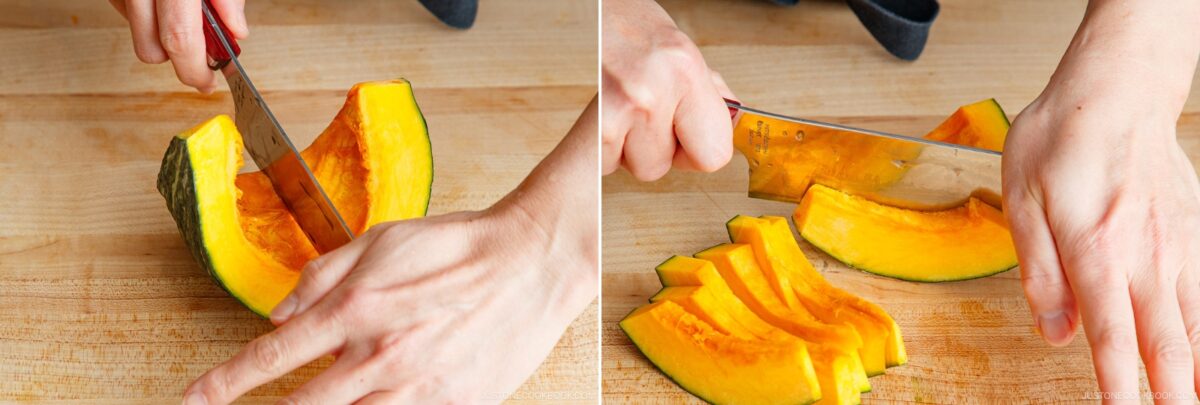
- Cut ¼ medium kabocha squash crosswise in half, then into thin slices. Nami's Tip: For my best tips and step-by-step instructions, see How to Cut a Kabocha Squash.
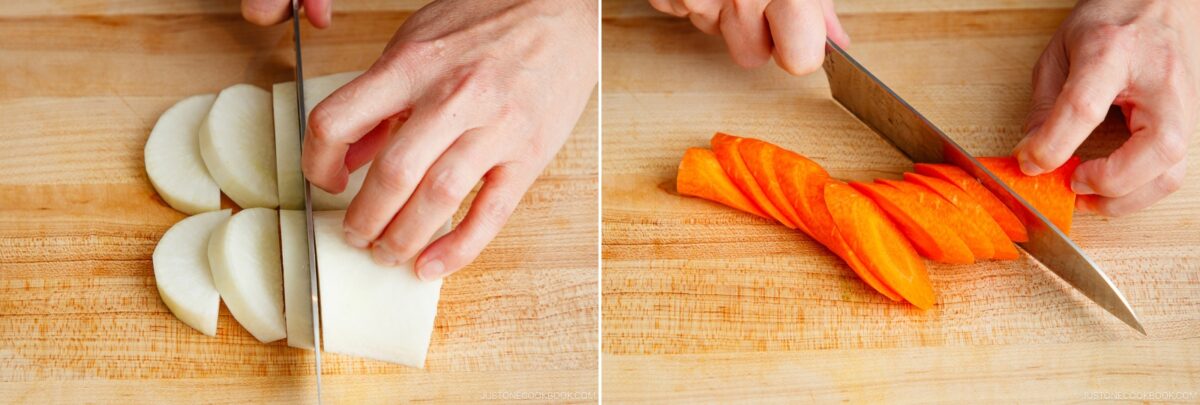
- Cut 4 inches daikon radish in half lengthwise, then crosswise into ⅜-inch (1-cm) half moons. Cut 1½ medium carrots diagonally into ¼-inch (6-mm) slices.
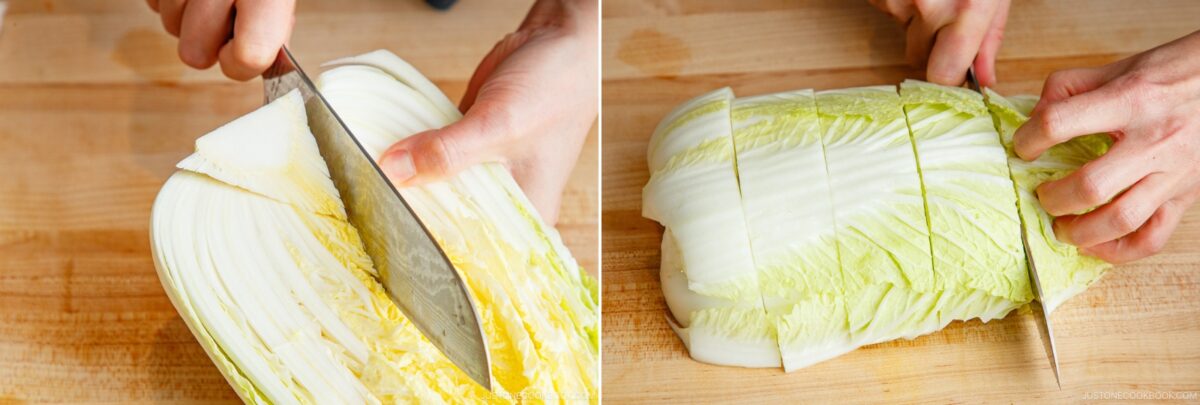
- Remove the core from ¾ medium napa cabbage. Cut the leaves crosswise into 1½-inch (3.75 cm) pieces. Separate the tender leaves and thick white parts.
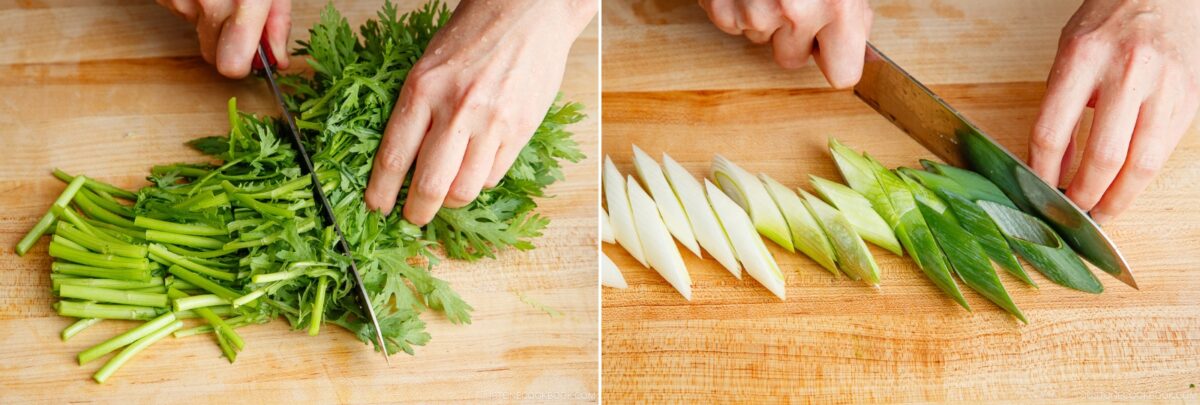
- Cut 1 bunch shungiku (chrysanthemum greens) into 2-inch (5-cm) pieces. Diagonally slice 1 Tokyo negi (long green onion) thinly.
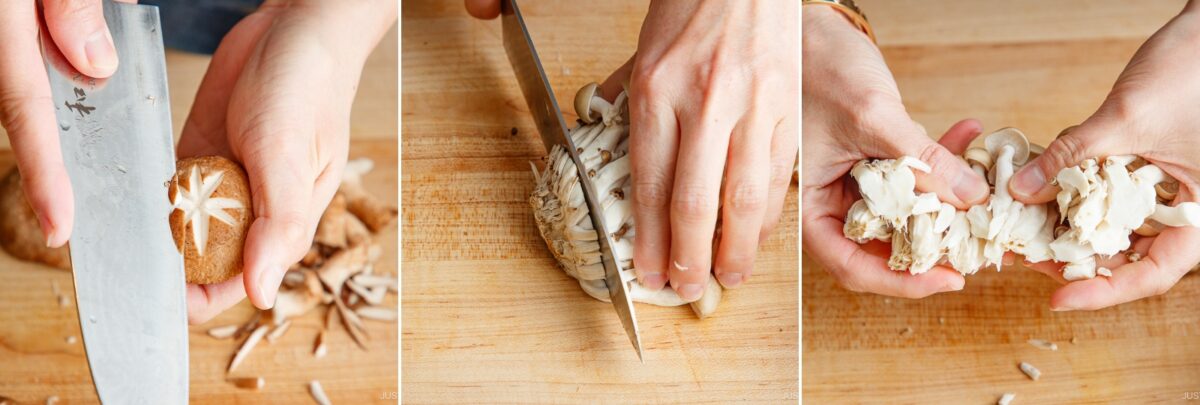
- Cut off the stems from 12 shiitake mushrooms. Make a decorative pattern on the caps, if desired. Cut off the root end from 1½ packages shimeji (brown beech) mushrooms and separate them into small clumps with your fingers.Nami's Tip: It's quite easy to decorate shiitake caps. Follow my step-by-step tutorial for How to Make a Flower Pattern on Shiitake Mushroom Caps.
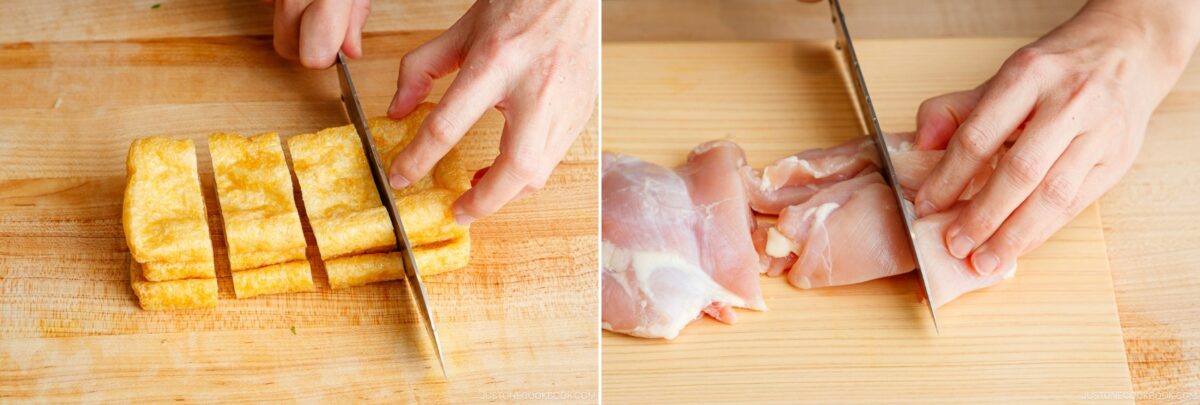
- Cut 3 pieces aburaage (deep-fried tofu pouch) crosswise into 1-inch (2.5 cm) pieces. Slice 3 pieces boneless, skinless chicken thighs into bite-size chunks about 2 inches (5 cm).
To Pack the Containers
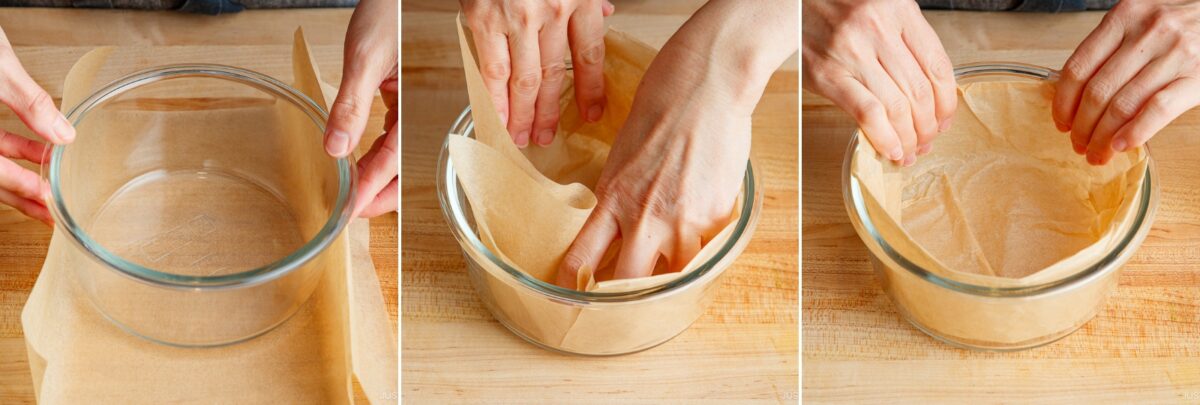
- Line 6 containers with parchment paper. This prevents food from bonding to the container as moisture freezes, making it easy to remove later. I use glass containers with airtight lids, but freezer-safe plastic bags work great too.
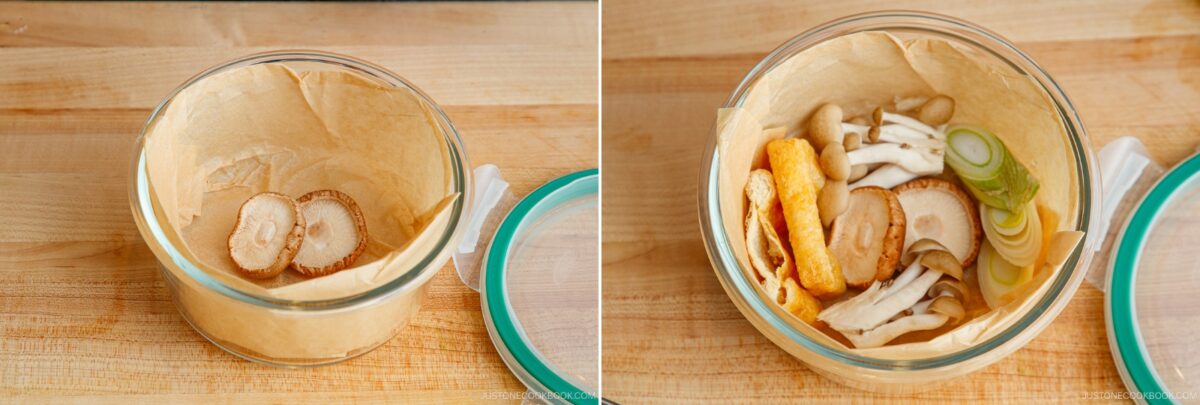
- Add the mushrooms, aburaage, and negi to the bottom of the containers, decorative side facing down.Nami's Tip: Flip the frozen block into the pot so the mushrooms land on top—they cook best with gentle heat, not direct boiling.
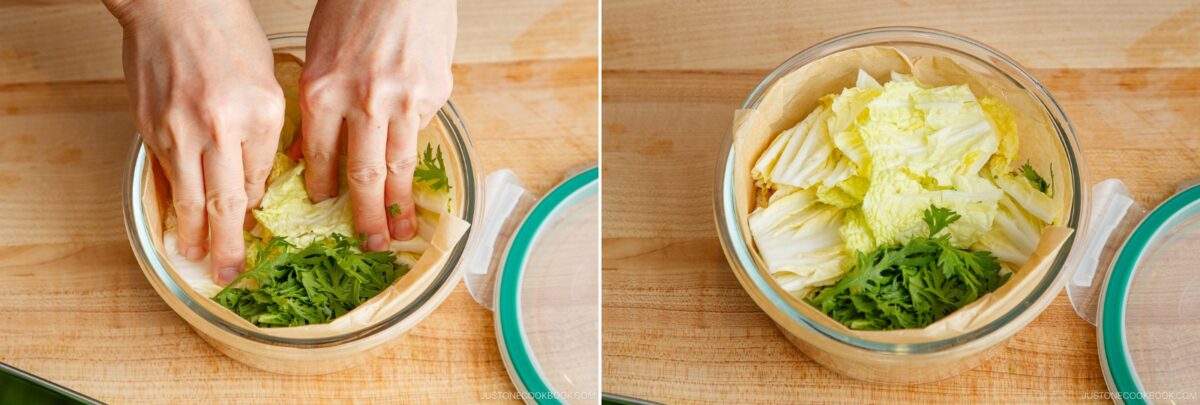
- Add the shungiku and tender napa cabbage leaves. Press down to compact the ingredients.
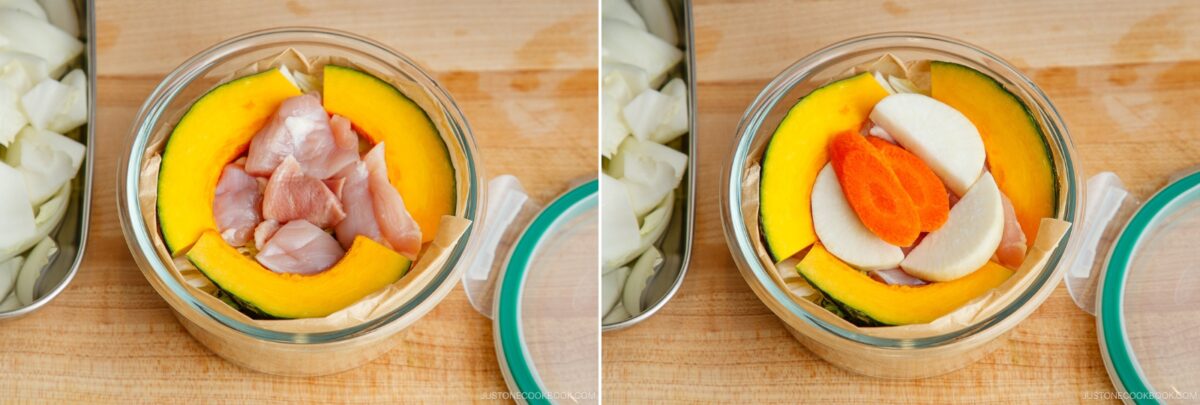
- Add the chicken and kabocha to the next layer. Keep the chicken away from the container walls so it doesn't bond when frozen. Top with the carrot and daikon.Nami's Tip: The thicker, slow-cooking ingredients are toward the top of the container. Once you flip the frozen block into the pot, they sink to the bottom where the heat is strongest.
- Add the thick napa cabbage on top and press down firmly. Pack the ingredients tightly so there's no loose space. Close the lids.
To Freeze
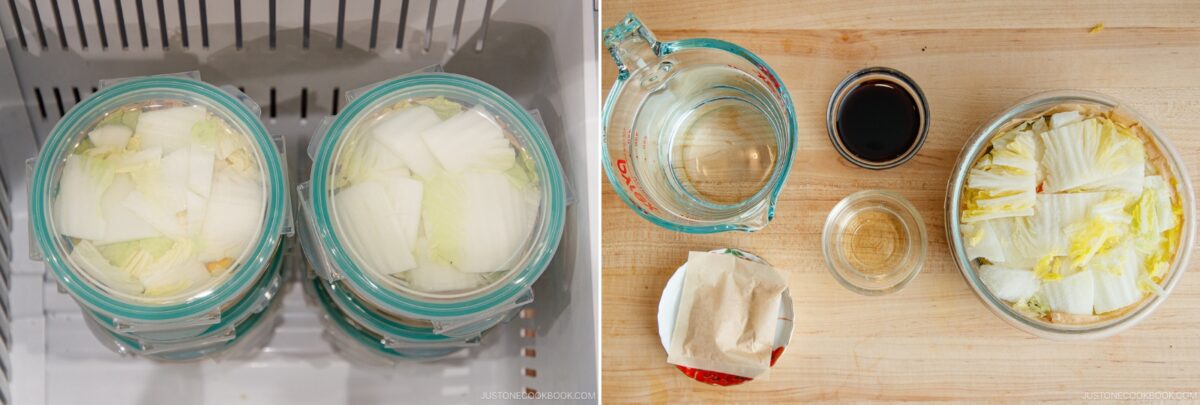
- Store the hot pot kits in the freezer for up to 1 month.Nami's Tip: To refrigerate instead, use within 1–2 days.
To Cook (One Serving)
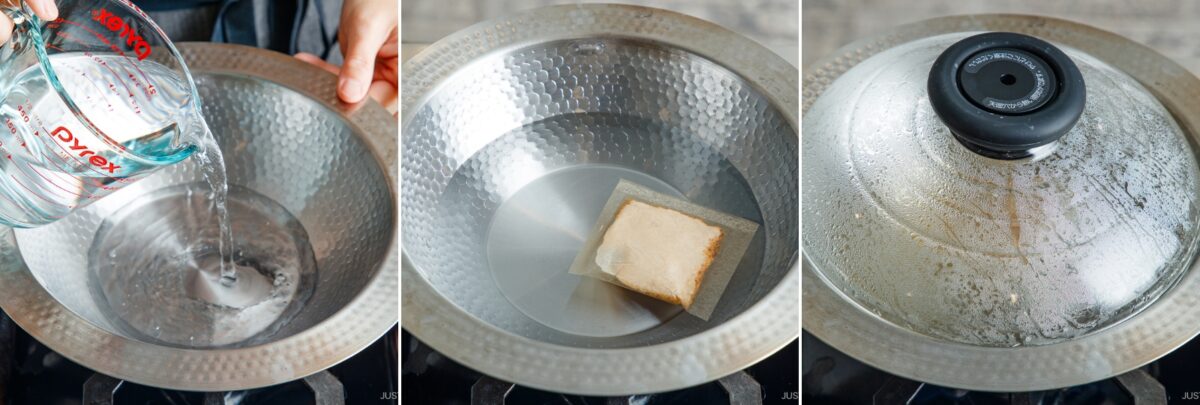
- Gather the broth ingredients and one frozen meal prep container. Do not defrost—cook straight from frozen. Let it sit for 3–5 minutes before releasing.
- Add 2 cups water and 1 dashi packet (do not open it) to a donabe or pot. Bring to a boil over medium heat. Shake the packet a few times, then reduce to medium low and simmer for 2–3 minutes.Nami's Tip: Use the dashi packet like a tea bag to steep flavor into the hot water.
- Discard the packet. Add 1 Tbsp mirin and 2 Tbsp soy sauce to the stock. Stir to combine and bring it to a gentle boil.
- Remove the frozen hot pot ingredients from the container. If needed, run a butter knife along the sides to loosen before tipping out. Peel off the paper lining.
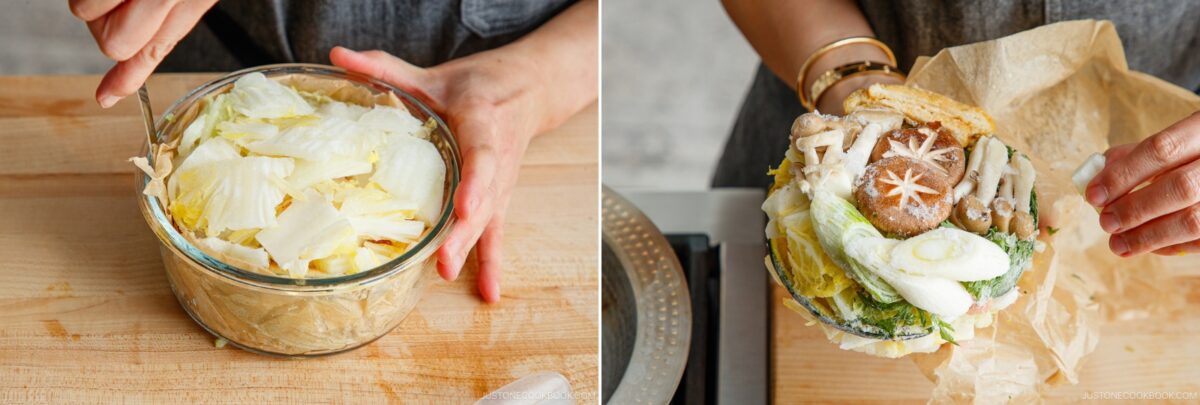
- Add the frozen block to the boiling broth, mushroom side up and napa cabbage side down. Cover and simmer for 10 minutes, until the chicken is opaque and cooked through and the vegetables are tender.
To Serve
- The hot pot is flavorful on its own, but Ponzu Sauce makes a great dipping sauce if desired.
To Store
- Store the leftovers in the refrigerator for up to 2–3 days. I do not recommend refreezing the leftovers.
Notes
- Swap the protein. Replace the chicken with thinly sliced beef, pork, salmon, cod, scallops and seafood, fish balls, chicken meatballs, or fried tofu for a vegan version.
- Change up the mushrooms. Enoki, maitake, or oyster mushrooms all hold up well in this broth.
- Try different greens. Spinach, bok choy, kale, or watercress can sub for shungiku if it’s hard to find.
- Make good homemade dashi. Try our classic Awase Dashi or Vegan Dashi in just 20 minutes.
- Season the broth differently. For more variety, explore other nabe broth styles—miso, sesame, or spicy.
Did you make this recipe?
Tag @justonecookbook on Instagram so we can see your delicious creation!