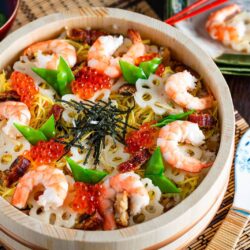
Chirashi Sushi
Chirashi Sushi is a traditional Japanese sushi served on happy and celebratory occasions. It‘s a bright and festive dish of sushi rice mixed with seasoned vegetables and scattered with colorful toppings. Try this made-from-scratch method or my quick and easy version!
Ingredients
For the Sushi Rice
- 2¼ cups uncooked Japanese short-grain white rice (see Notes below; 3 rice cooker cups)
- 2¼ cups water
- 1 piece kombu (dried kelp) (5 g; 2 x 2 inches, 5 x 5 cm per piece; optional, for a nice aroma)
- ⅓ cup rice vinegar (unseasoned)
- 3 Tbsp sugar
- 1½ tsp Diamond Crystal kosher salt
For the Chirashi Mix (You can buy a store-bought mix)
- 4 dried shiitake mushrooms
- ⅔ gobo (burdock root)
- ½ carrot
- 0.8 oz dried kanpyo (gourd strips)
- ½ cup water (for shiitake rehydration and stock)
- 1¼ cups dashi (Japanese soup stock) (I make it with a dashi packet; you can use Awase Dashi or Vegan Dashi)
- ¼ cup sake
- 3 Tbsp mirin
- 1 Tbsp sugar
- 2 Tbsp soy sauce
For the Egg Crepe
- 3 large eggs (50 g w/o shell)
- 1 Tbsp mirin
- 1 tsp potato starch or cornstarch
- 1 tsp water
- ¼ tsp Diamond Crystal kosher salt
- 2 tsp neutral oil (for cooking)
For the Toppings (Choose What You Like)
- 6 snow peas
- 8–10 large and jumbo shrimp
- 1 Tbsp sake (for cooking the shrimp)
- ½ Tbsp toasted white sesame seeds (for the sushi rice)
- 2 Tbsp shredded nori seaweed (for the sushi rice)
- 1 fillet unagi (freshwater eel) fillet (optional)
- 4 Tbsp ikura (salmon roe) (optional)
For the Optional Pickled Lotus Root
- 2 inches lotus root (renkon)
- 1 inch ginger
- ½ cup rice vinegar (unseasoned)
- ⅓ cup sugar
- ½ tsp Diamond Crystal kosher salt
Instructions
Before We Start
- If you want to take a shortcut version using a store-bought chirashi mix, see my Quick & Easy Chirashi Sushi recipe.
Here's the Game Plan
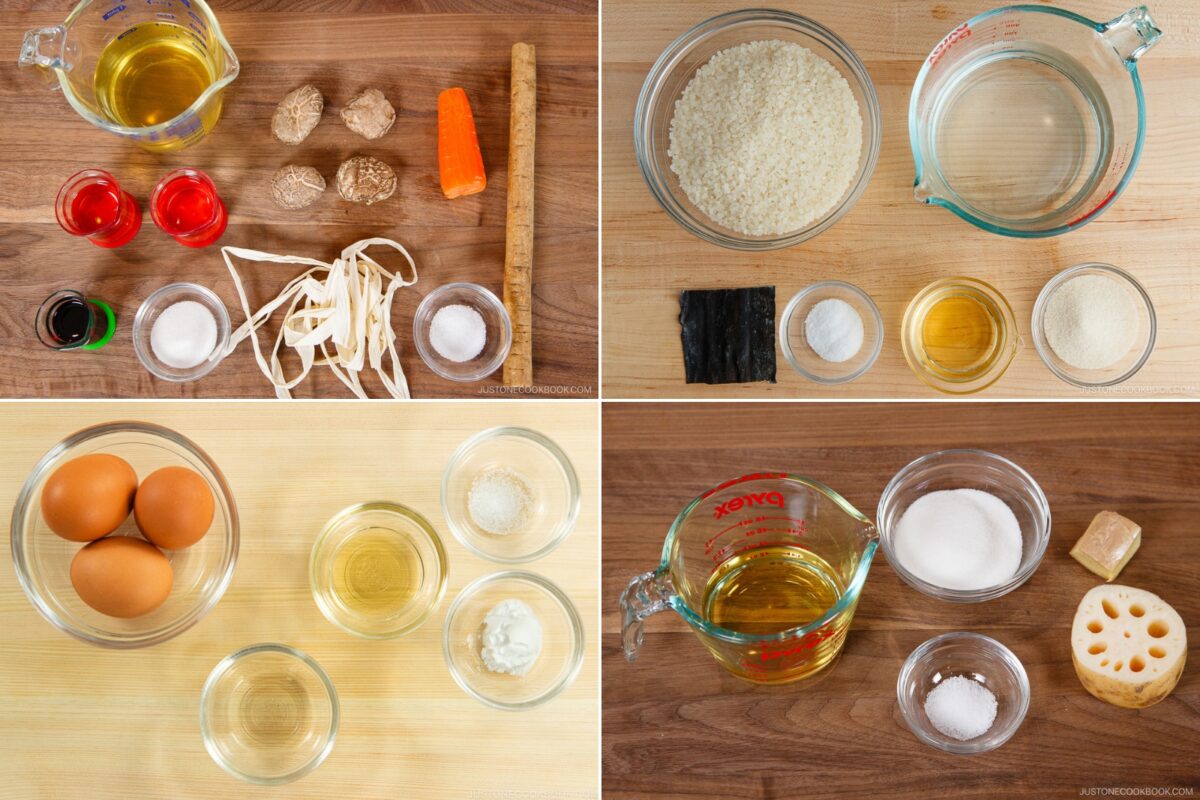
- Homemade chirashi sushi may look elaborate, but it’s really just three components: seasoned sushi rice, a chirashi mix (simmered vegetables and mushrooms), and colorful toppings.We'll work in layers. First, make the sushi rice. Next, prepare the chirashi mix. Then, get the toppings ready. Finally, assemble everything beautifully on a platter. Because many steps overlap, the total active time is about 1 hour—slightly longer if you're beginner.To make it even easier, some components can be prepared ahead. The chirashi mix can be made 1–2 days in advance. Even the egg crepes can be cooked earlier in the day and sliced just before assembling. If you plan on making the optional pickled lotus root, I highly recommend making it ahead of time. Gather all the ingredients.
To Make the Chirashi Mix
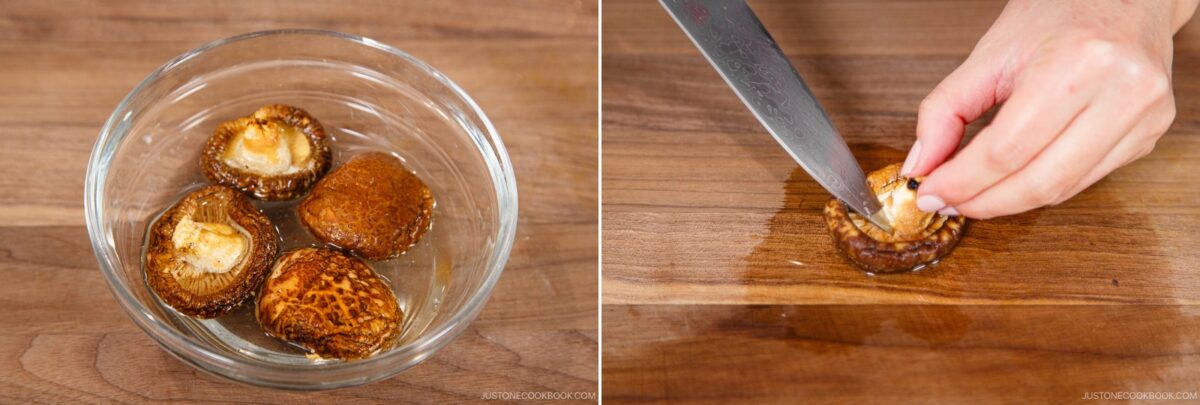
- Soak 4 dried shiitake mushrooms in ½ cup water until they are hydrated and tender. Then, squeeze the mushrooms and reserve the liquid (this stock is called shiitake dashi) in the bowl. Cut off the stems.
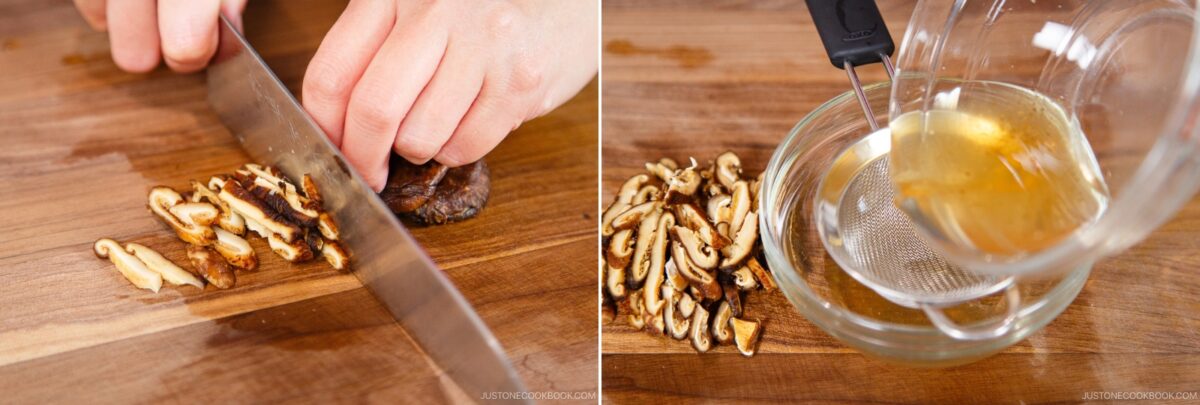
- Slice the caps into thin pieces. Strain the shiitake dashi to remove grit and impurities. Reserve shiitake dashi until you’re ready to use it in Step 7.
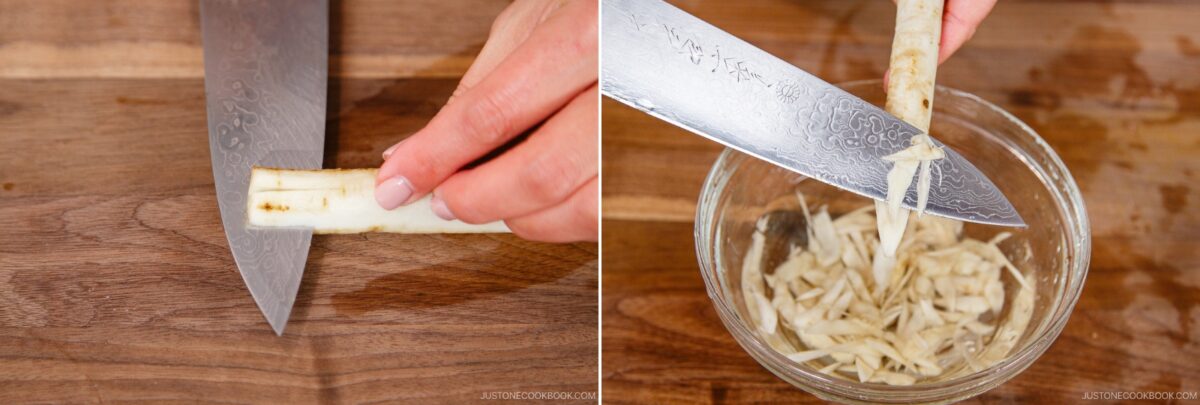
- Scrape off the brown outer skin from ⅔ gobo (burdock root) with the edge of a knife. Make a crisscross incision at the bottom end (it helps make shaving easier). Start at one end and shave off a small, thin piece like you're shaving a pencil. Rotate the gobo, then shave off another piece. Continue to rotate and shave the rest of the gobo. Soak the cut pieces in water to prevent browning. Change the water 1–2 times. Drain right before you start cooking in Step 7.Nami's Tip: This gobo shaving technique is called sasagaki (read more).
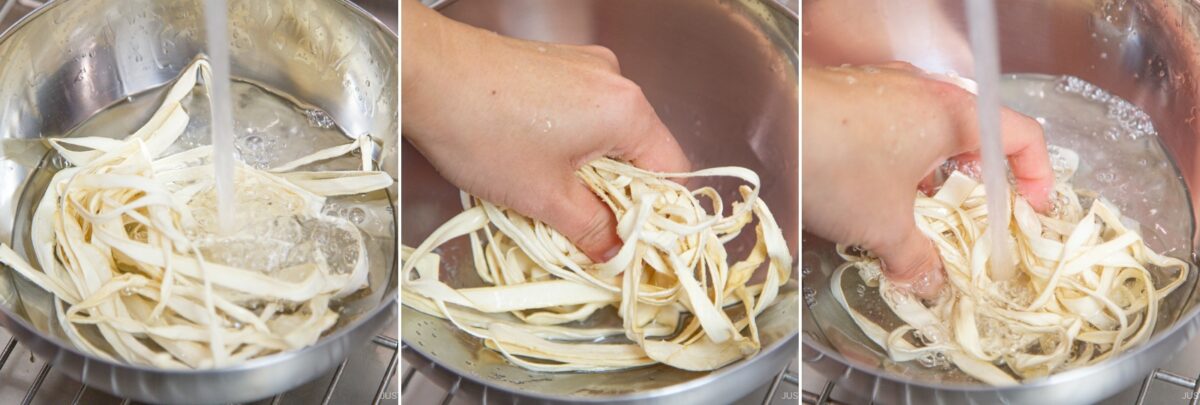
- Bring some water to a boil in a small saucepan. Meanwhile, quickly rinse 0.8 oz dried kanpyo (gourd strips) in running water and drain. Rub the kanpyo with 1 tsp kosher salt. Rinse and drain well.
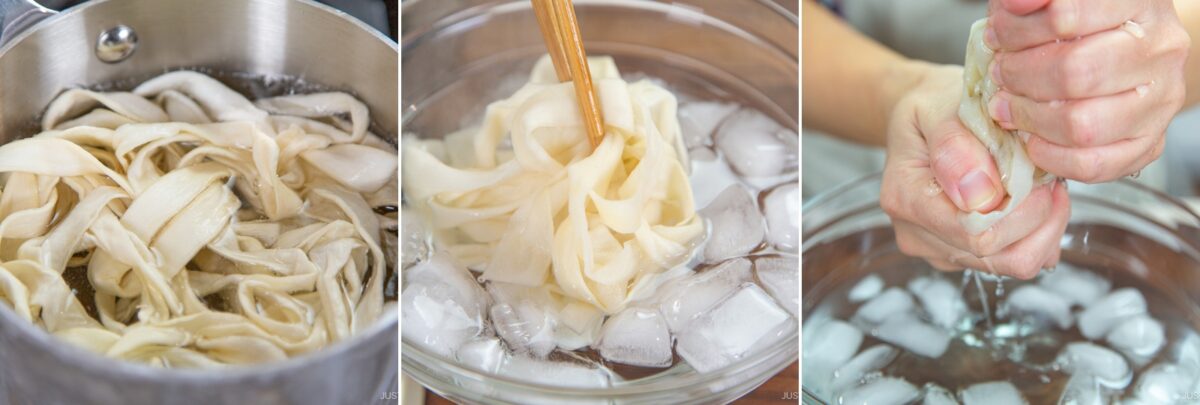
- Cook the kanpyo in boiling water for 3 minutes. Transfer to a bowl of iced water to stop the cooking. Then, squeeze the water out.
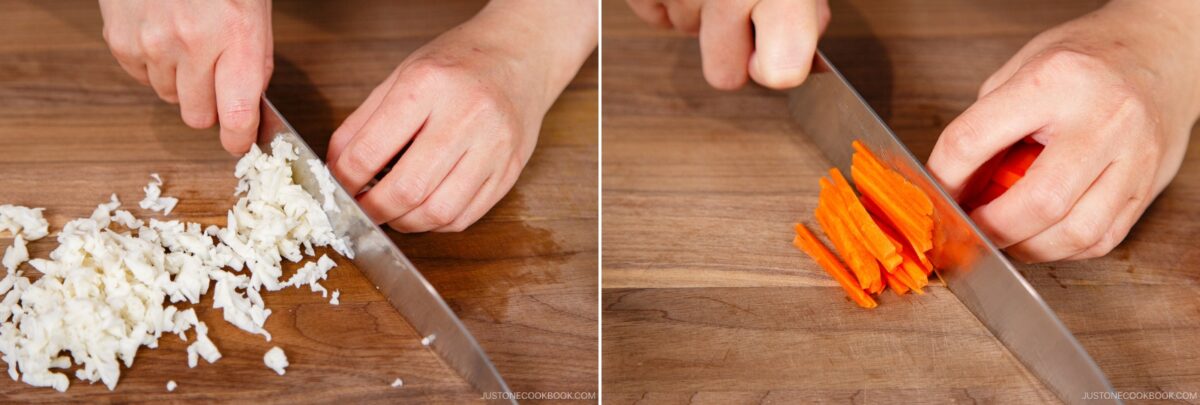
- Cut the kanpyo into small pieces. Next, cut ½ carrot into julienned strips.
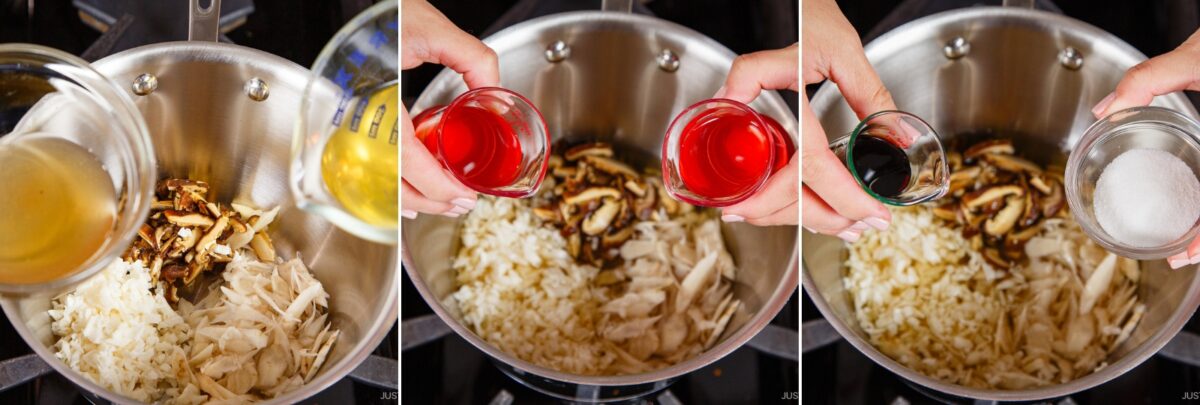
- In the empty medium saucepan, add the shiitake mushrooms, gobo, and kanpyo. Keep the carrot aside for now. Add 1¼ cups dashi (Japanese soup stock), the reserved shiitake dashi, ¼ cup sake, 3 Tbsp mirin, 1 Tbsp sugar, and 2 Tbsp soy sauce. Bring it to a simmer on medium heat.
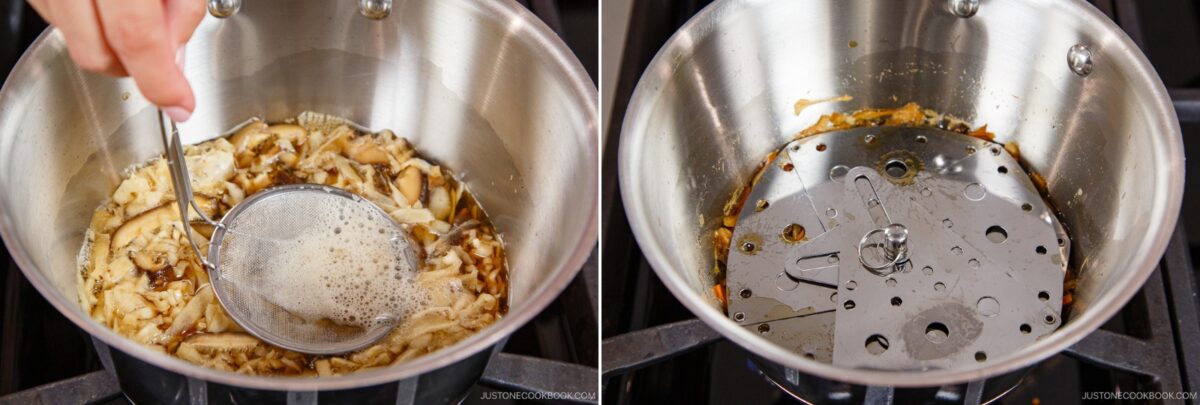
- Skim off the foam and scum from the surface of the cooking liquid. Lower the heat to a gentle simmer and place an otoshibuta (drop lid) directly on top of the vegetables.Nami's Tip: The drop lid helps keep ingredients submerged and allows the flavorful cooking liquid to circulate evenly. To make one with aluminum foil, follow my tutorial.
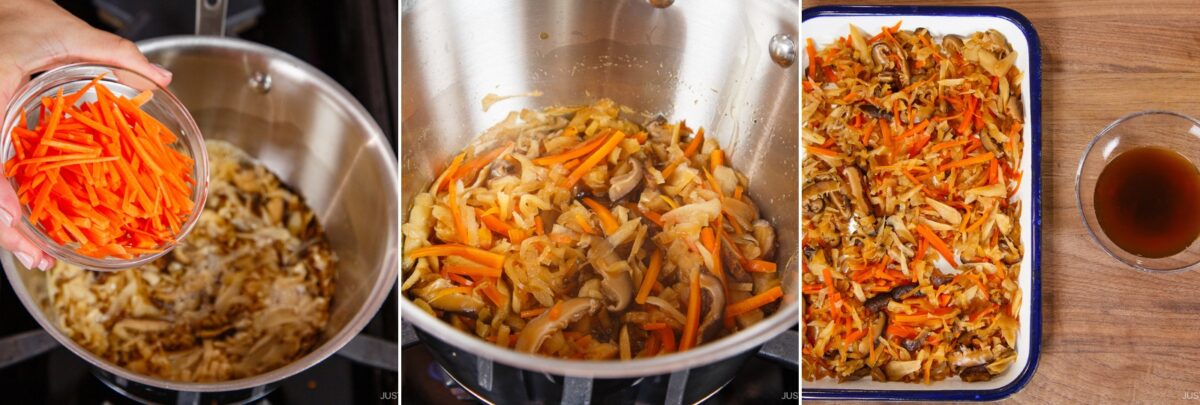
- Add the carrot while there is still some liquid in the pot, but toward the end of cooking so it doesn't overcook and get mushy. Place the otoshibuta on top and continue simmering until the liquid is almost gone. The total cooking time should be about 20–25 minutes. Transfer the chirashi mix to a plate to cool completely. If there's any cooking liquid left, you can save a small amount to lightly season the rice later. Nami's Tip: You can make the chirashi mix ahead of time and store it in an airtight container in the refrigerator for up to 1–2 days.
To Cook the Sushi Rice
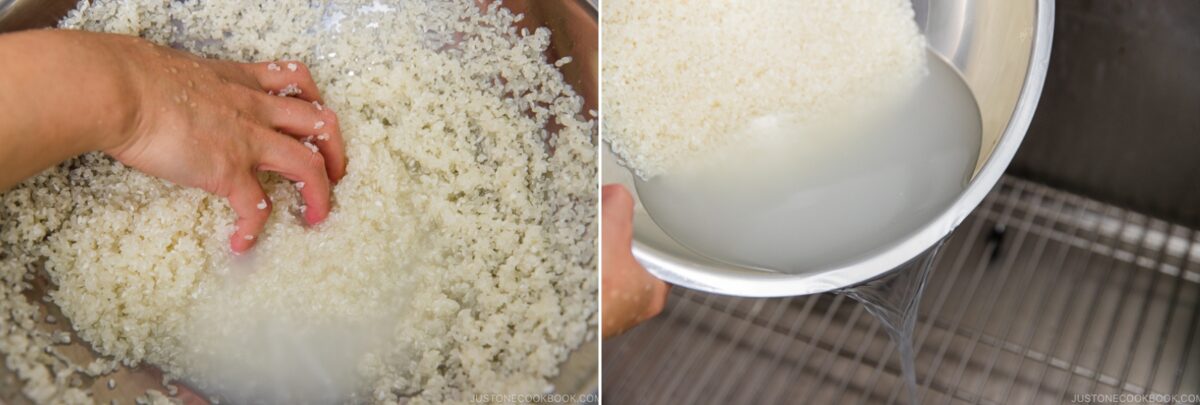
- For detailed, step-by-step instructions with photos, please see my post How to Make Sushi Rice. Rinse and wash 2¼ cups uncooked Japanese short-grain white rice (3 rice cooker cups) 3 times and drain well.
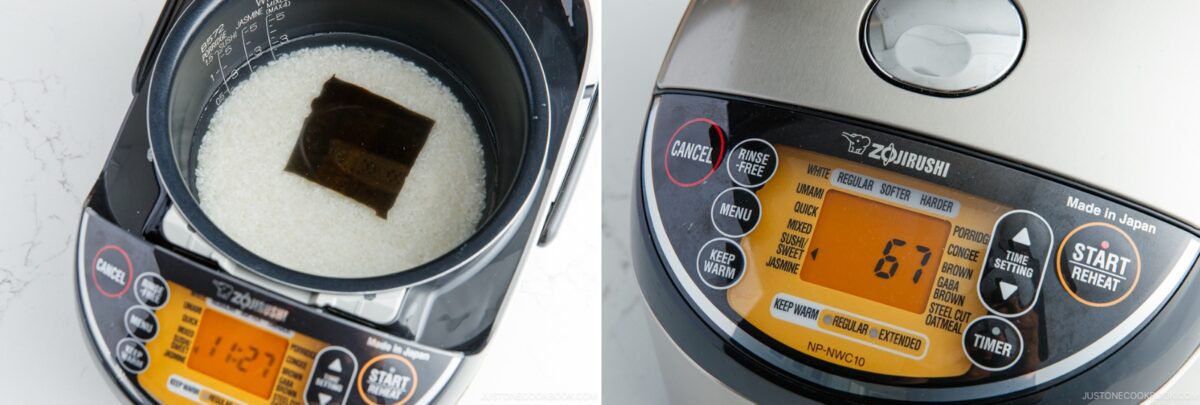
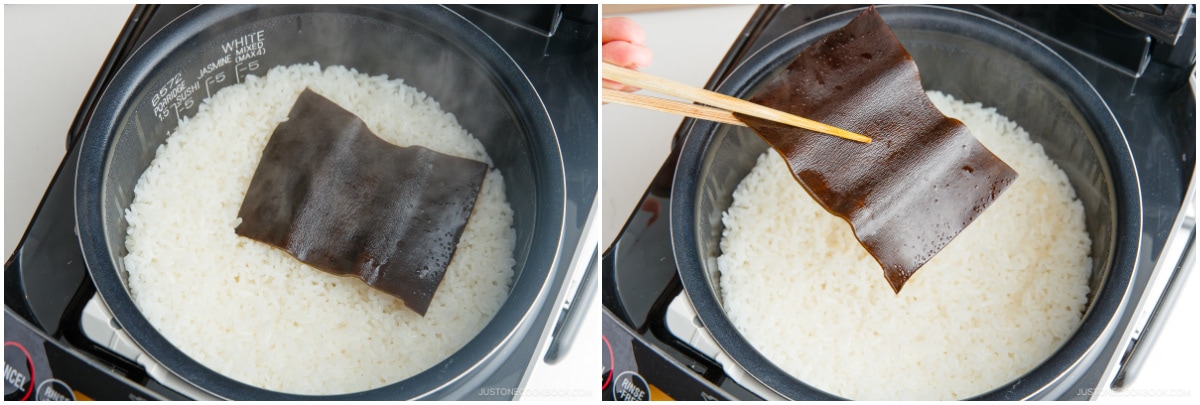
- Transfer the rice to the inner pot of a rice cooker and add 2¼ cups water. Place 1 piece kombu (dried kelp) on top. Soak the rice and kombu for 20 minutes, then start cooking. You have about 1 hour to prepare the remaining ingredients while the rice cooks.Nami's Tip: For easy measuring, use your rice cooker's Sushi Rice mode and add water to the line for the number of rice cups you're cooking. Or, use the White Rice mode and add water to just under that line. If you don‘t have a rice cooker, see how to cook short-grain rice using a pot over the stove, Instant Pot, or donabe.
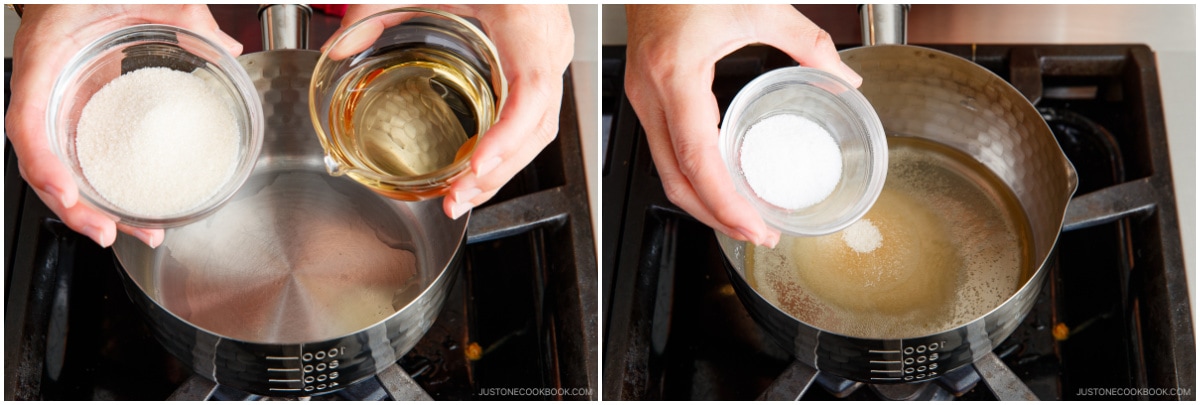
- Meanwhile, prepare the sushi vinegar seasoning. In a bowl, combine ⅓ cup rice vinegar (unseasoned), 3 Tbsp sugar, and 1½ tsp Diamond Crystal kosher salt and mix well.To help dissolve the sugar, microwave the mixture for about 1 minute or heat it in a small saucepan over medium-high heat until the sugar fully dissolves. Set aside to cool slightly.
To Make the Shredded Egg Crepe
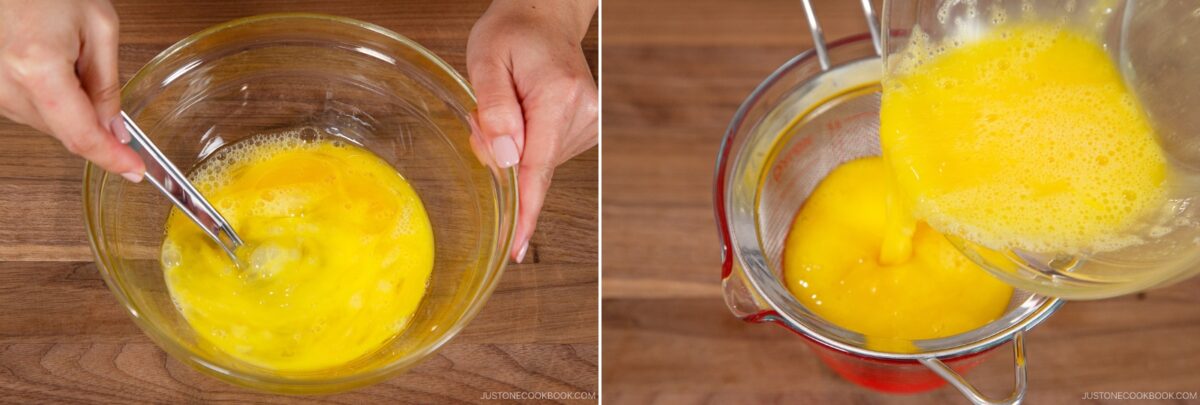
- In a bowl, combine 3 large eggs (50 g w/o shell), 1 Tbsp mirin, ¼ tsp Diamond Crystal kosher salt, and the slurry (premixed with 1 tsp potato starch or cornstarch and 1 tsp water). Whisk well. For a silky-smooth texture, strain the egg mixture through a fine-mesh sieve.
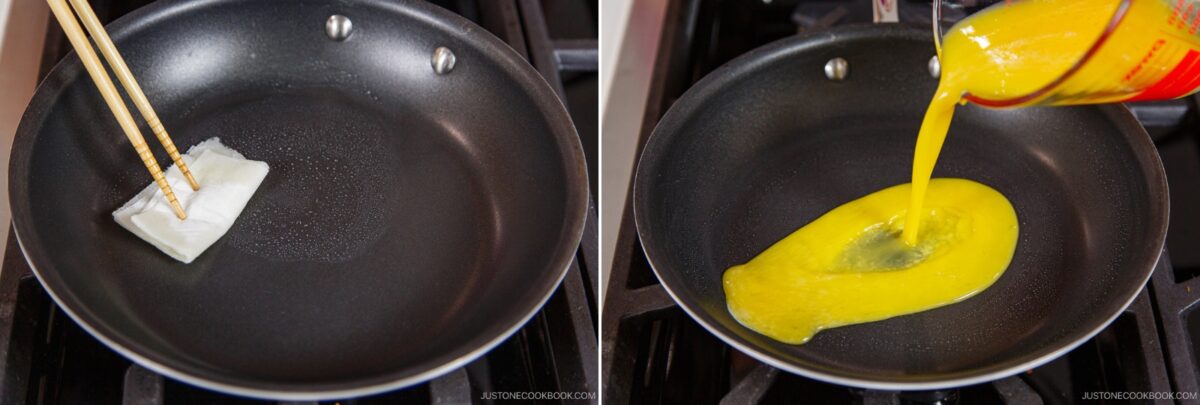
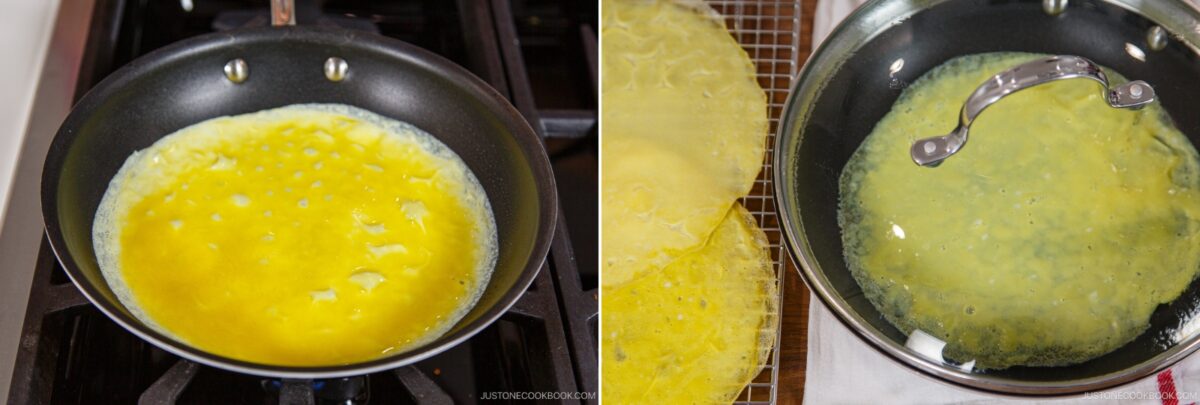
- Heat a large nonstick frying pan on medium heat. When it's hot, grease it with a paper towel dipped in 2 tsp neutral oil and wipe off the excess oil. Now, reduce to medium-low heat. Then, pour just enough egg mixture to cover the surface of the frying pan.
- Tilt the pan to spread the egg mixture into a thin, even layer, then cover with a lid. Cook for about 1 minute. When the surface is no longer wet, it's done.Transfer the cooked egg crepe to a wire rack and let cool completely. Repeat until you've used up all the egg mixture. Nami's Tip: If the pan gets too hot, briefly remove it from the heat or set it on a damp, cold towel for a few seconds. This helps cool the pan quickly so the egg doesn’t brown.
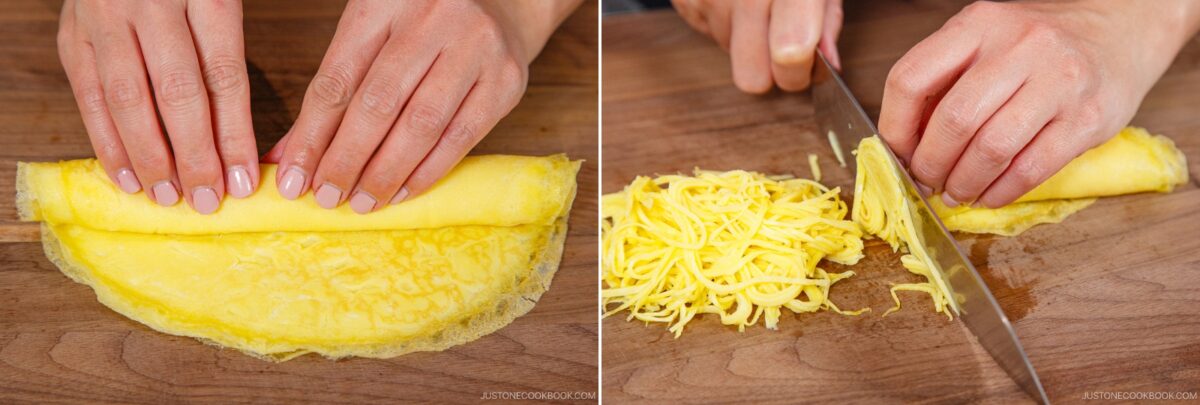
- Stack the egg crepes and roll them up tightly. Slice into thin julienne strips, then gently loosen the strands with your fingers. Set aside.Nami's Tip: You can make the egg crepes earlier in the day. You can also roll them up and freeze for up to a month. Slice just before assembling for the best texture.
To Prepare the Toppings
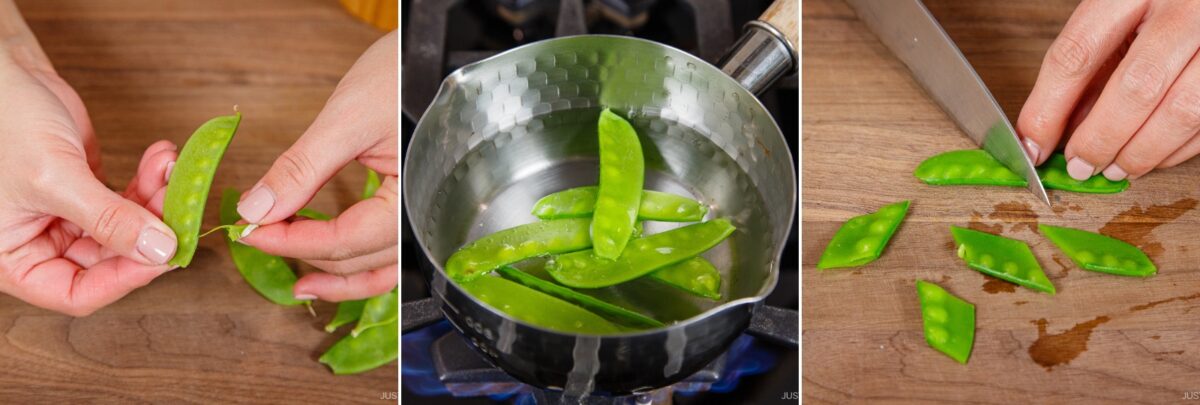
- Snow Peas: Remove the tough strings from 6 snow peas. Bring water to boil in a small saucepan. Add ⅛ tsp salt and blanch the snow peas for 1 minute. Drain and cut diagonally in half or thirds.
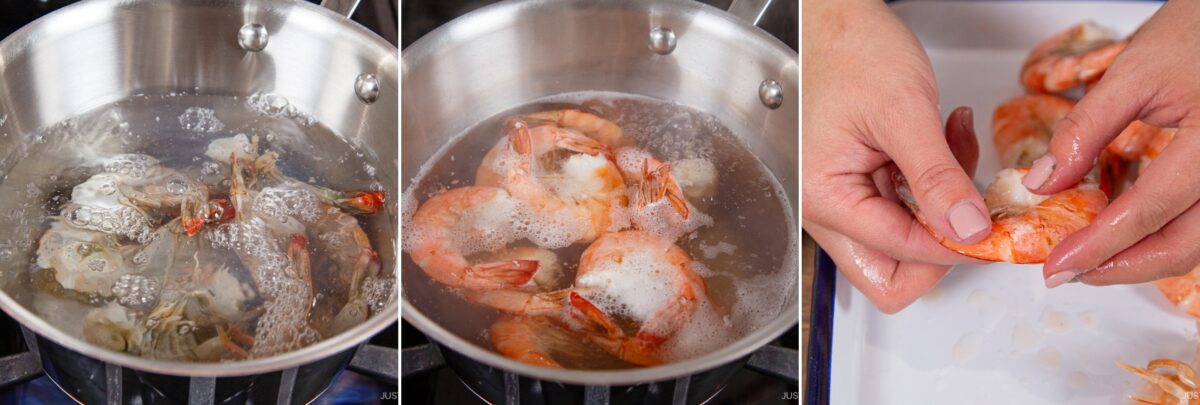
- Shrimp: Use a skewer to devein 8–10 large and jumbo shrimp, keeping the shells on (see how to devein shrimp for my detailed instructions). Boil water in a medium saucepan. Once boiling, add ⅕ tsp salt, 1 Tbsp sake, and the shrimp. Simmer until pink, about 2–3 minutes. Drain, peel off the shells, and set aside. Nami's Tip: Peel the shrimp after cooking to retain the shrimp's flavor.
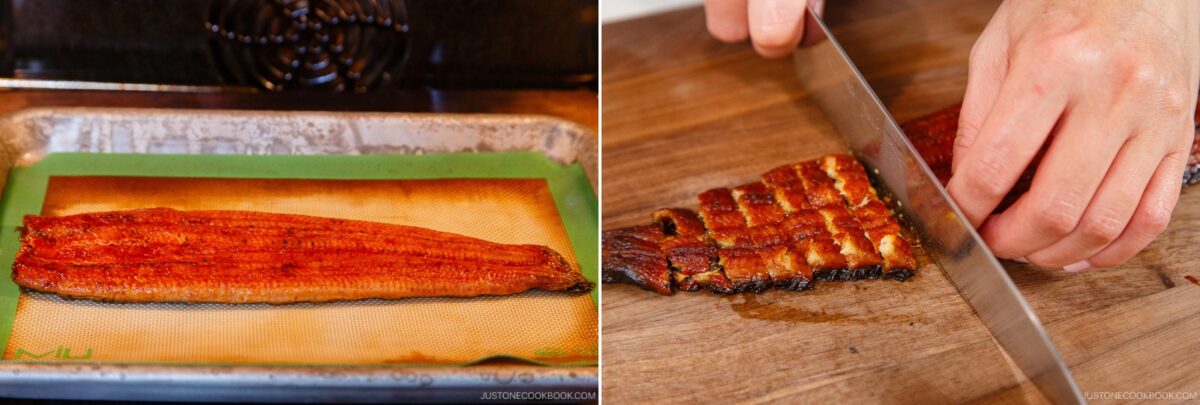
- Optional unagi: Line a baking sheet with foil, lightly oil it, and place 1 fillet unagi (freshwater eel) fillet on top. Broil on High (550ºF/290ºC) on the middle rack for about 5 minutes, or until bubbling and lightly browned. No need to flip. Let cool slightly and cut into ¼-inch (6 mm) pieces and set aside.Nami's Tip: Store-bought unagi is already cooked and broiled, so you just need to reheat it.
To Make the Optional Pickled Lotus Root
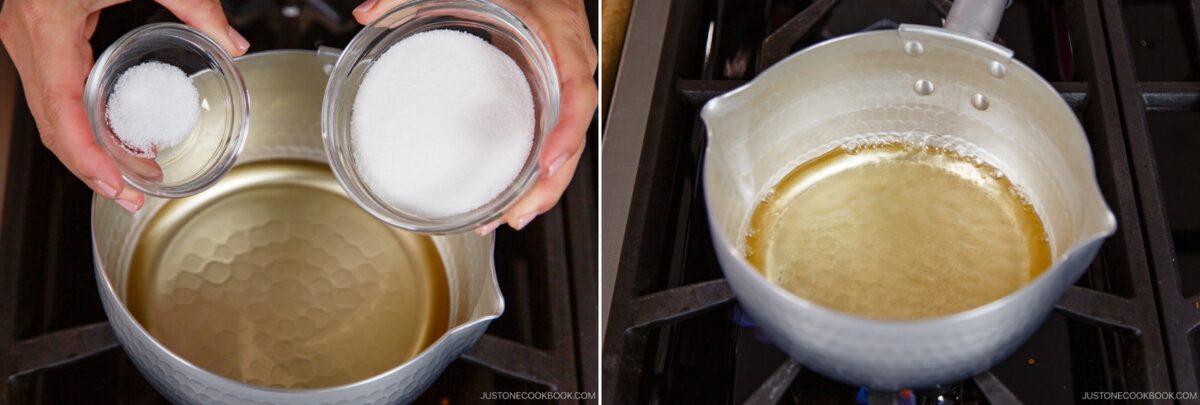
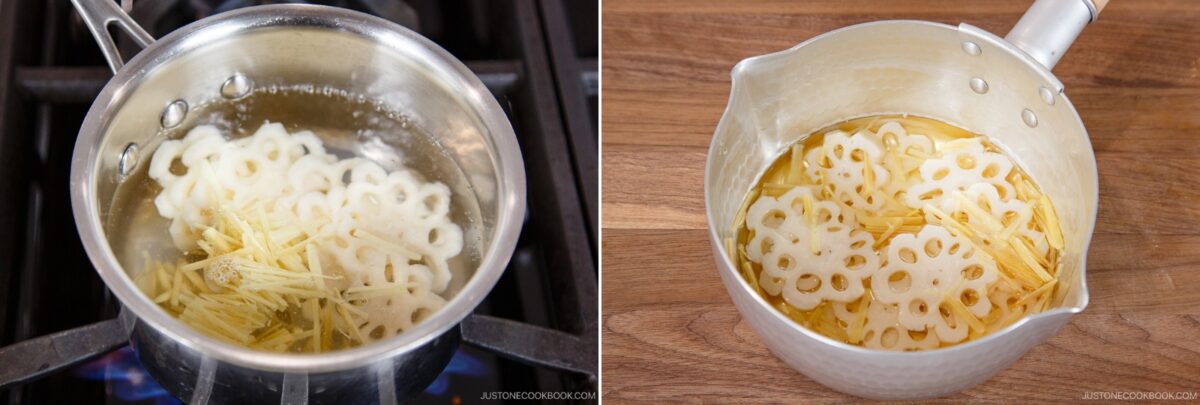
- Combine ½ cup rice vinegar (unseasoned), ⅓ cup sugar, and ½ tsp Diamond Crystal kosher salt in a small saucepan. Stir and bring it to a boil to let the sugar dissolved completely. Remove from heat and cool.
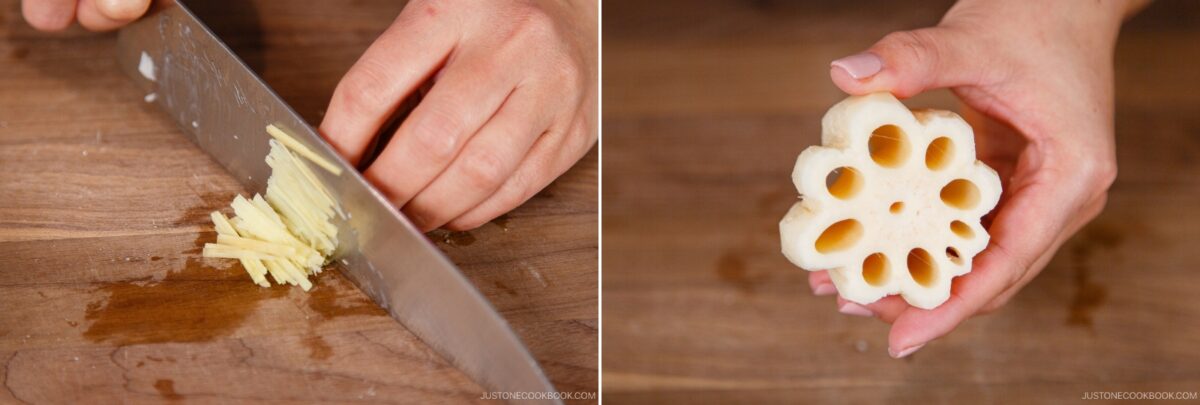
- Meanwhile, peel and cut 1 inch ginger into thin julienned strips (the thinner, the better). Peel 2 inches lotus root (renkon) and cut around the edge to make a flower shape (for detailed instructions and photos, read How to Make Hana Renkon).
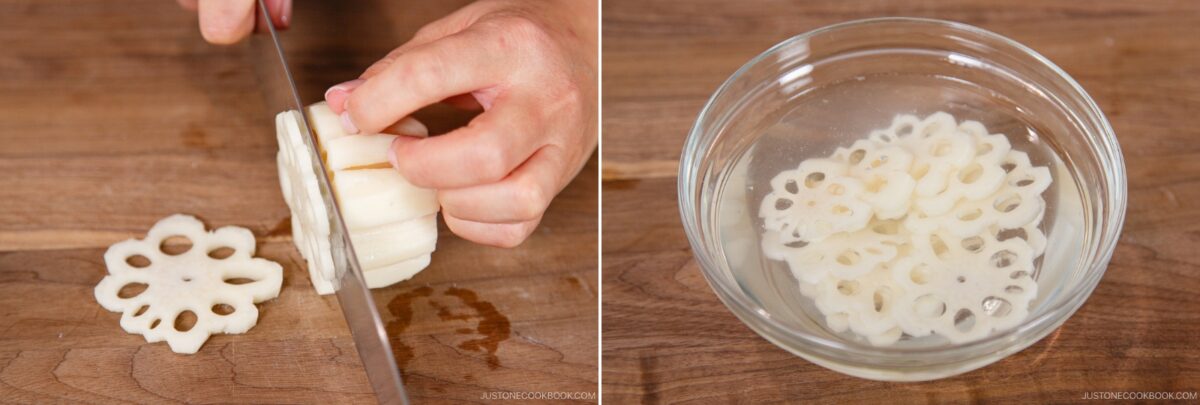
- Cut the lotus root into ⅛-inch (3-mm) slices. Soak in vinegared water (add 1 tsp rice vinegar to a bowl of water) for 5 minutes to keep it from turning brown.
- Boil water in a small saucepan. Blanch the ginger and lotus root for 3 minutes. Drain well and transfer them to the cooled vinegar mixture to marinate. Nami's Tip: You can make the pickled lotus root in advance and keep it in the refrigerator up to 1 week.
To Season the Sushi Rice
- Start this step once you've completed all the previous steps. When the rice is done cooking, discard the kombu.
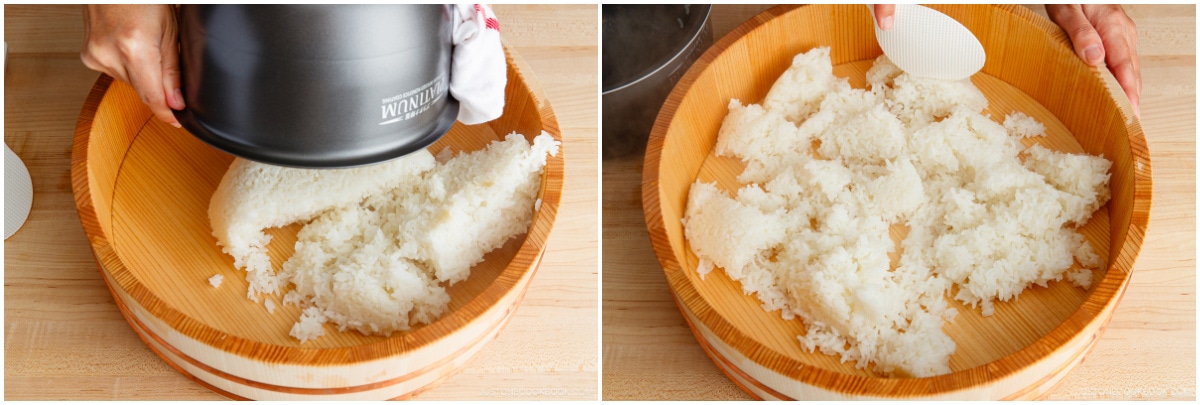
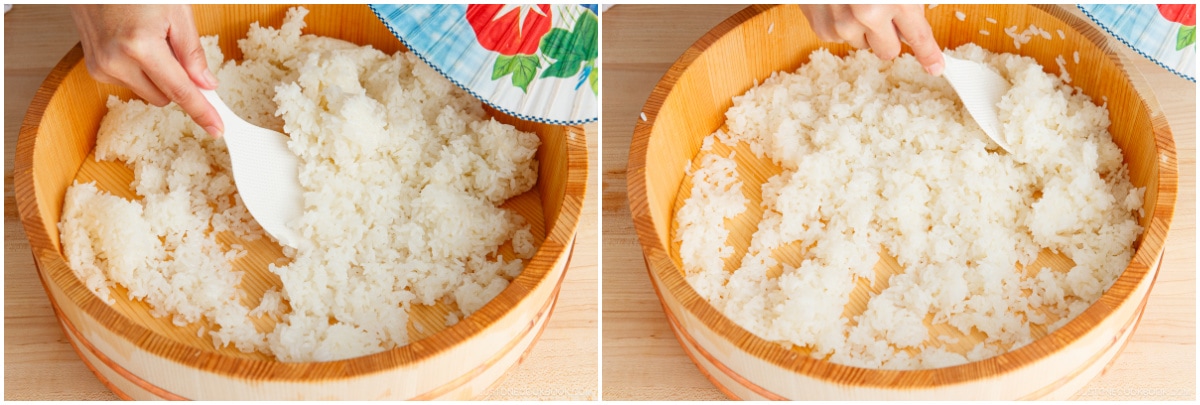
- Transfer the hot rice to a hangiri (sushi oke) that you've rinsed under running water, drained, and wiped with a towel. You could also use a baking sheet lined with parchment paper. Spread out the rice evenly with a rice paddle so it will cool faster.
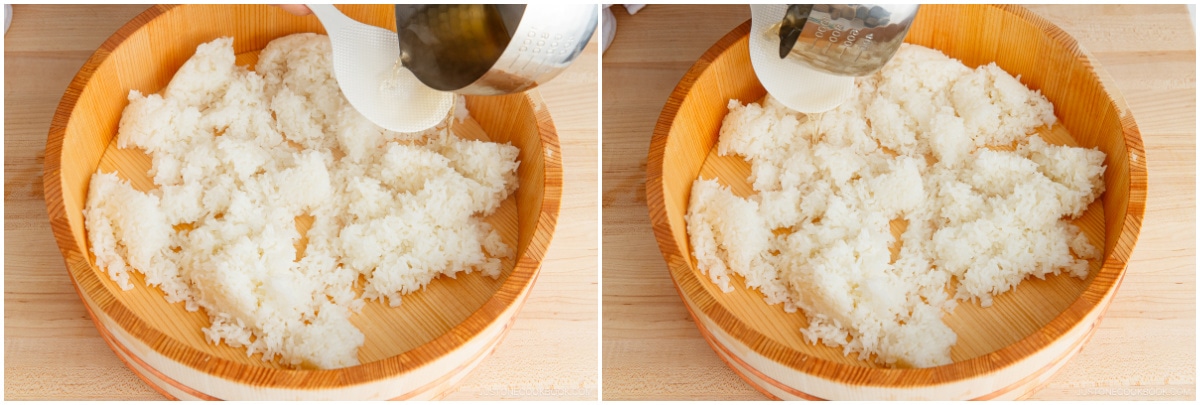
- While the rice is hot, pour the cooled sushi seasoning onto the rice paddle over the rice to evenly distribute it. Gently “slice” the rice with the rice paddle at a 45-degree angle to incorporate the seasoned vinegar and separate the rice chunks. Do not stir or mix because that may break the grains and make it mushy.
- As you fold, fan the rice to cool it to about body temperature. Use a paddle fan or an electric fan. Fanning helps remove excess moisture and gives the rice a beautiful shine.
To Assemble the Chirashi Sushi
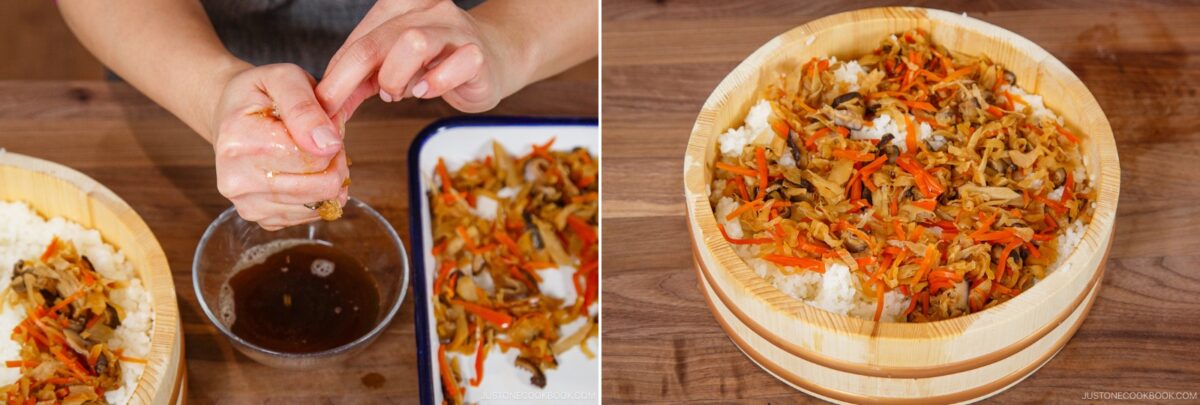
- Squeeze the chirashi vegetable mix to remove excess liquid (otherwise the rice gets too soggy). Add the vegetables to the cooled sushi rice and gently combine with the rice paddle using a slicing motion. Nami's Tip: You can always add a few tablespoons of the reserved liquid to season the rice if you‘d like (I don‘t usually do it).
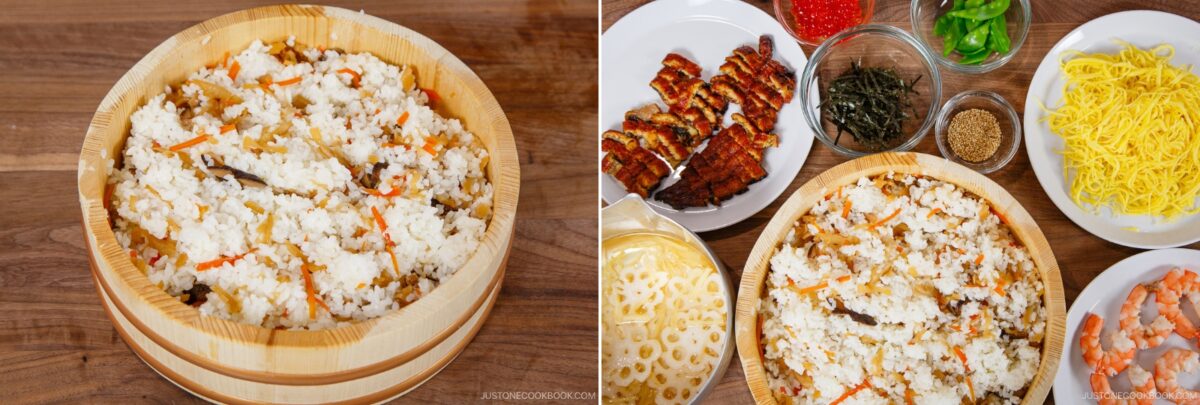
- Gather all the toppings you’ve prepared.
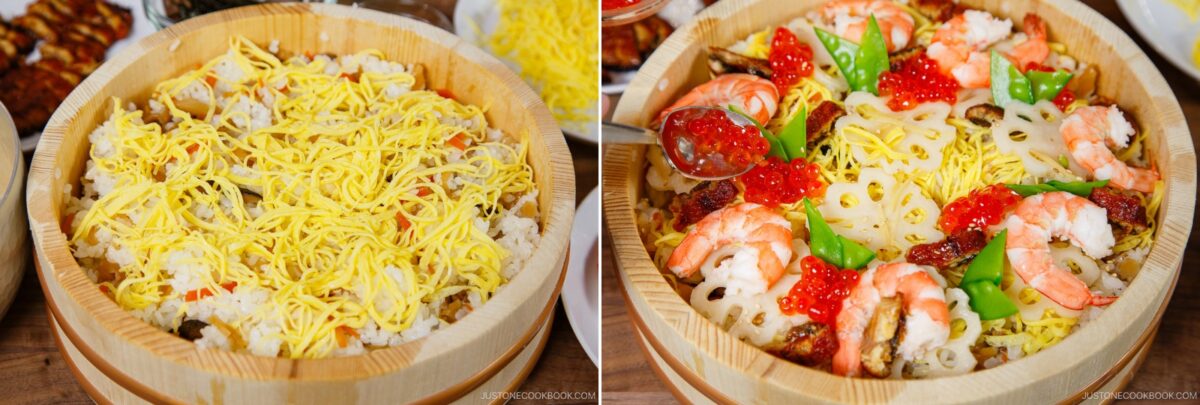
- Scatter the shredded egg crepe on top of the sushi rice. Then, add the toppings in the following order: Lotus root, shrimp, unagi, snow peas, 4 Tbsp ikura (salmon roe), ½ Tbsp toasted white sesame seeds, and 2 Tbsp shredded nori seaweed in the center. Enjoy!
To Store
- You can keep the leftovers in an airtight container and store in the refrigerator for 3 days and in the freezer for a month.
Notes
- Uncooked Japanese short-grain white rice: 540 ml; yields 6⅔ cups or 990 g of cooked rice
- Unagi: about 5.6 oz (160 g) per fillet
Nutrition
Calories: 419kcal, Carbohydrates: 75g, Protein: 12g, Fat: 5g, Saturated Fat: 1g, Polyunsaturated Fat: 1g, Monounsaturated Fat: 2g, Trans Fat: 0.02g, Cholesterol: 114mg, Sodium: 446mg, Potassium: 242mg, Fiber: 3g, Sugar: 10g, Vitamin A: 1138IU, Vitamin C: 3mg, Calcium: 81mg, Iron: 1mg
